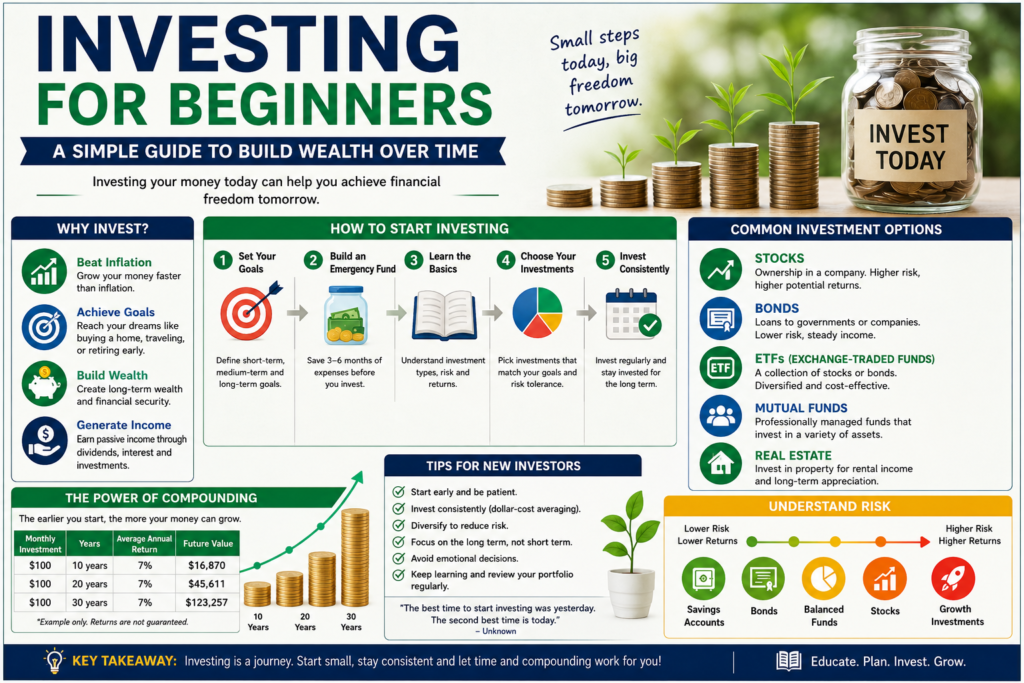
Introduction
Investing is one of the most effective ways to build wealth and achieve long-term financial goals. While saving money is important, investing allows your money to grow over time through the power of compound returns. Whether you’re saving for retirement, a home purchase, financial independence, or future opportunities, learning how to invest is an essential financial skill.
Many beginners avoid investing because it seems complicated or risky. However, investing doesn’t require expert knowledge or a large amount of money to get started. With the right strategy and a long-term mindset, anyone can begin building wealth through investing.
This comprehensive beginner’s guide will explain the basics of investing, common investment options, risk management strategies, and practical steps to help you start investing confidently.
What Is Investing?
Investing is the process of putting money into assets that have the potential to increase in value over time.
Unlike saving, which focuses on preserving money, investing aims to grow wealth through capital appreciation, dividends, interest, or other returns.
Common investment assets include:
- Stocks
- Bonds
- Exchange-Traded Funds (ETFs)
- Mutual Funds
- Real Estate
- Index Funds
- Retirement Accounts
The goal of investing is to generate returns that outpace inflation and increase your purchasing power over time.
Why Investing Is Important
Investing offers several advantages over simply keeping money in a savings account.
Beat Inflation
Inflation gradually reduces the purchasing power of money. Investing helps your money grow faster than inflation.
Build Long-Term Wealth
Consistent investing can create significant wealth over decades through compound growth.
Achieve Financial Goals
Investing helps fund goals such as:
- Retirement
- Home ownership
- Education
- Travel
- Financial independence
Generate Passive Income
Some investments provide ongoing income through dividends, interest payments, or rental income.
Understanding Risk and Return
Every investment involves some level of risk.
Generally, higher potential returns come with higher risks.
Low-Risk Investments
Examples include:
- High-yield savings accounts
- Certificates of deposit (CDs)
- Government bonds
Moderate-Risk Investments
Examples include:
- Bond funds
- Balanced mutual funds
- Dividend-paying stocks
Higher-Risk Investments
Examples include:
- Individual stocks
- Growth stocks
- Emerging markets
- Cryptocurrency
Understanding your risk tolerance is essential before investing.
The Power of Compound Interest
One of the most powerful concepts in investing is compound growth.
Compound growth occurs when investment earnings generate additional earnings over time.
Even small monthly investments can grow substantially over several decades because returns continue earning returns.
For beginners, time is often more important than the amount invested.
Step 1: Set Investment Goals
Before investing, define your financial objectives.
Short-Term Goals
Typically less than five years:
- Vacation fund
- Car purchase
- Emergency savings
Medium-Term Goals
Five to ten years:
- Home down payment
- Business startup
- Education expenses
Long-Term Goals
More than ten years:
- Retirement
- Financial independence
- Generational wealth
Your goals help determine your investment strategy.
Step 2: Build an Emergency Fund First
Before investing aggressively, establish an emergency fund.
Financial experts generally recommend saving:
- Three to six months of expenses
- Easily accessible cash reserves
- Funds for unexpected emergencies
This prevents the need to sell investments during market downturns.
Step 3: Understand Different Investment Types
Stocks
Stocks represent ownership in a company.
Benefits:
- High growth potential
- Dividend income opportunities
- Long-term wealth creation
Risks:
- Market volatility
- Potential losses
Bonds
Bonds are loans made to governments or corporations.
Benefits:
- Lower risk
- Regular interest payments
Risks:
- Lower returns compared to stocks
Exchange-Traded Funds (ETFs)
ETFs contain multiple investments within a single fund.
Benefits:
- Diversification
- Low costs
- Easy management
Many beginners start with ETFs because they simplify investing.
Mutual Funds
Mutual funds pool money from many investors.
Benefits:
- Professional management
- Diversification
Risks:
- Higher fees than many ETFs
Real Estate
Real estate investing involves purchasing property for appreciation or rental income.
Benefits:
- Tangible asset
- Passive income potential
Risks:
- Maintenance costs
- Market fluctuations
Step 4: Start with Index Funds
Many experts recommend index funds for beginners.
An index fund tracks a market index, such as a broad stock market benchmark.
Benefits include:
- Low fees
- Broad diversification
- Strong long-term performance
- Simple investing approach
Index funds reduce the risk associated with selecting individual stocks.
Step 5: Diversify Your Portfolio
Diversification means spreading investments across multiple asset types.
A diversified portfolio may include:
- Domestic stocks
- International stocks
- Bonds
- Real estate investments
- Cash reserves
Diversification reduces risk and helps stabilize long-term returns.
Step 6: Invest Consistently
Consistency often matters more than timing the market.
Dollar-Cost Averaging
Dollar-cost averaging involves investing a fixed amount regularly regardless of market conditions.
Benefits include:
- Reduced emotional investing
- Lower timing risk
- Consistent investment habits
Many successful investors follow this strategy.
Step 7: Think Long Term
Successful investing requires patience.
Markets naturally experience:
- Bull markets
- Bear markets
- Corrections
- Volatility
Long-term investors typically focus on decades rather than days or months.
Avoid reacting emotionally to short-term market movements.
Common Beginner Investing Mistakes
Trying to Time the Market
Predicting short-term market movements is extremely difficult.
Investing Without Research
Understand investments before committing money.
Lack of Diversification
Concentrating investments increases risk.
Chasing Hot Trends
Popular investments often attract attention after significant price increases.
Selling During Market Declines
Market downturns are normal and often temporary.
Ignoring Fees
Investment fees can significantly impact long-term returns.
Sample Beginner Portfolio
A simple beginner portfolio might include:
- 70% Stock Index Funds
- 20% Bond Funds
- 10% Cash or Savings
The ideal allocation depends on age, goals, and risk tolerance.
How Much Money Do You Need to Start?
One of the biggest myths about investing is that you need thousands of dollars.
Today, many platforms allow investors to start with:
- $10
- $25
- $50
- $100
The key is starting early and investing consistently.
Investing vs. Saving
Saving
Best for:
- Emergency funds
- Short-term goals
- Stability
Investing
Best for:
- Retirement
- Wealth building
- Long-term financial goals
Both saving and investing play important roles in a healthy financial plan.
Best Habits for New Investors
Successful investors often:
- Invest consistently
- Stay diversified
- Focus on long-term growth
- Avoid emotional decisions
- Continue learning
- Reinvest dividends
- Review portfolios periodically
These habits create a strong foundation for financial success.
Conclusion
Investing is one of the most powerful tools for building long-term wealth and achieving financial freedom. While investing may seem intimidating at first, beginners can succeed by starting with simple strategies such as index funds, diversification, and consistent contributions.
Remember that investing is a marathon, not a sprint. By setting clear goals, understanding risk, staying disciplined, and maintaining a long-term perspective, you can create a portfolio that grows steadily over time.
The best time to start investing was years ago. The second-best time is today.