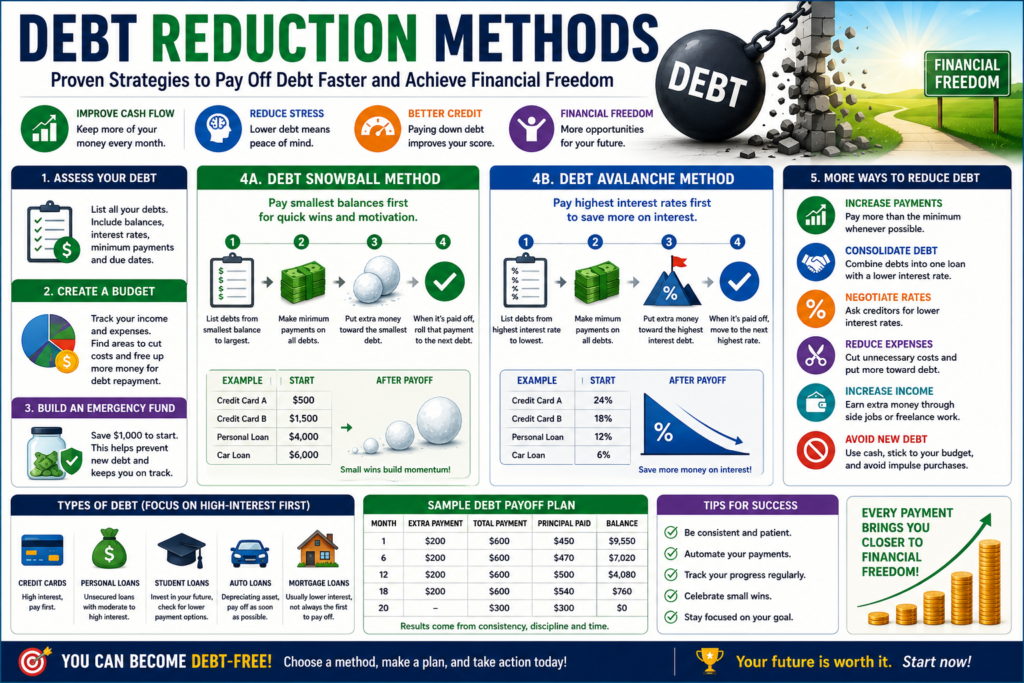
Introduction
Debt can be one of the biggest obstacles to financial stability and long-term wealth building. Whether it’s credit card balances, personal loans, student loans, or other financial obligations, excessive debt can create stress, limit financial opportunities, and reduce your ability to save and invest.
The good news is that with the right debt reduction methods, you can take control of your finances and work toward becoming debt-free. Successful debt management requires discipline, planning, and a clear repayment strategy.
In this guide, you’ll learn the most effective debt reduction techniques, practical money-saving strategies, and proven methods that can help you eliminate debt faster and improve your financial future.
Why Debt Reduction Matters
Reducing debt provides numerous financial and personal benefits:
Improved Cash Flow
Less debt means more money available for:
- Savings
- Investments
- Emergency funds
- Lifestyle goals
Reduced Financial Stress
Lower debt levels often lead to greater peace of mind and financial confidence.
Better Credit Scores
Consistent debt repayment can improve your credit profile and borrowing opportunities.
Increased Financial Freedom
Becoming debt-free creates opportunities to focus on wealth building rather than debt payments.
Understanding Good Debt vs. Bad Debt
Not all debt is created equal.
Good Debt
Good debt may help increase future income or net worth.
Examples include:
- Education loans
- Business loans
- Reasonable mortgage debt
Bad Debt
Bad debt typically finances depreciating assets or unnecessary spending.
Examples include:
- High-interest credit cards
- Payday loans
- Consumer debt
- Excessive personal loans
Reducing high-interest debt should usually be your top priority.
Step 1: Assess Your Debt Situation
Begin by creating a complete list of all debts.
Include:
- Creditor names
- Outstanding balances
- Interest rates
- Minimum monthly payments
- Due dates
Understanding your debt picture allows you to create a realistic repayment plan.
Step 2: Create a Debt Repayment Budget
A budget is essential for successful debt reduction.
Track:
- Monthly income
- Fixed expenses
- Variable expenses
- Debt payments
Identify areas where spending can be reduced and redirect those savings toward debt repayment.
Step 3: Use the Debt Snowball Method
The Debt Snowball Method focuses on paying off the smallest balances first.
How It Works
- List debts from smallest to largest balance.
- Make minimum payments on all debts.
- Put extra money toward the smallest debt.
- Once paid off, roll that payment into the next debt.
Advantages
- Quick wins
- Increased motivation
- Simple implementation
Many people find this method psychologically rewarding.
Step 4: Use the Debt Avalanche Method
The Debt Avalanche Method prioritizes debts with the highest interest rates.
How It Works
- Rank debts by interest rate.
- Make minimum payments on all debts.
- Apply extra funds to the highest-interest debt.
- Continue until all debts are eliminated.
Advantages
- Saves more money on interest
- Faster overall debt reduction
- Mathematically efficient
This strategy often results in the lowest total repayment cost.
Step 5: Increase Monthly Payments
Paying more than the minimum payment can dramatically reduce repayment time.
Benefits include:
- Faster debt elimination
- Lower interest costs
- Improved cash flow sooner
Even modest additional payments can make a significant difference.
Step 6: Consolidate Debt
Debt consolidation combines multiple debts into a single payment.
Potential benefits:
- Simplified finances
- Lower interest rates
- Fixed repayment schedules
Common consolidation options include:
- Personal loans
- Balance transfer cards
- Home equity loans
Always compare fees and terms before consolidating.
Step 7: Negotiate Lower Interest Rates
Many creditors may be willing to reduce interest rates for reliable customers.
Benefits include:
- Lower monthly payments
- Reduced total interest
- Faster payoff timelines
A simple phone call could save hundreds or even thousands of dollars.
Step 8: Reduce Unnecessary Expenses
Every dollar saved can be redirected toward debt repayment.
Consider reducing:
- Subscription services
- Dining out
- Entertainment expenses
- Impulse purchases
- Luxury spending
Temporary sacrifices can accelerate long-term financial freedom.
Step 9: Increase Your Income
Additional income can significantly speed up debt repayment.
Options include:
- Freelancing
- Side businesses
- Overtime work
- Selling unused items
- Consulting services
Using extra income exclusively for debt reduction can produce rapid results.
Step 10: Avoid Accumulating New Debt
One of the most important debt reduction principles is preventing new debt.
Strategies include:
- Using cash when possible
- Following a budget
- Building an emergency fund
- Avoiding impulse purchases
Debt reduction becomes much easier when balances stop growing.
Debt Reduction Through Emergency Savings
Many people focus entirely on debt repayment and neglect savings.
Maintaining a small emergency fund helps prevent:
- New credit card balances
- Unexpected borrowing
- Financial setbacks
A starter emergency fund of $1,000 can provide valuable protection.
Common Debt Reduction Mistakes
Avoid these common errors:
Paying Only Minimum Payments
Minimum payments often keep debt around for years.
Ignoring High Interest Rates
High-interest debt can significantly increase total repayment costs.
Not Following a Budget
Without a spending plan, debt reduction efforts may stall.
Closing All Credit Accounts Immediately
Closing accounts can sometimes negatively affect credit utilization ratios.
Taking on New Debt
New debt can undo months of repayment progress.
Debt Reduction Timeline Example
Credit Card Debt: $10,000
Minimum Payment Only:
- May take many years
- Thousands in interest
Extra $200 Monthly:
- Faster payoff
- Significant interest savings
Consistency is often more important than the size of individual payments.
Best Habits for Becoming Debt-Free
Successful debt reducers typically:
- Track spending carefully
- Follow a budget
- Make payments on time
- Avoid unnecessary borrowing
- Increase income when possible
- Review financial progress regularly
These habits support long-term financial health.
Life After Debt
Becoming debt-free opens opportunities to:
- Build emergency savings
- Invest for retirement
- Purchase a home
- Start a business
- Achieve financial independence
Many people experience improved financial confidence and reduced stress after eliminating debt.
Conclusion
Debt reduction is a journey that requires patience, discipline, and commitment. Whether you choose the Debt Snowball Method, Debt Avalanche Method, debt consolidation, or a combination of strategies, the most important factor is taking consistent action.
By creating a budget, increasing payments, reducing expenses, avoiding new debt, and staying focused on your goals, you can steadily eliminate debt and build a stronger financial future.
Every payment brings you one step closer to financial freedom. Start today, stay consistent, and remember that lasting financial success is built through small, disciplined actions over time.