Introduction
Social media has transformed how businesses connect with customers, build brand awareness, and drive revenue. Platforms such as Facebook, Instagram, LinkedIn, TikTok, X (Twitter), Pinterest, and YouTube have become essential marketing channels for organizations of every size.
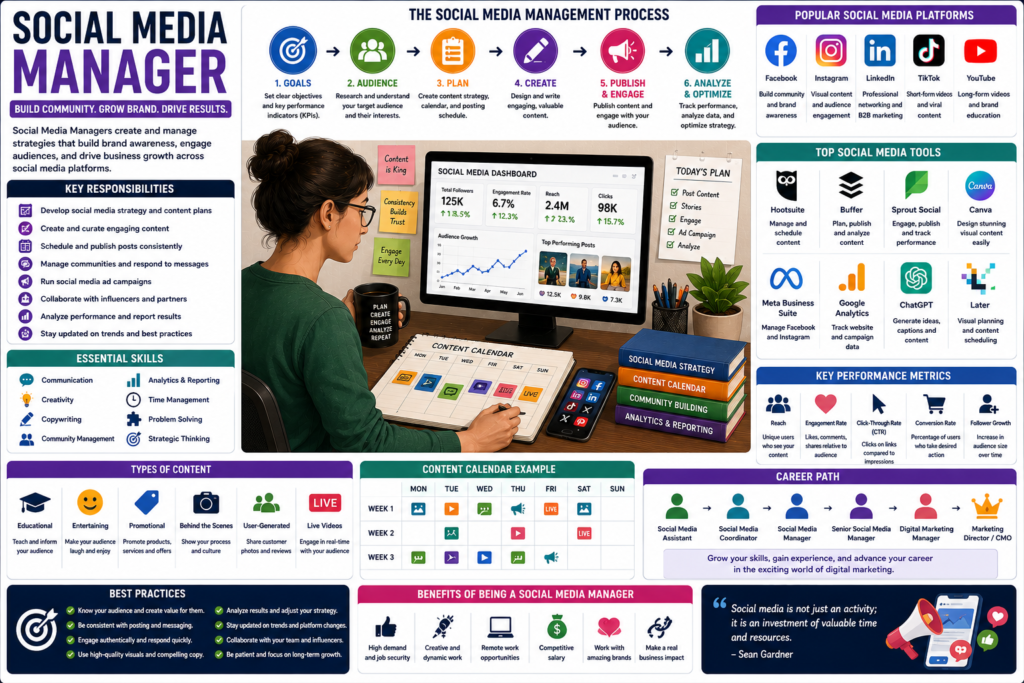
At the center of these efforts is the Social Media Manager—a professional responsible for planning, creating, managing, and optimizing social media strategies that engage audiences and support business goals.
Social Media Managers combine creativity, communication, marketing expertise, analytics, and strategic thinking to help brands build meaningful relationships with their communities.
As businesses continue investing in digital marketing, the demand for skilled Social Media Managers remains strong across industries worldwide.
What Is a Social Media Manager?
A Social Media Manager is responsible for managing an organization’s presence across social media platforms.
Their primary objective is to grow brand awareness, increase engagement, attract customers, and support business growth through effective social media strategies.
Typical responsibilities include:
- Content planning
- Content creation
- Social media scheduling
- Community management
- Campaign management
- Social media advertising
- Influencer collaboration
- Analytics reporting
- Audience engagement
- Brand monitoring
Why Social Media Matters
Builds Brand Awareness
Social media helps businesses reach large audiences quickly.
Improves Customer Engagement
Brands can communicate directly with customers.
Drives Website Traffic
Social platforms help generate visitors and leads.
Supports Sales Growth
Social commerce and advertising increase conversions.
Enhances Customer Relationships
Ongoing interaction builds trust and loyalty.
Core Responsibilities of a Social Media Manager
Content Strategy
Developing content plans aligned with business objectives.
Content Creation
Creating engaging content such as:
- Images
- Videos
- Reels
- Stories
- Infographics
- Polls
- Articles
Community Management
Responding to comments, messages, and customer interactions.
Campaign Management
Executing promotional and brand-awareness campaigns.
Analytics and Reporting
Monitoring performance and identifying opportunities.
Social Listening
Tracking conversations, mentions, and industry trends.
Popular Social Media Platforms
Ideal for community building and advertising.
Popular for visual storytelling and brand engagement.
Best for professional networking and B2B marketing.
TikTok
Focused on short-form video content and viral growth.
YouTube
Excellent for long-form video content and education.
Supports discovery and visual search.
X (Twitter)
Useful for conversations, news, and customer engagement.
The Social Media Marketing Process
1. Goal Setting
Define objectives such as:
- Brand awareness
- Lead generation
- Customer engagement
- Website traffic
- Sales growth
2. Audience Research
Understand:
- Demographics
- Interests
- Behaviors
- Platform preferences
3. Content Planning
Create a content calendar and posting schedule.
4. Content Creation
Develop engaging and platform-specific content.
5. Publishing
Schedule and distribute content strategically.
6. Engagement
Interact with followers and manage communities.
7. Performance Analysis
Measure results and optimize future campaigns.
Essential Skills for Social Media Managers
Communication
Building relationships with audiences and stakeholders.
Creativity
Creating compelling content and campaigns.
Copywriting
Writing captions, posts, and promotional content.
Design Awareness
Understanding visual branding and content presentation.
Data Analysis
Using metrics to improve performance.
Marketing Strategy
Aligning social activities with business goals.
Time Management
Managing multiple platforms and campaigns efficiently.
Content Strategy for Social Media
Successful Social Media Managers create diverse content types.
Examples include:
Educational Content
Teaching audiences useful information.
Entertaining Content
Driving engagement through fun and creative posts.
Promotional Content
Highlighting products, services, and offers.
User-Generated Content
Sharing customer experiences and testimonials.
Behind-the-Scenes Content
Humanizing brands and building authenticity.
Community Management
Community management is a critical aspect of social media success.
Responsibilities include:
- Responding to comments
- Answering customer questions
- Handling complaints
- Encouraging discussions
- Building relationships
Strong community management increases customer loyalty and trust.
Social Media Advertising
Paid advertising expands reach and accelerates growth.
Popular advertising platforms include:
Facebook Ads
Targeted advertising based on demographics and interests.
Instagram Ads
Visual campaigns for engagement and conversions.
LinkedIn Ads
Professional audience targeting.
TikTok Ads
Short-form video advertising.
YouTube Ads
Video campaigns with broad reach.
Influencer Marketing
Many Social Media Managers collaborate with influencers.
Benefits include:
- Increased reach
- Greater credibility
- Higher engagement
- Improved conversions
Successful influencer partnerships align with brand values and target audiences.
Social Media Analytics
Performance measurement helps improve results.
Important metrics include:
Reach
Number of unique users who see content.
Impressions
Total content views.
Engagement Rate
Interactions relative to audience size.
Follower Growth
Growth of audience size over time.
Click-Through Rate (CTR)
Percentage of users clicking links.
Conversion Rate
Percentage of users completing desired actions.
Popular Social Media Tools
Hootsuite
Social media scheduling and management.
Buffer
Content scheduling and publishing.
Sprout Social
Social media management and analytics.
Canva
Graphic design for social content.
Meta Business Suite
Management platform for Facebook and Instagram.
Google Analytics
Tracks traffic from social campaigns.
ChatGPT and AI Tools
Support content ideas, planning, and copy creation.
Career Path for Social Media Managers
Social Media Assistant
Supports content creation and scheduling.
Social Media Coordinator
Manages daily platform activities.
Social Media Manager
Leads social media strategies and campaigns.
Senior Social Media Manager
Oversees larger campaigns and teams.
Digital Marketing Manager
Manages multiple marketing channels.
Marketing Director
Leads broader marketing initiatives.
Chief Marketing Officer (CMO)
Directs company-wide marketing strategy.
Industries Hiring Social Media Managers
E-Commerce
Driving product awareness and sales.
Technology
Building communities around products and services.
Healthcare
Educating and engaging audiences.
Education
Promoting courses and learning opportunities.
Hospitality
Marketing hotels, restaurants, and travel experiences.
Media and Entertainment
Growing audiences and promoting content.
Best Practices for Social Media Management
Know Your Audience
Create content that resonates with followers.
Be Consistent
Maintain a regular posting schedule.
Prioritize Quality
High-quality content outperforms content volume.
Engage Actively
Respond quickly and authentically.
Use Analytics
Let data guide strategy improvements.
Stay Updated
Follow platform updates and trends.
Future Trends in Social Media Marketing
Artificial Intelligence
AI assists with content creation and audience analysis.
Short-Form Video
Video continues dominating engagement metrics.
Social Commerce
Direct purchasing through social platforms grows rapidly.
Personalization
Users expect more tailored experiences.
Creator Partnerships
Influencer collaborations become increasingly important.
Community-Driven Marketing
Brands focus more on building loyal communities.
Benefits of Becoming a Social Media Manager
- High global demand
- Remote work opportunities
- Creative career path
- Strong earning potential
- Diverse industries
- Continuous learning
- Leadership opportunities
Conclusion
Social Media Managers play a vital role in helping brands connect with audiences, build communities, and drive business growth. By combining creativity, strategy, communication, and analytics, they transform social platforms into powerful marketing channels.
As social media continues evolving, skilled Social Media Managers will remain highly valuable across industries. Professionals who master content strategy, community engagement, advertising, and analytics can build rewarding careers while shaping the online presence of modern brands.