Introduction
Customer Service Representatives are often the first point of contact between a company and its customers. They play a critical role in ensuring customer satisfaction, resolving issues, answering questions, and creating positive experiences that strengthen customer loyalty.
In today’s highly competitive business environment, exceptional customer service can be a key differentiator. Companies that provide outstanding support often enjoy higher customer retention, stronger brand reputations, and increased revenue. At the center of these efforts is the Customer Service Representative (CSR).
This guide explores the role of a Customer Service Representative, essential skills, daily responsibilities, career opportunities, tools, best practices, and future trends in customer support.
What Is a Customer Service Representative?
A Customer Service Representative (CSR) is a professional responsible for assisting customers before, during, and after their interactions with a company.
Their primary objectives include:
- Answering customer inquiries
- Resolving complaints
- Providing product information
- Supporting customer needs
- Improving customer satisfaction
- Building long-term customer relationships
Customer Service Representatives serve as the voice of a company and play an important role in shaping the customer experience.
Why Customer Service Matters
Increases Customer Satisfaction
Excellent service improves overall customer experiences.
Builds Customer Loyalty
Satisfied customers are more likely to return.
Protects Brand Reputation
Positive interactions strengthen public perception.
Improves Customer Retention
Retaining customers is often more cost-effective than acquiring new ones.
Supports Business Growth
Happy customers frequently recommend businesses to others.
Key Responsibilities of a Customer Service Representative
Typical responsibilities include:
- Answering customer calls and emails
- Responding to live chat inquiries
- Resolving customer complaints
- Processing orders and requests
- Providing product information
- Updating customer records
- Escalating complex issues
- Following up with customers
- Maintaining service standards
- Recording interactions in CRM systems
Types of Customer Service Representatives
Call Center Representative
Handles customer support through phone conversations.
Live Chat Support Representative
Provides real-time assistance through online chat.
Email Support Specialist
Manages customer inquiries via email.
Technical Support Representative
Assists customers with technical issues and troubleshooting.
Customer Success Representative
Focuses on long-term customer satisfaction and retention.
Help Desk Support Specialist
Provides support for software, systems, and services.
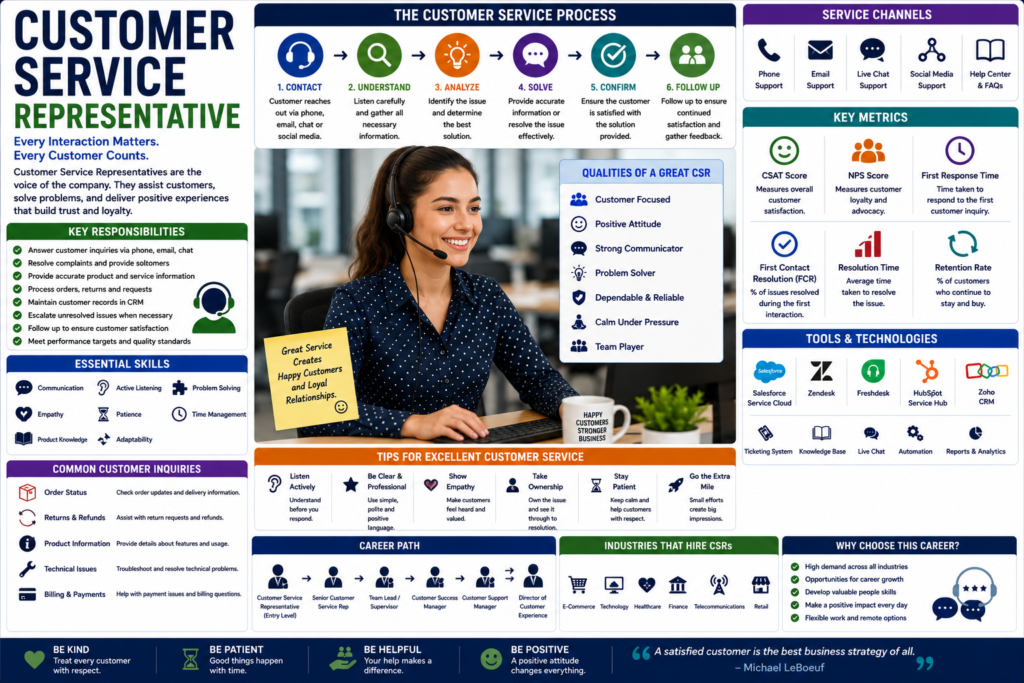
The Customer Service Process
1. Customer Contact
The customer reaches out through phone, email, chat, or social media.
2. Understanding the Issue
Gather information to identify customer needs.
3. Problem Analysis
Determine the cause of the issue.
4. Solution Delivery
Provide guidance, information, or corrective action.
5. Resolution Confirmation
Ensure the customer is satisfied with the outcome.
6. Follow-Up
Maintain customer satisfaction and gather feedback.
Essential Skills for Customer Service Representatives
Communication Skills
Clear and professional communication is essential.
Active Listening
Understanding customer concerns accurately.
Problem Solving
Finding efficient and effective solutions.
Empathy
Demonstrating understanding and care for customer situations.
Patience
Handling challenging interactions professionally.
Time Management
Managing multiple inquiries efficiently.
Adaptability
Responding effectively to changing customer needs.
Customer Service Communication Best Practices
Listen Carefully
Allow customers to explain their concerns fully.
Stay Positive
Maintain a professional and friendly attitude.
Use Clear Language
Avoid confusing terminology and jargon.
Show Empathy
Acknowledge customer frustrations and concerns.
Provide Accurate Information
Ensure responses are correct and helpful.
Follow Through
Deliver on commitments and promises.
CRM Systems and Customer Support Tools
Modern Customer Service Representatives use CRM platforms to manage interactions.
Popular tools include:
- Salesforce Service Cloud
- HubSpot CRM
- Zendesk
- Freshdesk
- Zoho CRM
- Microsoft Dynamics 365
- Intercom
These systems help track:
- Customer information
- Support tickets
- Communication history
- Service requests
- Customer satisfaction metrics
Key Customer Service Metrics
Customer Satisfaction Score (CSAT)
Measures overall customer satisfaction.
Net Promoter Score (NPS)
Evaluates customer loyalty and recommendations.
First Response Time
Measures how quickly support responds.
Resolution Time
Tracks how long it takes to resolve issues.
First Contact Resolution (FCR)
Measures issues resolved during the first interaction.
Customer Retention Rate
Tracks long-term customer loyalty.
Customer Service vs Customer Success
Customer Service
Focuses on resolving customer issues and inquiries.
Customer Success
Focuses on helping customers achieve long-term goals and value.
Both functions are essential for customer retention and satisfaction.
Career Path for Customer Service Representatives
Customer Service Associate
Entry-level support role.
Customer Service Representative
Handles customer inquiries independently.
Senior Customer Service Representative
Supports complex cases and mentors team members.
Customer Service Supervisor
Manages customer support teams.
Customer Success Manager
Focuses on long-term customer relationships.
Customer Support Manager
Leads support operations and performance.
Director of Customer Experience
Develops company-wide customer service strategies.
Industries Hiring Customer Service Representatives
E-Commerce
Supporting online shoppers and order management.
Technology
Providing software and technical support.
Healthcare
Assisting patients and healthcare customers.
Banking and Finance
Managing customer accounts and inquiries.
Telecommunications
Supporting internet, mobile, and communication services.
Retail
Helping customers with products and purchases.
Best Practices for Customer Service Success
Put Customers First
Focus on customer needs and satisfaction.
Stay Organized
Maintain accurate records and follow-up processes.
Continue Learning
Develop product knowledge and support skills.
Remain Professional
Handle difficult situations calmly and respectfully.
Use Technology Effectively
Leverage CRM systems and support tools.
Seek Feedback
Continuously improve service quality.
Future Trends in Customer Service
Artificial Intelligence
AI-powered chatbots assist with routine inquiries.
Omnichannel Support
Customers expect seamless experiences across platforms.
Self-Service Resources
Knowledge bases and FAQs continue growing.
Personalization
Support becomes increasingly tailored to individual customers.
Remote Customer Support
Remote work opportunities continue expanding.
Customer Experience Focus
Organizations increasingly prioritize customer-centric strategies.
Benefits of Becoming a Customer Service Representative
- High demand across industries
- Remote work opportunities
- Valuable communication skills
- Career growth potential
- Transferable professional experience
- Customer-focused work environment
- Opportunities for leadership roles
Conclusion
Customer Service Representatives play a vital role in creating positive customer experiences and supporting business success. Through effective communication, empathy, problem-solving, and professionalism, they help customers overcome challenges and build lasting relationships with organizations.
As businesses continue prioritizing customer experience, skilled Customer Service Representatives will remain highly valuable. Professionals who master communication, technology, and customer relationship management can build rewarding careers while making a meaningful impact on customer satisfaction and business growth.