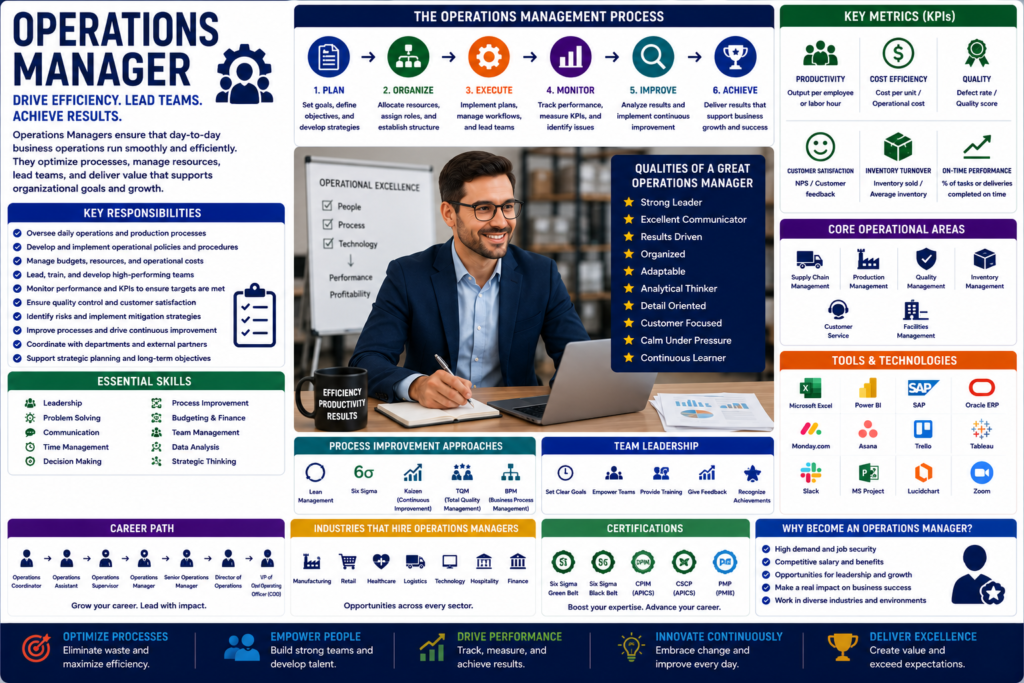
Introduction
Every successful organization relies on efficient processes, productive teams, and streamlined operations to achieve its goals. At the center of these efforts is the Operations Manager, a professional responsible for ensuring that daily business activities run smoothly and efficiently.
Operations Managers play a critical role in improving productivity, reducing costs, optimizing workflows, managing resources, and supporting long-term business growth. They oversee the systems, people, and processes that keep organizations functioning effectively.
As businesses continue facing increased competition, digital transformation, and evolving customer expectations, skilled Operations Managers have become essential across virtually every industry.
This guide explores the role of an Operations Manager, key responsibilities, essential skills, tools, certifications, career paths, and future trends shaping operations management.
What Is an Operations Manager?
An Operations Manager is responsible for planning, coordinating, and overseeing an organization’s daily operations to ensure efficiency, profitability, and continuous improvement.
Their primary goals include:
- Improving operational efficiency
- Managing teams and resources
- Optimizing workflows
- Reducing operational costs
- Maintaining quality standards
- Supporting business growth
- Enhancing customer satisfaction
Operations Managers work closely with leadership teams, department managers, employees, vendors, and customers to ensure business objectives are achieved.
Why Operations Managers Are Important
Improve Efficiency
Operations Managers identify opportunities to streamline processes and eliminate inefficiencies.
Reduce Costs
They help organizations optimize resource utilization and control expenses.
Increase Productivity
Efficient workflows enable teams to achieve better results.
Maintain Quality Standards
Operations leaders ensure products and services meet organizational expectations.
Support Strategic Goals
Strong operations management helps businesses achieve long-term growth objectives.
Key Responsibilities of an Operations Manager
Process Management
Designing and improving operational workflows.
Team Leadership
Managing employees and fostering a productive work environment.
Resource Allocation
Ensuring staff, equipment, and budgets are used effectively.
Performance Monitoring
Tracking operational performance and KPIs.
Quality Control
Maintaining product and service standards.
Budget Management
Managing operational expenses and financial performance.
Strategic Planning
Supporting business initiatives and organizational growth.
Core Areas of Operations Management
Workforce Management
Managing staffing, scheduling, and productivity.
Supply Chain Operations
Coordinating suppliers, inventory, and logistics.
Customer Service Operations
Ensuring customer satisfaction and service quality.
Financial Operations
Monitoring costs, budgets, and profitability.
Technology Operations
Supporting systems and digital transformation initiatives.
Risk Management
Identifying and mitigating operational risks.
The Operations Management Process
1. Planning
Establishing operational goals and strategies.
2. Organizing
Allocating resources and assigning responsibilities.
3. Executing
Implementing plans and managing daily operations.
4. Monitoring
Tracking performance and identifying issues.
5. Improving
Continuously optimizing processes and outcomes.
Essential Skills for Operations Managers
Leadership
Guiding teams and driving performance.
Communication
Ensuring clear communication across departments.
Problem Solving
Identifying challenges and implementing solutions.
Strategic Thinking
Aligning operations with business objectives.
Time Management
Balancing multiple priorities effectively.
Financial Management
Understanding budgets, forecasting, and cost control.
Analytical Thinking
Using data to improve decision-making.
Process Improvement
One of the most important responsibilities of an Operations Manager is continuous improvement.
Common goals include:
- Eliminating waste
- Reducing delays
- Improving quality
- Increasing productivity
- Lowering operational costs
- Enhancing customer satisfaction
Continuous improvement helps organizations remain competitive and adaptable.
Supply Chain and Logistics Management
Many Operations Managers oversee supply chain activities.
Responsibilities may include:
- Vendor management
- Inventory control
- Procurement
- Distribution
- Logistics planning
- Demand forecasting
Efficient supply chain operations directly impact profitability and customer satisfaction.
Team Leadership and Employee Management
Operations Managers often supervise multiple teams.
Leadership responsibilities include:
- Performance evaluations
- Employee development
- Training programs
- Conflict resolution
- Motivation and engagement
- Workforce planning
Strong leadership contributes to a positive workplace culture and improved productivity.
Key Performance Indicators (KPIs)
Operations Managers monitor metrics such as:
Productivity Rate
Measures workforce efficiency.
Cost Per Unit
Tracks production or service delivery costs.
Customer Satisfaction
Evaluates service quality and customer experience.
Inventory Turnover
Measures inventory management effectiveness.
Employee Retention
Tracks workforce stability.
Operational Efficiency
Assesses overall performance improvements.
Profit Margins
Measures financial success.
Operations Management Methodologies
Lean Management
Focuses on eliminating waste and maximizing value.
Six Sigma
Improves quality through data-driven process optimization.
Kaizen
Promotes continuous incremental improvement.
Total Quality Management (TQM)
Focuses on organization-wide quality improvement.
Agile Operations
Supports flexibility and adaptability in changing environments.
Popular Operations Management Tools
Microsoft Excel
Data analysis and reporting.
Power BI
Business intelligence and performance dashboards.
SAP
Enterprise resource planning (ERP) platform.
Oracle ERP
Business operations management system.
Monday.com
Workflow and operations management.
Asana
Task and project management.
Trello
Workflow organization and collaboration.
Tableau
Data visualization and analytics.
Operations Manager vs Project Manager
Operations Manager
Focuses on ongoing business activities and operational efficiency.
Project Manager
Focuses on temporary projects with defined objectives and timelines.
Operations Managers oversee continuous processes, while Project Managers oversee specific initiatives.
Operations Manager vs Business Analyst
Operations Manager
Implements and manages operational processes.
Business Analyst
Analyzes business needs and recommends improvements.
Both roles often collaborate on process optimization initiatives.
Industries Hiring Operations Managers
Manufacturing
Managing production and supply chain operations.
Healthcare
Overseeing healthcare services and administrative operations.
Retail
Managing store operations and customer service.
Logistics and Transportation
Coordinating supply chain and distribution activities.
Technology
Supporting operational excellence and growth initiatives.
Hospitality
Managing hotels, restaurants, and service operations.
Financial Services
Improving operational efficiency and compliance.
Certifications for Operations Managers
Certified Manager (CM)
Leadership and management certification.
Six Sigma Certifications
Process improvement expertise.
Lean Management Certifications
Operational efficiency methodologies.
PMP (Project Management Professional)
Project management and leadership skills.
APICS Certifications
Supply chain and operations expertise.
Certified Supply Chain Professional (CSCP)
Advanced logistics and operations knowledge.
Career Path for Operations Managers
Operations Coordinator
Entry-level operational support role.
Operations Supervisor
Leads teams and manages daily activities.
Operations Manager
Oversees business operations and performance.
Senior Operations Manager
Manages larger departments and strategic initiatives.
Director of Operations
Leads organization-wide operational strategies.
Vice President of Operations
Oversees multiple business units.
Chief Operating Officer (COO)
Executive responsible for company-wide operations.
Best Practices for Operations Management
Focus on Continuous Improvement
Always seek opportunities to improve efficiency.
Use Data to Guide Decisions
Track performance and identify trends.
Invest in Employees
Develop talent and leadership capabilities.
Improve Communication
Ensure alignment across teams and departments.
Embrace Technology
Leverage automation and analytics tools.
Prioritize Customer Satisfaction
Operational excellence should support customer success.
Future Trends in Operations Management
Artificial Intelligence
AI improves forecasting, planning, and decision-making.
Automation
Organizations automate repetitive operational tasks.
Data-Driven Operations
Analytics become central to operational strategies.
Remote Workforce Management
Operations leaders increasingly manage distributed teams.
Sustainability Initiatives
Organizations prioritize environmentally responsible operations.
Digital Transformation
Technology continues reshaping operational processes.
Benefits of Becoming an Operations Manager
- High demand across industries
- Strong leadership opportunities
- Competitive salaries
- Strategic business influence
- Diverse career paths
- Continuous learning and development
- Executive leadership potential
Conclusion
Operations Managers play a critical role in ensuring organizations operate efficiently, profitably, and effectively. By combining leadership, analytical thinking, process improvement, and strategic planning, they help businesses achieve operational excellence and sustainable growth.
As organizations continue adapting to changing markets and technological advancements, skilled Operations Managers will remain highly valuable. Professionals who master operational strategy, team leadership, process optimization, and data-driven decision-making can build rewarding careers while driving meaningful business success.