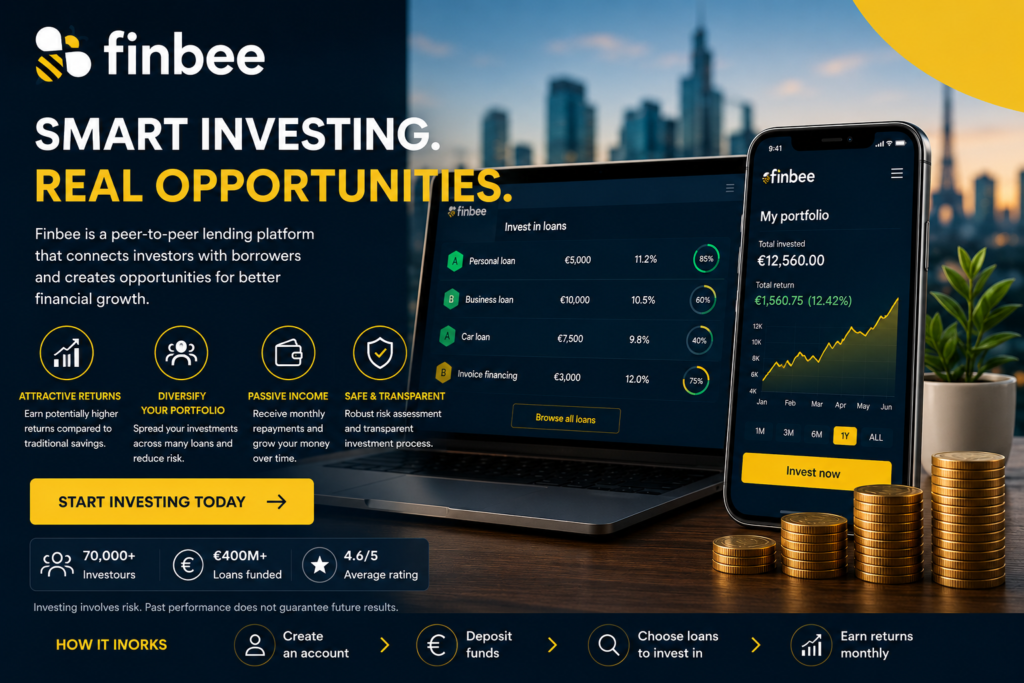
The investment landscape has changed significantly in recent years. Traditional savings accounts and fixed-income products often provide limited returns, encouraging investors to explore alternative opportunities. One investment sector that has gained considerable attention is peer-to-peer (P2P) lending.
Among Lithuania’s well-known platforms, Finbee has established itself as a recognized participant in the P2P lending market. The platform allows investors to fund loans directly while borrowers gain access to financing alternatives outside traditional banking systems.
This article explores how Finbee works, its features, advantages, risks, and investment considerations.
What Is Finbee?
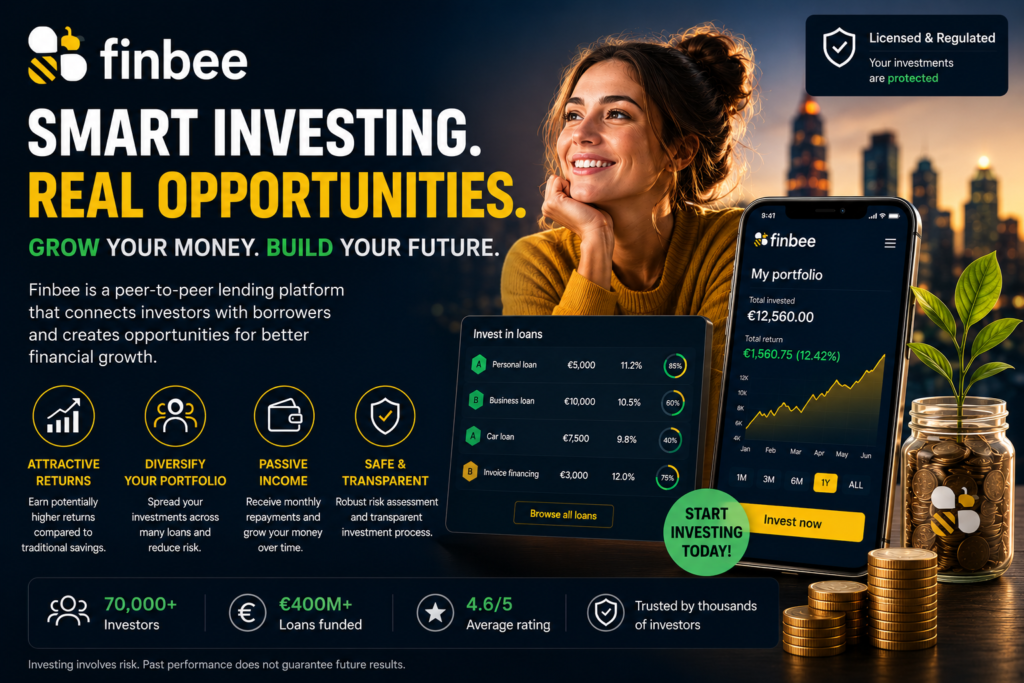
Finbee is a Lithuanian peer-to-peer lending platform that connects borrowers and investors through an online marketplace.
Instead of banks acting as the sole intermediary, Finbee enables investors to lend money to individuals or businesses and potentially earn returns from borrower repayments and interest.
The platform functions as a digital ecosystem where both parties benefit:
- Borrowers gain access to financing solutions
- Investors can potentially generate returns
- The lending process becomes more transparent and efficient
P2P lending has become increasingly attractive because it creates opportunities outside traditional financial institutions.
How Does Finbee Work?
The investment process on Finbee generally follows several steps:
Step 1: Registration and Account Verification
Users create an account and complete identity verification procedures. Security and regulatory requirements help maintain platform integrity.
Step 2: Funding the Investment Account
After account verification, investors deposit funds into their accounts and prepare capital for investment opportunities.
Step 3: Choosing Investment Opportunities
Investors can typically select loans according to various criteria:
- Loan amount
- Risk level
- Credit rating
- Interest rate
- Loan duration
Some investors prefer manual selection, while others may use automated investment tools to streamline portfolio management.
Step 4: Loan Funding
Instead of financing an entire loan individually, investors can allocate smaller amounts across many loans.
For example:
- €20 in one loan
- €20 in another loan
- Repeated across dozens or hundreds of borrowers
This approach supports diversification and risk management.
Step 5: Receiving Returns
Borrowers make scheduled monthly payments consisting of:
- Principal repayment
- Interest payment
Investors receive these payments directly into their accounts.
Key Benefits of Finbee
Potential for Attractive Returns
One major reason investors consider P2P lending is the possibility of earning returns that may exceed traditional savings products.
Return levels can vary based on:
- Loan risk category
- Borrower profile
- Market conditions
- Portfolio strategy
Higher expected returns often involve increased risk.
Diversification Opportunities
Diversification remains one of the fundamental principles of investing.
Many investors combine multiple asset classes such as:
- Stocks
- ETFs
- Bonds
- Real estate
- P2P loans
Including P2P lending may help reduce dependence on a single investment type.
Passive Income Potential
Finbee may appeal to investors seeking recurring income streams.
Monthly borrower repayments can generate:
- Interest income
- Regular cash flow
- Reinvestment opportunities
Over time, reinvesting returns may contribute to compounding effects.
Accessibility for Investors
One attractive aspect of P2P platforms is accessibility.
Unlike certain traditional investments that may require significant capital, P2P platforms frequently allow investors to begin with smaller amounts.
This lower entry barrier can make investing available to a broader audience.
Risks of Investing Through Finbee
Every investment carries risk, and understanding these risks is essential.
Borrower Default Risk
Borrowers may fail to repay loans according to agreed schedules.
Possible outcomes include:
- Delayed payments
- Partial recovery
- Financial losses
Although credit evaluation systems attempt to minimize risks, defaults cannot be entirely eliminated.
Liquidity Risk
P2P investments differ from publicly traded assets.
Investors should understand:
- Loans can have longer durations
- Immediate withdrawal options may be limited
- Selling investments early can be difficult
Economic and Market Risks
Economic conditions may influence repayment performance.
Factors such as:
- Inflation
- Interest rate changes
- Unemployment
- Economic slowdowns
can affect borrowers and overall portfolio performance.
Platform Risk
Investors should also consider risks associated with the platform itself:
- Technology issues
- Regulatory changes
- Operational risks
Platform stability is an important factor when evaluating any investment service.
Strategies for Smarter Finbee Investing
Diversify Across Many Loans
Diversification can help reduce exposure to individual borrower risk.
For example:
Instead of investing €1,000 in one borrower:
- Invest €25 across 40 loans
This may reduce the impact of individual defaults.
Reinvest Returns
Reinvesting interest and repayments can support long-term portfolio growth.
Compounding may increase overall returns over extended periods.
Invest Based on Risk Tolerance
Different investors have different goals.
Some prioritize:
- Growth potential
- Higher returns
Others focus on:
- Stability
- Lower risk exposure
Investments should align with personal financial goals and risk tolerance.
Is Finbee Suitable for Beginners?
Finbee may be suitable for beginners because of its accessible structure and relatively straightforward investment process.
However, beginners should still:
- Start with smaller investments
- Learn platform mechanics
- Diversify broadly
- Monitor portfolio performance
- Avoid investing emergency funds
Building knowledge before committing larger amounts is important.
Final Thoughts
Finbee represents one of the growing alternatives within modern investing and peer-to-peer lending. The platform gives investors access to opportunities outside traditional banking systems while allowing borrowers to secure financing through a digital marketplace.
Like all investments, potential rewards come together with risks. Investors should carefully evaluate financial objectives, understand how the platform operates, and build strategies based on diversification and long-term planning.
For investors seeking alternative ways to grow their money and diversify portfolios, Finbee may be worth exploring as part of a broader investment strategy.
Investing involves risk. Past performance does not guarantee future results.