Introduction
Illustration is one of the most powerful forms of visual communication. From books, advertisements, websites, video games, and product packaging to social media content and animations, illustrations help communicate ideas, tell stories, and inspire audiences worldwide.
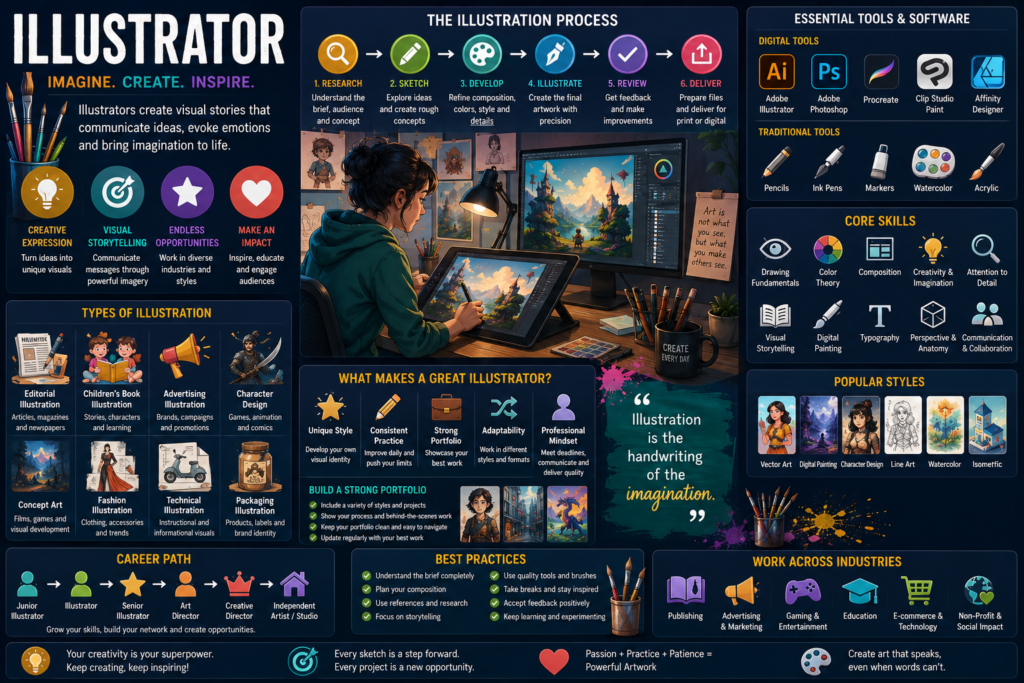
An Illustrator combines creativity, artistic skill, and visual storytelling to create original artwork that informs, entertains, and engages viewers. As digital media continues to grow, illustrators are finding new opportunities across industries such as publishing, marketing, entertainment, education, gaming, and technology.
This guide explores the role of an Illustrator, essential skills, tools, workflows, career opportunities, and future trends shaping the illustration industry.
What Is an Illustrator?
An Illustrator is a creative professional who creates visual artwork to communicate concepts, stories, messages, or ideas.
Illustrators produce original artwork for various mediums, including:
- Books and magazines
- Advertising campaigns
- Product packaging
- Websites and mobile apps
- Social media content
- Video games
- Animation projects
- Educational materials
Their work helps audiences understand information, connect emotionally with brands, and experience compelling visual narratives.
Why Illustration Matters
Enhances Storytelling
Illustrations help communicate stories visually and emotionally.
Strengthens Branding
Unique illustrations create memorable brand identities.
Improves Communication
Visual content often explains complex concepts more effectively than text.
Increases Engagement
Illustrated content captures attention and improves audience interaction.
Supports Creativity
Illustration brings imagination and ideas to life.
Types of Illustration
Editorial Illustration
Artwork created for newspapers, magazines, and online publications.
Book Illustration
Visuals designed for:
- Children’s books
- Educational materials
- Novels
- Graphic novels
Advertising Illustration
Custom artwork used in marketing campaigns and promotional materials.
Character Design
Creating characters for games, animations, comics, and brands.
Concept Art
Visual development for films, games, and entertainment projects.
Fashion Illustration
Artwork focused on clothing, accessories, and fashion concepts.
Technical Illustration
Detailed visuals used to explain products, systems, or processes.
Medical Illustration
Scientific and educational illustrations related to healthcare and biology.
The Illustration Process
1. Research and Discovery
Understanding project requirements, audience, and objectives.
2. Concept Development
Generating ideas and exploring creative directions.
3. Sketching
Creating rough drafts and visual concepts.
4. Refinement
Selecting and improving the strongest ideas.
5. Final Artwork Creation
Producing polished illustrations using traditional or digital techniques.
6. Review and Revisions
Gathering feedback and making improvements.
7. Delivery
Preparing files for print, web, publishing, or production.
Essential Skills for Illustrators
Drawing Fundamentals
Strong understanding of:
- Anatomy
- Perspective
- Composition
- Shape language
- Form and structure
Color Theory
Using color effectively to communicate mood and meaning.
Creativity
Developing original visual concepts and solutions.
Visual Storytelling
Communicating messages through imagery.
Attention to Detail
Creating professional-quality artwork.
Communication
Working effectively with clients, publishers, and creative teams.
Popular Illustration Software
Adobe Illustrator
Industry-leading vector illustration software.
Features include:
- Vector drawing
- Logo design
- Scalable graphics
- Professional print preparation
Adobe Photoshop
Widely used for digital painting and raster artwork.
Procreate
Popular among digital artists using tablets.
Clip Studio Paint
Excellent for comics, manga, and illustration work.
CorelDRAW
Professional vector illustration platform.
Affinity Designer
Powerful alternative for digital illustration and design.
Traditional vs Digital Illustration
Traditional Illustration
Uses physical materials such as:
- Pencils
- Ink
- Watercolors
- Acrylic paints
- Markers
Digital Illustration
Uses tablets and software for creating artwork.
Benefits include:
- Faster revisions
- Flexible workflows
- Easier file sharing
- Unlimited experimentation
Many modern illustrators combine both approaches.
Illustration in Modern Industries
Publishing
Books, magazines, and educational content.
Marketing and Advertising
Campaign visuals and brand storytelling.
Gaming
Character design, environments, and concept art.
Animation
Storyboards, character concepts, and production artwork.
Technology
Website graphics, app illustrations, and digital experiences.
Education
Visual learning materials and instructional content.
Building a Successful Illustration Portfolio
A strong portfolio should include:
- Best work only
- Diverse projects
- Personal style examples
- Professional presentation
- Clear project descriptions
A portfolio often plays a larger role than formal qualifications when seeking illustration work.
Freelancing as an Illustrator
Many illustrators choose freelance careers.
Benefits include:
- Flexible schedules
- Creative freedom
- Global clients
- Diverse projects
Successful freelancers focus on:
- Personal branding
- Networking
- Client communication
- Time management
- Business development
Career Path for Illustrators
Junior Illustrator
Develops foundational skills and professional experience.
Illustrator
Creates artwork independently across projects.
Senior Illustrator
Leads creative projects and mentors others.
Art Director
Oversees visual direction and creative teams.
Creative Director
Defines creative strategy and brand vision.
Independent Studio Owner
Builds and manages a creative illustration business.
Best Practices for Illustrators
- Practice consistently
- Develop a unique style
- Study design fundamentals
- Build a professional portfolio
- Stay updated with industry trends
- Accept constructive feedback
- Learn business and marketing skills
- Network with creative professionals
Future Trends in Illustration
AI-Assisted Workflows
Artists increasingly use AI tools to enhance productivity and ideation.
Digital-First Content
Demand for illustrations in digital products continues growing.
Interactive Illustrations
Websites and apps increasingly feature animated and interactive artwork.
NFT and Digital Collectibles
New opportunities continue emerging in digital ownership and art markets.
Motion Illustration
Combining illustration with animation is becoming increasingly valuable.
Benefits of Becoming an Illustrator
- Creative freedom
- Flexible career paths
- Remote work opportunities
- Freelance potential
- Diverse industries
- Continuous artistic growth
- Global client opportunities
Conclusion
Illustrators play a vital role in modern visual communication. Through creativity, storytelling, and artistic expertise, they transform ideas into compelling visuals that inform, entertain, and inspire audiences.
As digital media, gaming, publishing, and online content continue expanding, skilled Illustrators will remain highly valuable across industries. By mastering drawing fundamentals, digital tools, and visual storytelling techniques, aspiring illustrators can build rewarding careers and leave a lasting impact through their art.