Introduction
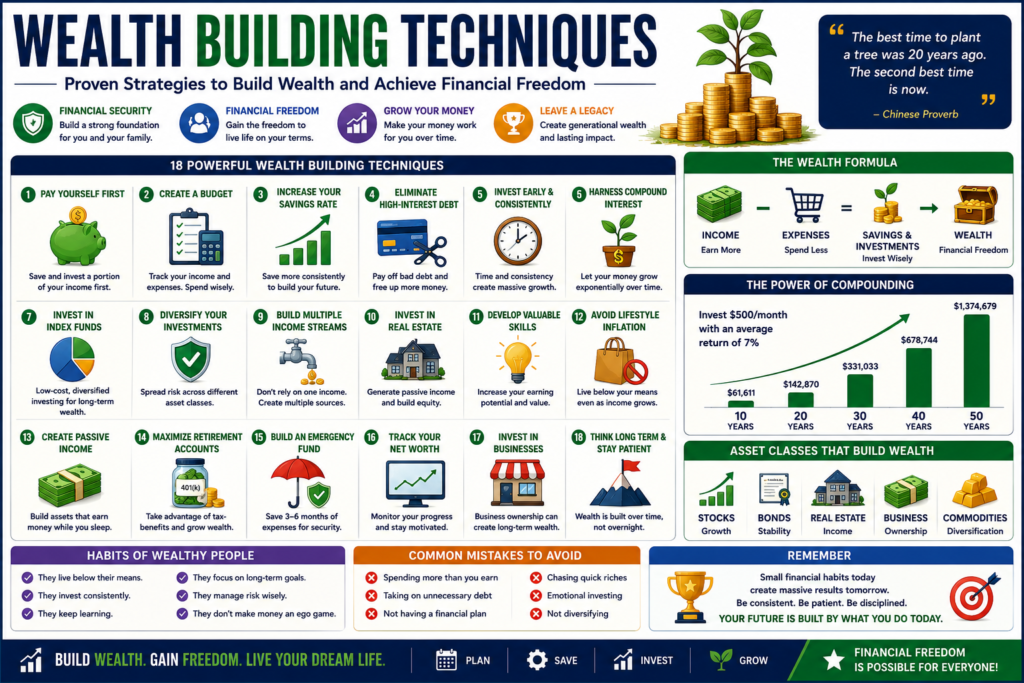
Building wealth is not about getting rich overnight—it’s about making smart financial decisions consistently over time. Wealth building involves creating assets, increasing income, managing expenses, investing wisely, and developing habits that support long-term financial growth.
Many people believe wealth is reserved for high-income earners, but the truth is that anyone can build wealth through discipline, planning, and strategic financial management. Whether your goal is financial independence, early retirement, passive income, or simply greater financial security, understanding wealth building techniques can help you achieve lasting success.
This comprehensive guide explores the most effective strategies for growing your net worth and creating a financially secure future.
What Is Wealth Building?
Wealth building is the process of accumulating assets that increase your net worth over time.
Wealth includes:
- Investments
- Real estate
- Savings
- Business ownership
- Retirement accounts
- Income-producing assets
Unlike income, which is earned through work, wealth continues to grow and generate opportunities even when you’re not actively working.
Why Wealth Building Matters
Building wealth provides numerous advantages:
Financial Security
A strong financial foundation helps protect against unexpected challenges.
Financial Freedom
Wealth provides flexibility and greater control over life decisions.
Passive Income
Assets can generate income without requiring active work.
Legacy Creation
Wealth can support future generations and charitable goals.
1. Pay Yourself First
One of the most effective wealth-building habits is paying yourself first.
Before spending money:
- Allocate a percentage to savings
- Contribute to investments
- Fund retirement accounts
Treating savings as a mandatory expense ensures consistent wealth accumulation.
2. Create and Follow a Budget
Budgeting is the foundation of financial success.
A budget helps:
- Control spending
- Increase savings
- Identify wasteful expenses
- Support financial goals
Popular budgeting methods include:
50/30/20 Rule
- 50% Needs
- 30% Wants
- 20% Savings and Investments
Consistent budgeting creates surplus cash for wealth building.
3. Increase Your Savings Rate
Your savings rate directly impacts your ability to build wealth.
Ways to increase savings:
- Reduce unnecessary expenses
- Avoid lifestyle inflation
- Automate transfers
- Save raises and bonuses
Higher savings rates accelerate financial growth.
4. Eliminate High-Interest Debt
Debt can significantly slow wealth accumulation.
Prioritize paying off:
- Credit cards
- Personal loans
- Payday loans
Reducing debt frees more money for investing and asset building.
5. Invest Early and Consistently
Investing is one of the most powerful wealth-building tools available.
Benefits include:
- Compound growth
- Inflation protection
- Long-term appreciation
The earlier you begin investing, the more time your money has to grow.
6. Harness the Power of Compound Interest
Compound growth allows earnings to generate additional earnings over time.
Key factors include:
- Time
- Consistency
- Reinvestment
Small investments made consistently can grow into substantial wealth over decades.
7. Invest in Index Funds
Index funds are popular among successful long-term investors.
Advantages include:
- Low fees
- Diversification
- Simplicity
- Strong historical performance
Many investors use index funds as the core of their wealth-building strategy.
8. Diversify Your Investments
Diversification helps reduce risk.
A diversified portfolio may include:
- Stocks
- Bonds
- Real estate
- International investments
- Cash reserves
Diversification improves portfolio stability and long-term growth potential.
9. Build Multiple Income Streams
Relying on a single income source increases financial vulnerability.
Additional income streams may include:
- Dividend investments
- Rental properties
- Side businesses
- Freelancing
- Royalties
- Affiliate marketing
Multiple income sources can accelerate wealth creation.
10. Invest in Real Estate
Real estate has long been a proven wealth-building asset.
Benefits include:
- Rental income
- Property appreciation
- Tax advantages
- Portfolio diversification
Many wealthy individuals include real estate in their investment strategy.
11. Develop Valuable Skills
Your earning potential is one of your greatest assets.
Invest in:
- Professional certifications
- Technical skills
- Leadership development
- Business knowledge
Increasing income often leads to greater wealth-building opportunities.
12. Avoid Lifestyle Inflation
As income increases, many people increase spending proportionally.
Instead:
- Maintain your lifestyle
- Increase investments
- Save bonuses
- Build assets
Controlling lifestyle inflation dramatically improves wealth accumulation.
13. Create Passive Income Streams
Passive income generates money with minimal ongoing effort.
Examples include:
- Dividend stocks
- Rental properties
- Digital products
- Online courses
- Royalties
Passive income supports long-term financial independence.
14. Maximize Retirement Contributions
Retirement accounts provide powerful wealth-building opportunities.
Benefits include:
- Tax advantages
- Long-term growth
- Compound returns
Consistent retirement contributions can significantly increase net worth.
15. Build an Emergency Fund
Unexpected expenses can disrupt wealth-building plans.
Maintain:
- Three to six months of living expenses
- Easily accessible cash reserves
Emergency savings protect investments from premature withdrawals.
16. Track Your Net Worth
Net worth measures financial progress.
Formula:
Net Worth = Assets − Liabilities
Regular tracking helps:
- Monitor growth
- Identify weaknesses
- Stay motivated
Successful wealth builders often review net worth quarterly or annually.
17. Invest in Businesses
Business ownership can provide substantial wealth-building opportunities.
Benefits include:
- Scalability
- Higher income potential
- Equity growth
Businesses can become valuable long-term assets.
18. Focus on Long-Term Thinking
Wealth is rarely built quickly.
Successful investors focus on:
- Decades rather than months
- Consistency over perfection
- Long-term value creation
Patience is often one of the most profitable financial skills.
Common Wealth-Building Mistakes
Avoid these common errors:
Not Investing
Saving alone may not keep pace with inflation.
Excessive Debt
Debt reduces available capital for investing.
Emotional Investing
Fear and greed often lead to poor financial decisions.
Chasing Quick Riches
Sustainable wealth is typically built gradually.
Lack of Financial Education
Continuous learning improves decision-making and investment outcomes.
Habits of Wealthy Individuals
Many wealthy individuals share similar habits:
- They live below their means.
- They invest consistently.
- They continue learning.
- They focus on long-term goals.
- They create multiple income streams.
- They manage risk effectively.
- They maintain financial discipline.
These habits support sustainable wealth growth.
The Wealth-Building Mindset
Successful wealth creation begins with the right mindset.
Focus on:
- Delayed gratification
- Long-term planning
- Consistency
- Continuous improvement
Financial success is often the result of thousands of small, smart decisions made over time.
Conclusion
Building wealth is a journey that requires discipline, patience, and strategic action. By saving consistently, investing wisely, reducing debt, creating multiple income streams, and focusing on long-term growth, you can steadily increase your net worth and achieve financial independence.
Remember that wealth building is not about earning the highest income—it’s about effectively managing and growing the resources you already have. Start today, stay committed to your goals, and allow time and compound growth to work in your favor.