Introduction
Web development is one of the most in-demand and rapidly growing fields in technology. Every business, organization, and entrepreneur needs a strong online presence, creating a constant demand for skilled web developers who can build professional websites and powerful web applications.
From simple business websites to complex social media platforms and e-commerce systems, web development powers much of the modern internet. Whether you’re interested in becoming a professional developer, starting a tech business, or simply understanding how websites work, learning web development can open countless opportunities.
This comprehensive guide explores web development fundamentals, technologies, tools, career paths, and best practices for creating successful websites and applications.
What Is Web Development?
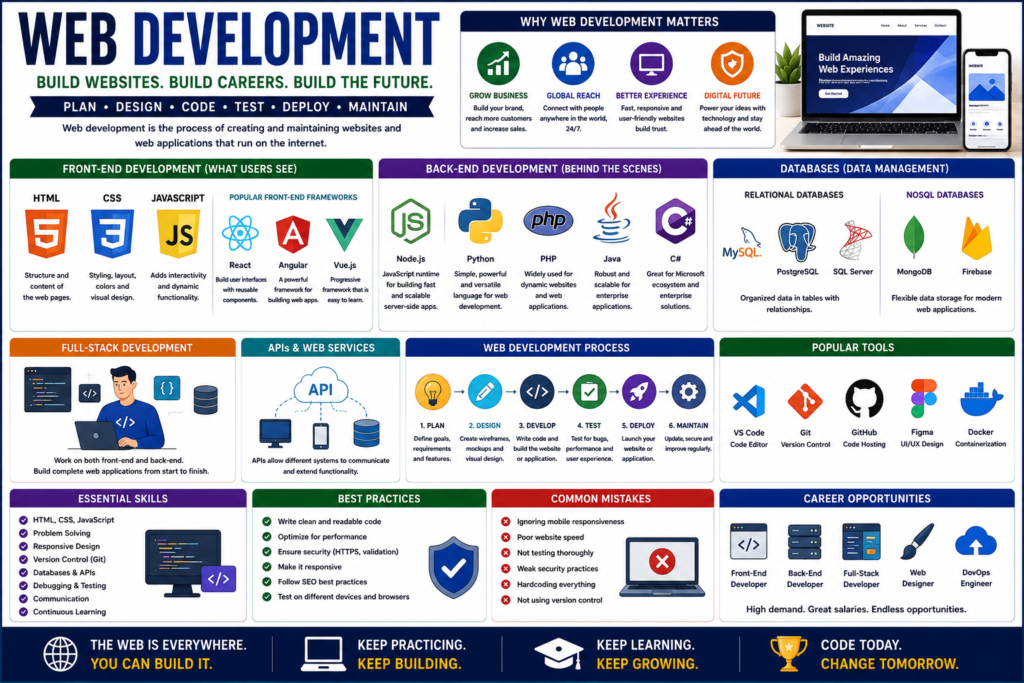
Web development is the process of creating, building, and maintaining websites and web applications.
Web development includes:
- Website design implementation
- Front-end development
- Back-end development
- Database management
- Web application development
- Website maintenance
- Performance optimization
Developers use programming languages, frameworks, and tools to create interactive digital experiences accessible through web browsers.
Why Web Development Matters
Web development plays a critical role in modern business and communication.
Supports Business Growth
A professional website helps businesses attract customers and generate revenue.
Improves Accessibility
Web applications provide information and services worldwide.
Enhances User Experience
Well-developed websites create seamless and enjoyable interactions.
Drives Digital Transformation
Organizations increasingly rely on web-based solutions to improve operations and customer engagement.
Front-End Development
Front-end development focuses on the visual and interactive parts of a website.
Everything users see and interact with is created by front-end developers.
Core Front-End Technologies
HTML
HTML (HyperText Markup Language) provides the structure of web pages.
HTML elements include:
- Headings
- Paragraphs
- Images
- Links
- Forms
- Tables
CSS
CSS (Cascading Style Sheets) controls visual presentation.
CSS manages:
- Colors
- Layouts
- Fonts
- Spacing
- Animations
JavaScript
JavaScript adds interactivity and functionality.
Examples include:
- Interactive forms
- Dynamic content
- Animations
- User interactions
Together, HTML, CSS, and JavaScript form the foundation of front-end development.
Responsive Web Design
Modern websites must function across various devices.
Responsive design ensures compatibility with:
- Smartphones
- Tablets
- Laptops
- Desktop computers
Benefits include:
- Better user experience
- Improved SEO
- Increased accessibility
Responsive design has become a standard requirement for modern websites.
Front-End Frameworks
Frameworks accelerate development and improve efficiency.
Popular front-end frameworks include:
React
Benefits:
- Component-based architecture
- High performance
- Large ecosystem
Angular
Benefits:
- Enterprise-level features
- Strong structure
- Scalability
Vue.js
Benefits:
- Simplicity
- Flexibility
- Easy learning curve
These frameworks help developers create modern user interfaces efficiently.
Back-End Development
Back-end development powers the server-side functionality of websites and applications.
Back-end developers manage:
- Databases
- Servers
- APIs
- Authentication
- Business logic
Popular Back-End Languages
JavaScript (Node.js)
Node.js allows JavaScript to run on servers.
Benefits:
- Full-stack JavaScript development
- High performance
- Large community support
Python
Popular for:
- Web development
- Data analysis
- Automation
Common framework:
- Django
PHP
Widely used for:
- Content management systems
- Dynamic websites
Java
Common in:
- Enterprise applications
- Large-scale systems
C#
Frequently used with:
- Microsoft technologies
- Enterprise solutions
Databases
Databases store and organize information.
Examples include:
Relational Databases
- MySQL
- PostgreSQL
- Microsoft SQL Server
NoSQL Databases
- MongoDB
- Firebase
Databases allow websites to manage users, products, orders, and other data efficiently.
Full-Stack Development
Full-stack developers work on both front-end and back-end systems.
Skills typically include:
- HTML
- CSS
- JavaScript
- Databases
- APIs
- Server management
Full-stack developers can build complete applications from start to finish.
APIs and Web Services
APIs (Application Programming Interfaces) allow systems to communicate with each other.
Examples include:
- Payment processing
- Social media integration
- Mapping services
- Weather applications
APIs expand website functionality and improve user experiences.
Version Control
Version control helps developers manage code changes.
Git
Git allows developers to:
- Track changes
- Collaborate with teams
- Restore previous versions
GitHub
GitHub provides:
- Code hosting
- Collaboration tools
- Project management features
Version control is essential for professional development workflows.
Web Development Process
Step 1: Planning
Define:
- Goals
- Features
- Target audience
- Technical requirements
Step 2: Design
Create:
- Wireframes
- Mockups
- User interface concepts
Step 3: Development
Build front-end and back-end functionality.
Step 4: Testing
Evaluate:
- Performance
- Security
- Functionality
- User experience
Step 5: Deployment
Launch the website or application.
Step 6: Maintenance
Provide updates, bug fixes, and improvements.
Web Development Best Practices
Prioritize User Experience
Design websites that are intuitive and easy to navigate.
Optimize Performance
Fast-loading websites improve engagement and SEO.
Focus on Security
Implement:
- HTTPS
- Secure authentication
- Input validation
Write Clean Code
Maintain:
- Readability
- Organization
- Scalability
Ensure Accessibility
Create websites usable by all visitors, including those with disabilities.
Common Web Development Mistakes
Avoid these common errors:
Poor Mobile Optimization
Mobile compatibility is essential.
Slow Loading Speeds
Performance issues reduce user satisfaction.
Weak Security Measures
Security vulnerabilities can lead to serious problems.
Lack of Testing
Testing identifies issues before launch.
Ignoring SEO
Search optimization improves visibility and traffic.
Career Opportunities in Web Development
Popular roles include:
- Front-End Developer
- Back-End Developer
- Full-Stack Developer
- Web Designer
- UI Developer
- Software Engineer
- DevOps Engineer
The demand for skilled developers continues to grow worldwide.
Future Trends in Web Development
Emerging technologies include:
- Artificial Intelligence Integration
- Progressive Web Apps (PWAs)
- Serverless Architecture
- Web3 Applications
- Low-Code Platforms
- Voice Interfaces
- Advanced Cybersecurity Solutions
Developers who stay current with trends remain highly competitive.
Essential Skills for Web Developers
Successful developers often possess:
- Problem-solving abilities
- Programming knowledge
- Communication skills
- Analytical thinking
- Continuous learning mindset
- Collaboration skills
Technology evolves rapidly, making lifelong learning essential.
Conclusion
Web development is a dynamic and rewarding field that combines creativity, problem-solving, and technical expertise. By learning front-end technologies, back-end systems, databases, APIs, and modern development practices, you can build powerful websites and applications that serve users worldwide.
Whether you’re pursuing a career in technology, launching your own business, or developing personal projects, web development provides valuable skills and endless opportunities for growth and innovation.
The internet continues to expand, and skilled web developers remain at the center of the digital world, creating the experiences that shape how people connect, learn, shop, and communicate online.