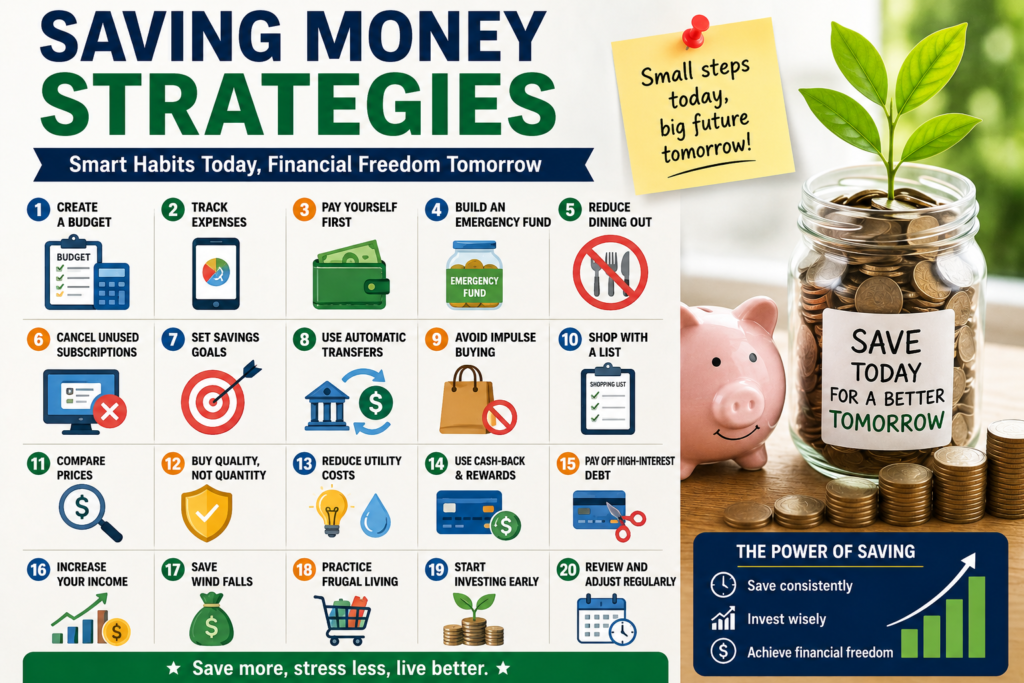
Saving money is one of the most important habits for achieving financial stability and long-term wealth. Whether you’re saving for an emergency fund, a dream vacation, a home purchase, retirement, or simply looking to improve your financial health, developing effective saving money strategies can help you reach your goals faster.
Many people believe saving money requires earning a high income. However, successful saving is often more about smart financial habits than how much you earn. By making intentional decisions and adopting practical money-saving techniques, anyone can improve their financial future.
Why Saving Money Is Important
Saving money provides financial security and flexibility. It helps you prepare for unexpected expenses and creates opportunities for future growth.
Benefits of saving money include:
- Reduced financial stress
- Emergency preparedness
- Greater financial independence
- Ability to achieve life goals
- Improved retirement readiness
- Protection against economic uncertainty
- Increased investment opportunities
Even small savings can accumulate into significant amounts over time.
1. Create a Budget
A budget is the foundation of every successful savings plan.
A budget helps you:
- Track income
- Monitor expenses
- Identify wasteful spending
- Allocate money toward savings goals
The 50/30/20 Rule
A simple budgeting strategy is:
- 50% Needs
- 30% Wants
- 20% Savings and Debt Repayment
Following a structured budget makes saving money much easier.
2. Pay Yourself First
One of the most effective saving strategies is paying yourself before paying discretionary expenses.
When you receive income:
- Transfer a percentage directly into savings.
- Treat savings like a mandatory bill.
- Spend what’s left after saving.
Automating savings removes the temptation to spend money unnecessarily.
3. Build an Emergency Fund
An emergency fund protects you from unexpected financial setbacks.
Common emergencies include:
- Medical expenses
- Vehicle repairs
- Job loss
- Home repairs
- Family emergencies
Financial experts typically recommend saving three to six months of living expenses.
4. Track Every Expense
Many people underestimate their spending habits.
Tracking expenses helps identify:
- Unnecessary subscriptions
- Frequent impulse purchases
- Dining-out expenses
- Convenience spending
Small expenses often have the greatest impact on savings potential.
5. Reduce Dining Out
Restaurant meals and takeout can significantly impact monthly budgets.
Money-saving alternatives include:
- Meal planning
- Cooking at home
- Preparing lunches
- Buying groceries in bulk
Reducing restaurant spending can save hundreds or even thousands of dollars annually.
6. Eliminate Unused Subscriptions
Many households pay for services they rarely use.
Review monthly subscriptions such as:
- Streaming services
- Gym memberships
- Software subscriptions
- Mobile apps
Canceling unused services can create immediate savings.
7. Set Specific Savings Goals
Clear goals increase motivation and accountability.
Examples include:
Short-Term Goals
- Emergency fund
- Vacation savings
- Holiday spending
Medium-Term Goals
- Car purchase
- Home down payment
- Business startup
Long-Term Goals
- Retirement
- Education funding
- Financial independence
Specific goals make saving more purposeful.
8. Use Automatic Savings Transfers
Automation is one of the most powerful financial tools available.
Benefits include:
- Consistency
- Reduced temptation
- Faster goal achievement
- Improved financial discipline
Scheduling automatic transfers ensures savings happen regularly.
9. Avoid Impulse Purchases
Impulse buying can quickly destroy a savings plan.
Before making non-essential purchases:
- Wait 24–48 hours
- Compare alternatives
- Evaluate necessity
- Review financial goals
Often, the desire to purchase fades after a short waiting period.
10. Shop with a List
Shopping without a list increases unnecessary spending.
Benefits of shopping lists include:
- Reduced impulse purchases
- Better meal planning
- Lower grocery costs
- More efficient shopping trips
Planning purchases beforehand saves both money and time.
11. Compare Prices Before Buying
Never assume the first price is the best price.
Compare:
- Retailers
- Online stores
- Seasonal sales
- Discount programs
Even small price differences can result in substantial annual savings.
12. Buy Quality Over Quantity
Cheap products often require frequent replacement.
Investing in quality items may:
- Last longer
- Perform better
- Reduce replacement costs
Long-term value often outweighs lower initial prices.
13. Reduce Utility Costs
Utility expenses are recurring monthly costs.
Ways to reduce them include:
- Turning off unused lights
- Using energy-efficient appliances
- Adjusting thermostat settings
- Fixing water leaks
- Unplugging electronics
Lower utility bills create ongoing savings.
14. Use Cash-Back and Reward Programs
Strategic use of rewards can reduce expenses.
Examples include:
- Cash-back credit cards
- Store loyalty programs
- Cashback shopping apps
- Travel rewards
Always avoid overspending simply to earn rewards.
15. Pay Off High-Interest Debt
Interest payments reduce your ability to save.
Focus on:
- Credit card balances
- Personal loans
- High-interest financing
Eliminating debt frees up more income for savings and investments.
16. Increase Your Income
While reducing expenses is important, increasing income can dramatically accelerate savings.
Potential options:
- Freelancing
- Side businesses
- Consulting
- Part-time work
- Selling unused items
Additional income creates greater savings opportunities.
17. Save Windfalls
Unexpected money should be used strategically.
Examples include:
- Tax refunds
- Bonuses
- Inheritance
- Gifts
- Performance incentives
Consider saving a large percentage of unexpected income.
18. Practice Frugal Living
Frugality focuses on maximizing value rather than eliminating enjoyment.
Examples include:
- Buying used items
- Using public transportation
- Borrowing instead of buying
- Repairing items when possible
Frugal habits can significantly improve financial outcomes.
19. Start Investing Early
Saving protects money, while investing helps it grow.
Investment options may include:
- Index funds
- ETFs
- Retirement accounts
- Bonds
- Real estate investments
Early investing allows compound growth to work over longer periods.
20. Review Financial Progress Monthly
Regular financial reviews help maintain momentum.
Track:
- Savings growth
- Budget performance
- Expense trends
- Goal progress
Monthly reviews help identify areas for improvement and celebrate milestones.
Common Saving Mistakes to Avoid
Avoid these frequent financial mistakes:
- Not having a budget
- Ignoring small expenses
- Carrying high-interest debt
- Failing to automate savings
- Spending windfalls immediately
- Setting unrealistic savings goals
- Delaying investing
Avoiding these mistakes can dramatically improve your financial future.
Best Saving Habits for Long-Term Success
Successful savers typically:
- Live below their means
- Save consistently
- Avoid unnecessary debt
- Invest regularly
- Track spending
- Set clear financial goals
- Continuously improve financial literacy
These habits compound over time and create lasting financial security.
Conclusion
Saving money is not about deprivation—it’s about making intentional financial decisions that align with your goals and priorities. By creating a budget, tracking expenses, eliminating wasteful spending, automating savings, reducing debt, and investing wisely, you can build a strong financial foundation and achieve greater financial freedom.
Remember that successful saving is a journey. Small, consistent actions taken today can lead to significant financial rewards in the future. Start implementing these saving money strategies now, and you’ll be well on your way to a more secure and prosperous financial future.