Introduction
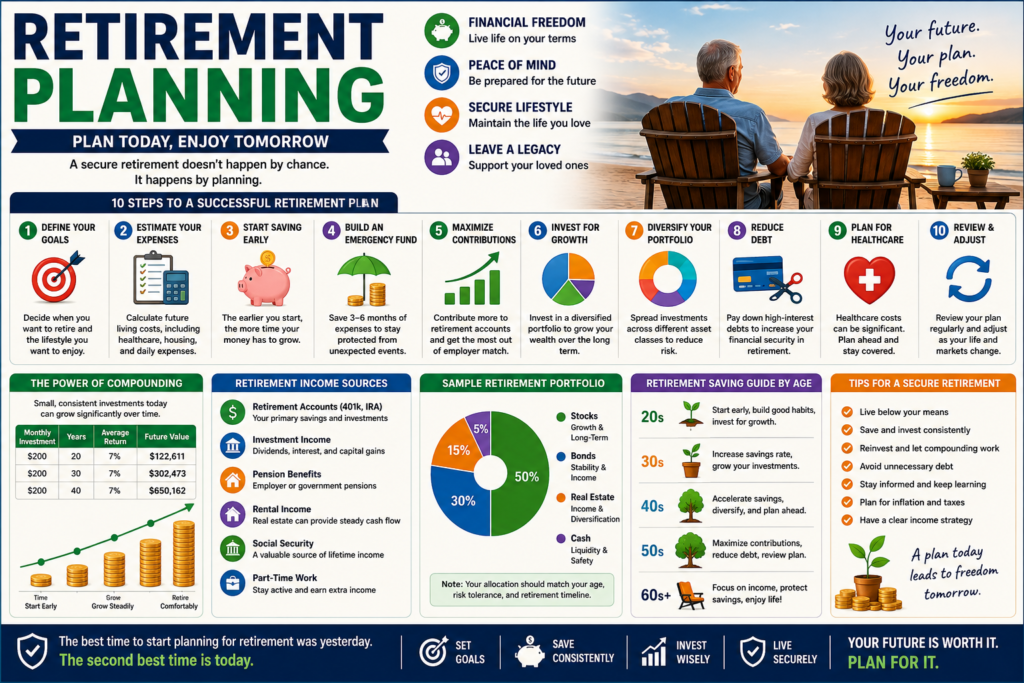
Retirement planning is one of the most important financial goals you’ll ever pursue. A well-structured retirement plan helps ensure you can maintain your desired lifestyle, cover healthcare expenses, and enjoy financial independence during your retirement years.
Many people delay retirement planning because it feels distant or overwhelming. However, the earlier you start, the easier it becomes to build a substantial retirement fund through the power of compound growth.
Whether you’re just beginning your career or approaching retirement age, understanding retirement planning strategies can help you create a secure and comfortable future.
What Is Retirement Planning?
Retirement planning is the process of preparing financially for life after full-time employment.
It involves:
- Setting retirement goals
- Estimating future expenses
- Building retirement savings
- Investing for long-term growth
- Managing retirement risks
- Creating income streams for retirement
The goal is to ensure your savings and investments can support your lifestyle throughout retirement.
Why Retirement Planning Matters
Retirement planning provides several important benefits:
Financial Independence
A strong retirement plan reduces dependence on family members or government assistance.
Lifestyle Security
Planning helps maintain your preferred standard of living after retirement.
Healthcare Preparedness
Medical expenses often increase with age, making financial preparation essential.
Peace of Mind
Knowing you’re financially prepared can reduce stress and uncertainty about the future.
Step 1: Define Your Retirement Goals
Every retirement plan should begin with clear objectives.
Consider:
- Desired retirement age
- Preferred lifestyle
- Travel plans
- Housing needs
- Healthcare expectations
- Family support responsibilities
The more specific your goals, the more effective your retirement strategy will be.
Step 2: Estimate Retirement Expenses
Understanding future expenses helps determine how much money you’ll need.
Common retirement costs include:
Housing
- Mortgage payments
- Property taxes
- Maintenance
- Utilities
Healthcare
- Insurance premiums
- Medications
- Medical treatments
- Long-term care
Daily Living Expenses
- Food
- Transportation
- Entertainment
- Travel
Many financial experts estimate retirees need approximately 70%–90% of their pre-retirement income annually.
Step 3: Start Saving Early
Time is one of the most valuable assets in retirement planning.
Benefits of starting early:
- Greater compound growth
- Lower monthly contribution requirements
- Increased flexibility
- Larger retirement balances
Even small monthly contributions can grow substantially over several decades.
Step 4: Build an Emergency Fund
Before focusing heavily on retirement investing, establish an emergency fund.
Financial experts typically recommend:
- Three to six months of living expenses
- Easily accessible savings
- Protection against unexpected events
This prevents retirement investments from being withdrawn prematurely.
Step 5: Maximize Retirement Contributions
Consistent contributions are critical for retirement success.
Strategies include:
- Increasing contributions annually
- Contributing after salary raises
- Automating retirement deposits
- Taking advantage of employer matching programs
Small increases over time can significantly impact retirement wealth.
Step 6: Invest for Long-Term Growth
Retirement investing focuses on long-term wealth accumulation.
Popular investment options include:
Stocks
Benefits:
- High growth potential
- Inflation protection
Risks:
- Market volatility
Bonds
Benefits:
- Lower risk
- Income generation
Risks:
- Lower long-term returns
Index Funds
Benefits:
- Diversification
- Low fees
- Simplicity
Many retirement portfolios use index funds as a core investment.
Exchange-Traded Funds (ETFs)
Benefits:
- Flexibility
- Diversification
- Cost efficiency
Step 7: Diversify Your Retirement Portfolio
Diversification reduces investment risk.
A diversified retirement portfolio may include:
- Domestic stocks
- International stocks
- Bonds
- Real estate investments
- Cash reserves
Diversification helps protect against market fluctuations and economic uncertainty.
Step 8: Understand the Power of Compound Growth
Compound growth allows investment earnings to generate additional earnings over time.
Key factors include:
- Time
- Consistency
- Reinvestment
The longer investments remain invested, the greater the potential growth.
Step 9: Reduce Debt Before Retirement
Entering retirement with significant debt can strain finances.
Prioritize paying off:
- Credit cards
- Personal loans
- Auto loans
- High-interest debt
Reducing debt improves cash flow and financial flexibility during retirement.
Step 10: Plan for Healthcare Costs
Healthcare is often one of the largest retirement expenses.
Potential costs include:
- Insurance premiums
- Prescription medications
- Specialist care
- Long-term care services
Including healthcare expenses in retirement planning is essential.
Common Retirement Planning Mistakes
Avoid these common errors:
Starting Too Late
Delaying retirement savings reduces the benefits of compound growth.
Underestimating Expenses
Many retirees spend more than expected, particularly on healthcare and leisure activities.
Insufficient Diversification
Overconcentration increases investment risk.
Withdrawing Funds Early
Early withdrawals can reduce long-term retirement security.
Ignoring Inflation
Inflation gradually reduces purchasing power over time.
Retirement Planning by Age
In Your 20s
Focus on:
- Building savings habits
- Starting investments early
- Taking advantage of compound growth
In Your 30s
Prioritize:
- Increasing contributions
- Expanding investments
- Reducing debt
In Your 40s
Focus on:
- Accelerating retirement savings
- Reviewing investment allocations
- Refining retirement goals
In Your 50s
Emphasize:
- Maximizing retirement contributions
- Reducing financial risks
- Finalizing retirement strategies
In Your 60s
Prepare for:
- Retirement income planning
- Portfolio adjustments
- Healthcare planning
Retirement Income Sources
Successful retirees often rely on multiple income streams.
Potential sources include:
- Retirement accounts
- Investment portfolios
- Pension benefits
- Rental income
- Dividend income
- Part-time work
- Government retirement benefits
Diversified income sources provide greater financial stability.
Building a Retirement Mindset
Retirement planning is not just about money—it’s also about long-term discipline.
Successful retirement savers typically:
- Live below their means
- Save consistently
- Invest regularly
- Avoid emotional investing
- Review plans annually
- Adapt to changing circumstances
These habits contribute significantly to retirement success.
Conclusion
Retirement planning is one of the most important financial responsibilities you will ever undertake. The earlier you begin, the more opportunities you’ll have to build wealth, reduce financial stress, and create the retirement lifestyle you envision.
By setting clear goals, saving consistently, investing wisely, diversifying your portfolio, and planning for future expenses, you can build a secure financial foundation that supports you throughout retirement.
Remember that retirement planning is a lifelong journey. Small actions taken today can lead to a more comfortable, secure, and financially independent future tomorrow.