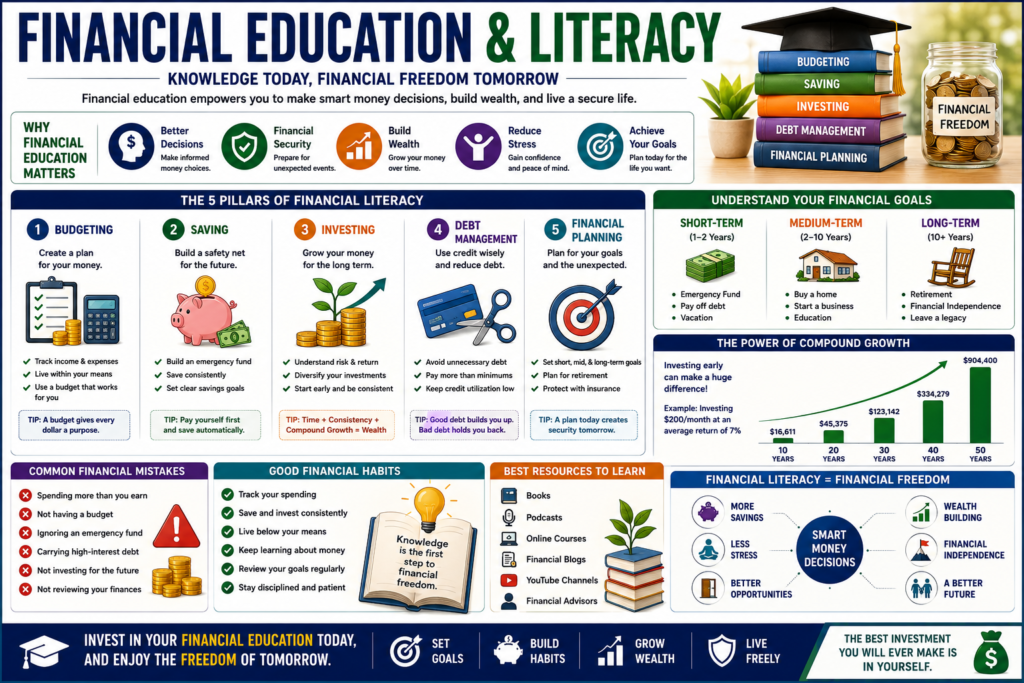
Introduction
Financial education and literacy are among the most valuable life skills a person can develop. Understanding how money works empowers individuals to make informed financial decisions, avoid costly mistakes, build wealth, and achieve long-term financial security.
Despite its importance, financial literacy is often overlooked in traditional education systems. As a result, many people enter adulthood without a clear understanding of budgeting, saving, investing, credit management, or retirement planning.
The good news is that financial literacy can be learned at any age. Whether you’re just beginning your financial journey or looking to improve your money management skills, developing financial knowledge can dramatically improve your financial future.
This comprehensive guide explores the key components of financial education and literacy, providing practical strategies for building financial confidence and success.
What Is Financial Literacy?
Financial literacy is the ability to understand and effectively use various financial skills and concepts.
These skills include:
- Budgeting
- Saving
- Investing
- Debt management
- Credit management
- Financial planning
- Retirement planning
- Risk management
Financially literate individuals can make informed decisions that support their long-term goals.
Why Financial Education Matters
Financial education helps people:
Make Better Financial Decisions
Understanding financial concepts improves decision-making regarding spending, saving, and investing.
Reduce Financial Stress
Knowledge creates confidence and reduces uncertainty about money matters.
Build Wealth
Financial literacy supports effective investing and long-term wealth accumulation.
Avoid Costly Mistakes
Education helps individuals avoid excessive debt, scams, and poor financial choices.
Achieve Financial Independence
Financially educated individuals are often better prepared to reach financial freedom.
The Core Areas of Financial Literacy
1. Budgeting
Budgeting is the foundation of financial success.
A budget helps:
- Track income
- Monitor expenses
- Control spending
- Increase savings
Popular budgeting methods include:
The 50/30/20 Rule
- 50% Needs
- 30% Wants
- 20% Savings and Investments
Effective budgeting provides a roadmap for financial success.
2. Saving Money
Saving is essential for financial security.
Key savings goals include:
- Emergency funds
- Major purchases
- Education expenses
- Retirement planning
Successful savers typically automate contributions and prioritize consistent saving habits.
3. Investing
Investing allows money to grow through compound returns.
Common investments include:
- Stocks
- Bonds
- ETFs
- Mutual Funds
- Real Estate
Understanding investment fundamentals helps individuals build long-term wealth.
4. Debt Management
Responsible debt management is a critical financial skill.
Important concepts include:
- Interest rates
- Credit utilization
- Repayment strategies
- Debt reduction methods
Managing debt effectively improves financial health and flexibility.
5. Credit Education
Credit affects many aspects of financial life.
A strong credit profile can help:
- Secure loans
- Obtain lower interest rates
- Rent housing
- Access financial opportunities
Financial literacy includes understanding:
- Credit scores
- Credit reports
- Responsible borrowing
Understanding Financial Goals
Financial education encourages goal-oriented planning.
Short-Term Goals
Examples:
- Emergency fund
- Vacation savings
- Debt repayment
Medium-Term Goals
Examples:
- Home purchase
- Vehicle purchase
- Business startup
Long-Term Goals
Examples:
- Retirement
- Financial independence
- Wealth creation
Clear goals help guide financial decisions.
The Importance of Emergency Funds
Emergency savings provide protection against unexpected financial challenges.
Examples include:
- Job loss
- Medical expenses
- Car repairs
- Home maintenance
Financial experts generally recommend saving three to six months of living expenses.
Emergency funds reduce reliance on debt during difficult times.
Understanding Compound Growth
One of the most powerful financial concepts is compound growth.
Benefits include:
- Exponential wealth accumulation
- Long-term investment growth
- Retirement fund expansion
The earlier individuals begin saving and investing, the more time compound growth has to work.
Financial Literacy and Investing
Investing knowledge helps individuals:
- Understand risk
- Diversify portfolios
- Avoid emotional decisions
- Build wealth systematically
Important investing principles include:
- Diversification
- Long-term thinking
- Consistent investing
- Risk management
Financial literacy reduces investment mistakes and improves outcomes.
Risk Management and Insurance
Financial education also includes protecting wealth.
Common insurance types include:
- Health insurance
- Auto insurance
- Home insurance
- Life insurance
- Disability insurance
Proper insurance coverage helps reduce financial risk.
Retirement Planning Basics
Retirement planning is a key component of financial literacy.
Important concepts include:
- Retirement accounts
- Investment growth
- Income replacement
- Withdrawal strategies
Starting early provides significant long-term advantages.
Common Financial Mistakes
Financial education helps people avoid common errors such as:
Living Beyond Their Means
Spending more than earned often leads to debt.
Ignoring Savings
Delaying savings can reduce future financial opportunities.
Lack of Budgeting
Without a budget, managing money becomes difficult.
Emotional Spending
Impulse purchases can undermine financial goals.
Ignoring Retirement Planning
Delaying retirement contributions can significantly impact future security.
Building Financial Literacy Habits
Developing strong financial habits is essential.
Successful individuals often:
- Track expenses
- Maintain budgets
- Save consistently
- Invest regularly
- Review financial goals
- Continue learning
These habits contribute to long-term financial success.
Financial Literacy for Different Life Stages
Students
Focus on:
- Budgeting
- Saving
- Responsible credit use
Young Professionals
Prioritize:
- Emergency funds
- Retirement investing
- Debt management
Families
Focus on:
- Household budgeting
- Insurance planning
- Education savings
Pre-Retirees
Emphasize:
- Retirement planning
- Wealth preservation
- Income strategies
Financial literacy evolves throughout life.
Best Resources for Financial Education
Individuals can improve financial knowledge through:
- Books
- Financial blogs
- Podcasts
- Online courses
- Financial advisors
- Educational videos
Continuous learning supports better financial decision-making.
Benefits of Financial Literacy
Strong financial education can lead to:
- Better money management
- Increased savings
- Improved investment outcomes
- Reduced debt
- Greater financial confidence
- Long-term wealth creation
- Financial independence
These benefits extend throughout every stage of life.
Conclusion
Financial education and literacy are essential foundations for long-term financial success. By learning how to budget, save, invest, manage debt, plan for retirement, and protect assets, individuals can make smarter financial decisions and build a more secure future.
Financial literacy is not about becoming a financial expert overnight. It is about continuously improving your understanding of money and applying that knowledge to everyday decisions. Small improvements in financial knowledge can lead to significant improvements in financial outcomes over time.
Invest in your financial education today, and you’ll gain skills that can benefit you for a lifetime.