Introduction
Content writing has become one of the most valuable skills in the digital age. Businesses, bloggers, marketers, and entrepreneurs rely on high-quality content to attract audiences, build trust, improve search engine rankings, and generate sales.
Whether you’re writing blog posts, website pages, product descriptions, social media content, or email campaigns, effective content writing combines creativity, strategy, and audience understanding.
In today’s competitive online landscape, simply writing isn’t enough. Successful content must provide value, engage readers, and be optimized for search engines. This guide explores everything you need to know about content writing, from the fundamentals to advanced SEO strategies.
What Is Content Writing?
Content writing is the process of creating written material for digital or print platforms with the purpose of informing, educating, entertaining, or persuading an audience.
Common forms of content writing include:
- Blog articles
- Website content
- Landing pages
- Product descriptions
- Social media posts
- Email newsletters
- Case studies
- E-books
- White papers
- Press releases
The primary goal is to deliver valuable information while achieving specific business or marketing objectives.
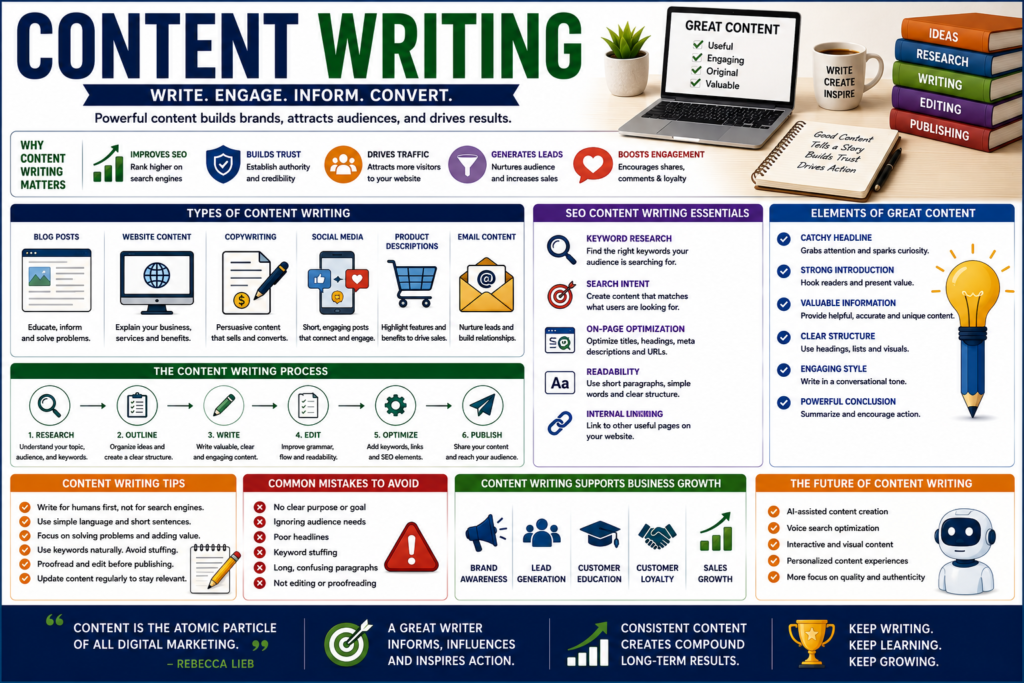
Why Content Writing Matters
Quality content plays a critical role in digital success.
Improves Search Engine Rankings
Search engines reward websites that consistently publish valuable, relevant content.
Builds Brand Authority
Educational and informative content positions businesses as trusted industry experts.
Increases Website Traffic
Well-optimized content attracts organic visitors through search engines.
Generates Leads and Sales
Strategic content can guide readers through the customer journey and encourage conversions.
Enhances Audience Engagement
Useful content encourages readers to spend more time interacting with your brand.
Types of Content Writing
Blog Writing
Blog posts are one of the most popular content formats.
Benefits include:
- SEO improvement
- Audience education
- Traffic generation
- Brand awareness
Website Content
Website pages explain:
- Company information
- Products
- Services
- Benefits
- Contact details
Clear website content improves user experience and conversions.
Copywriting
Copywriting focuses on persuasion and sales.
Examples include:
- Landing pages
- Advertisements
- Sales pages
- Email campaigns
Social Media Content
Social media writing requires:
- Brevity
- Engagement
- Strong calls-to-action
Technical Writing
Technical content explains complex topics in a clear and understandable way.
Examples include:
- Software documentation
- User manuals
- Tutorials
Understanding Your Audience
Effective content begins with audience research.
Ask:
- Who is reading?
- What problems do they face?
- What information are they seeking?
- What solutions can you provide?
Understanding your audience helps create content that resonates and delivers value.
The Importance of SEO Content Writing
SEO (Search Engine Optimization) helps content rank higher in search results.
Key SEO elements include:
Keyword Research
Identify relevant keywords your audience searches for.
Examples:
- Primary keywords
- Secondary keywords
- Long-tail keywords
Search Intent
Understand why users are searching.
Types include:
- Informational
- Navigational
- Transactional
- Commercial
On-Page Optimization
Optimize:
- Titles
- Headings
- Meta descriptions
- URLs
- Internal links
Readability
Content should be:
- Easy to scan
- Well-structured
- User-friendly
Essential Elements of Great Content
Compelling Headlines
Your headline determines whether readers click.
Strong headlines often:
- Solve problems
- Promise benefits
- Create curiosity
- Include keywords
Strong Introductions
The introduction should:
- Capture attention
- Address reader needs
- Explain the article’s value
Clear Structure
Use:
- Headings
- Subheadings
- Bullet points
- Numbered lists
Good structure improves readability and SEO performance.
Valuable Information
Every piece of content should answer questions and provide practical value.
Strong Conclusions
Summarize key points and encourage action.
Content Writing Process
Step 1: Research
Gather information from:
- Industry sources
- Competitor content
- Customer questions
- Keyword research tools
Step 2: Create an Outline
An outline helps organize ideas logically.
Step 3: Write the First Draft
Focus on:
- Clarity
- Flow
- Completeness
Avoid perfection during the first draft.
Step 4: Edit and Improve
Review:
- Grammar
- Structure
- Readability
- Accuracy
Step 5: Optimize for SEO
Add:
- Keywords naturally
- Internal links
- Meta descriptions
- Optimized headings
Best Content Writing Tips
Write for Humans First
Always prioritize readers over search engines.
Use Simple Language
Clear communication improves engagement.
Focus on Benefits
Explain how information helps the reader.
Avoid Keyword Stuffing
Keywords should appear naturally.
Support Claims with Facts
Accurate information builds credibility.
Keep Paragraphs Short
Short paragraphs improve readability on mobile devices.
Include Calls-to-Action
Guide readers toward the next step.
Examples:
- Subscribe
- Contact us
- Download a guide
- Purchase a product
Common Content Writing Mistakes
Avoid these common errors:
Writing Without a Purpose
Every article should have a clear objective.
Ignoring SEO
Quality content should also be discoverable.
Weak Headlines
Poor headlines reduce click-through rates.
Excessive Jargon
Complex language can confuse readers.
Lack of Editing
Proofreading improves professionalism and credibility.
Focusing Only on Search Engines
Content should serve readers first.
Content Writing for Business Growth
Content can support:
- Brand awareness
- Lead generation
- Customer education
- Customer retention
- Sales growth
A strong content strategy creates long-term marketing value.
Future of Content Writing
Emerging trends include:
- AI-assisted content creation
- Voice search optimization
- Interactive content
- Personalized experiences
- Video and multimedia integration
Writers who adapt to evolving trends will remain highly valuable.
Skills Every Content Writer Should Develop
Successful content writers typically possess:
- Research skills
- SEO knowledge
- Editing ability
- Storytelling techniques
- Audience understanding
- Marketing awareness
Continuous learning helps writers remain competitive.
Conclusion
Content writing is more than creating words on a page. It is the art and science of delivering valuable information that attracts, engages, and converts audiences. By understanding your readers, applying SEO best practices, creating clear and useful content, and maintaining consistency, you can build a strong online presence and achieve meaningful results.
Whether you’re a blogger, marketer, business owner, or aspiring writer, mastering content writing can open doors to greater visibility, stronger brand authority, and long-term success in the digital world.