Introduction
Social media has transformed the way businesses communicate with customers, build brand awareness, and generate revenue. With billions of active users across platforms such as Facebook, Instagram, LinkedIn, TikTok, X (Twitter), Pinterest, and YouTube, social media has become one of the most powerful marketing channels available.
However, simply creating social media accounts is not enough. Effective social media management requires strategy, consistency, creativity, audience engagement, and data-driven decision-making.
Whether you’re a business owner, entrepreneur, marketer, freelancer, or aspiring social media manager, understanding social media management can help you grow your audience, strengthen your brand, and achieve measurable results.
What Is Social Media Management?
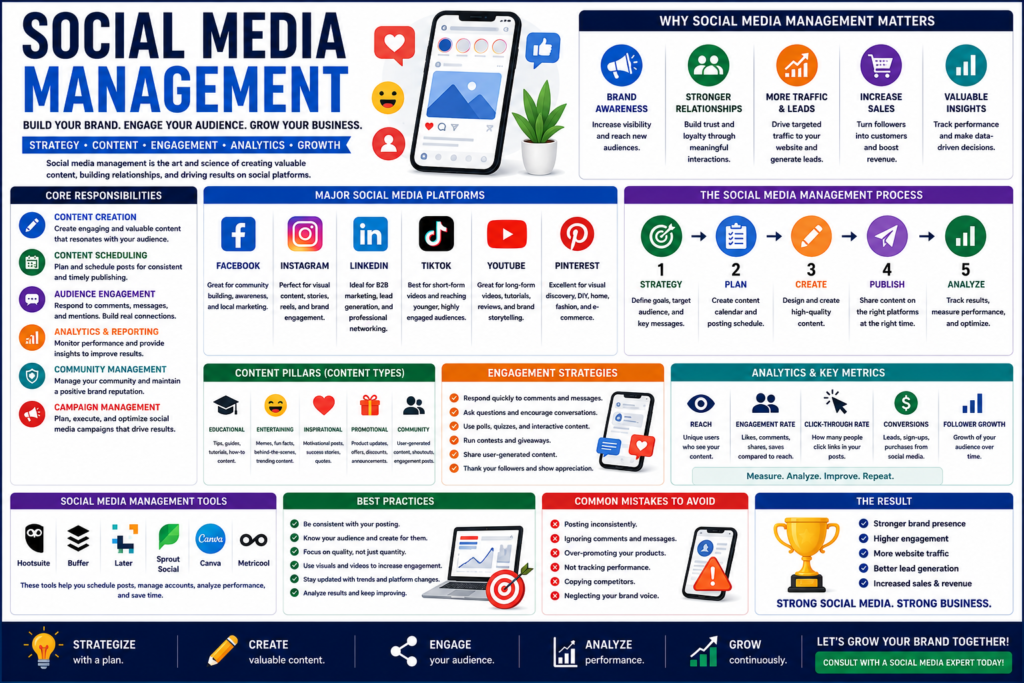
Social media management is the process of creating, publishing, monitoring, analyzing, and optimizing content across social media platforms.
It involves:
- Content creation
- Content scheduling
- Community management
- Audience engagement
- Performance tracking
- Brand monitoring
- Campaign management
The goal is to build meaningful relationships with audiences while supporting business objectives.
Why Social Media Management Matters
Increases Brand Awareness
Social media exposes businesses to larger audiences and improves visibility.
Builds Customer Relationships
Direct communication strengthens customer trust and loyalty.
Drives Website Traffic
Strategic content encourages users to visit websites and landing pages.
Generates Leads and Sales
Social media can support every stage of the customer journey.
Provides Valuable Insights
Analytics reveal customer behavior and preferences.
Major Social Media Platforms
Best for:
- Community building
- Advertising
- Local businesses
- Brand awareness
Ideal for:
- Visual content
- Influencer marketing
- Product promotion
- Lifestyle brands
Excellent for:
- B2B marketing
- Professional networking
- Thought leadership
TikTok
Perfect for:
- Short-form video content
- Viral marketing
- Younger audiences
YouTube
Useful for:
- Educational content
- Tutorials
- Product demonstrations
- Long-form video marketing
Popular for:
- Visual discovery
- E-commerce
- DIY and lifestyle content
Core Responsibilities of a Social Media Manager
Content Creation
Creating engaging content such as:
- Images
- Videos
- Stories
- Reels
- Carousels
- Infographics
Content Scheduling
Publishing content consistently using scheduling tools.
Audience Engagement
Responding to:
- Comments
- Messages
- Reviews
- Mentions
Analytics Monitoring
Tracking performance metrics and optimizing campaigns.
Brand Reputation Management
Monitoring conversations and maintaining a positive brand image.
Developing a Social Media Strategy
A successful strategy begins with clear goals.
Common objectives include:
Brand Awareness
Increase visibility and reach.
Lead Generation
Attract potential customers.
Website Traffic
Drive visitors to company websites.
Customer Engagement
Encourage interactions and community growth.
Sales Growth
Generate revenue through social media campaigns.
Understanding Your Target Audience
Effective social media marketing requires audience research.
Identify:
- Age groups
- Interests
- Demographics
- Pain points
- Online behaviors
Understanding audience preferences improves content relevance and engagement.
Creating High-Quality Social Media Content
Educational Content
Examples:
- Tutorials
- Tips
- Industry insights
Entertaining Content
Examples:
- Memes
- Behind-the-scenes videos
- Trending content
Inspirational Content
Examples:
- Success stories
- Motivational posts
- Customer achievements
Promotional Content
Examples:
- Product launches
- Discounts
- Special offers
A balanced content mix typically performs best.
Building a Content Calendar
A content calendar helps maintain consistency.
Benefits include:
- Better planning
- Consistent posting
- Improved organization
- Reduced stress
Content calendars often include:
- Post topics
- Publishing dates
- Platforms
- Campaign goals
Social Media Engagement Strategies
Respond Quickly
Timely responses improve customer satisfaction.
Ask Questions
Questions encourage comments and discussions.
Use Polls and Surveys
Interactive content increases engagement.
Encourage User-Generated Content
Customer-created content builds trust and authenticity.
Join Conversations
Participating in relevant discussions increases visibility.
Social Media Analytics and Metrics
Successful management requires measuring performance.
Important metrics include:
Reach
Number of unique users who see content.
Impressions
Total content views.
Engagement Rate
Measures:
- Likes
- Comments
- Shares
- Saves
Click-Through Rate (CTR)
Tracks traffic generated from social content.
Conversion Rate
Measures desired actions such as purchases or sign-ups.
Analytics help identify what works and what needs improvement.
Social Media Advertising
Paid advertising can accelerate growth.
Popular ad formats include:
Image Ads
Simple and visually appealing.
Video Ads
Often generate higher engagement.
Carousel Ads
Showcase multiple products or features.
Lead Generation Ads
Collect customer information directly within platforms.
Advertising complements organic growth strategies.
Social Media Management Tools
Common tools include:
Content Scheduling Tools
Help automate posting and content planning.
Design Tools
Assist with creating graphics and videos.
Analytics Platforms
Track campaign performance and audience behavior.
Social Listening Tools
Monitor brand mentions and conversations.
Automation improves efficiency and consistency.
Common Social Media Management Mistakes
Avoid these common errors:
Inconsistent Posting
Irregular activity reduces audience engagement.
Ignoring Analytics
Data helps optimize future performance.
Over-Promotion
Constant selling can drive followers away.
Poor Audience Engagement
Ignoring comments and messages damages relationships.
Copying Competitors
Original content creates stronger brand identity.
Best Practices for Social Media Success
Post Consistently
Consistency builds audience trust.
Prioritize Quality
Focus on valuable and engaging content.
Use Visual Content
Images and videos typically perform better than text-only posts.
Monitor Trends
Stay informed about platform updates and industry changes.
Test and Optimize
Experiment with formats, posting times, and content types.
Social Media and Brand Building
Strong social media management helps establish:
- Brand identity
- Authority
- Trust
- Community
- Customer loyalty
A recognizable and consistent brand presence improves long-term business success.
Future Trends in Social Media Management
Emerging trends include:
- Artificial Intelligence content tools
- Short-form video growth
- Social commerce
- Creator partnerships
- Personalized content
- Community-driven marketing
- Interactive experiences
Businesses that adapt quickly often gain competitive advantages.
Career Opportunities in Social Media Management
Popular roles include:
- Social Media Manager
- Content Creator
- Community Manager
- Social Media Strategist
- Digital Marketing Specialist
- Influencer Marketing Manager
Demand for skilled social media professionals continues to grow worldwide.
Conclusion
Social media management is a vital component of modern digital marketing. By developing a clear strategy, creating valuable content, engaging with audiences, monitoring performance, and adapting to changing trends, businesses can build stronger online communities and achieve measurable growth.
Successful social media management requires consistency, creativity, and continuous learning. Whether you’re managing personal brands, startups, or large organizations, effective social media strategies can increase visibility, strengthen relationships, and drive long-term success.
Mastering social media management is no longer optional—it’s an essential skill in today’s digital-first world.