Introduction
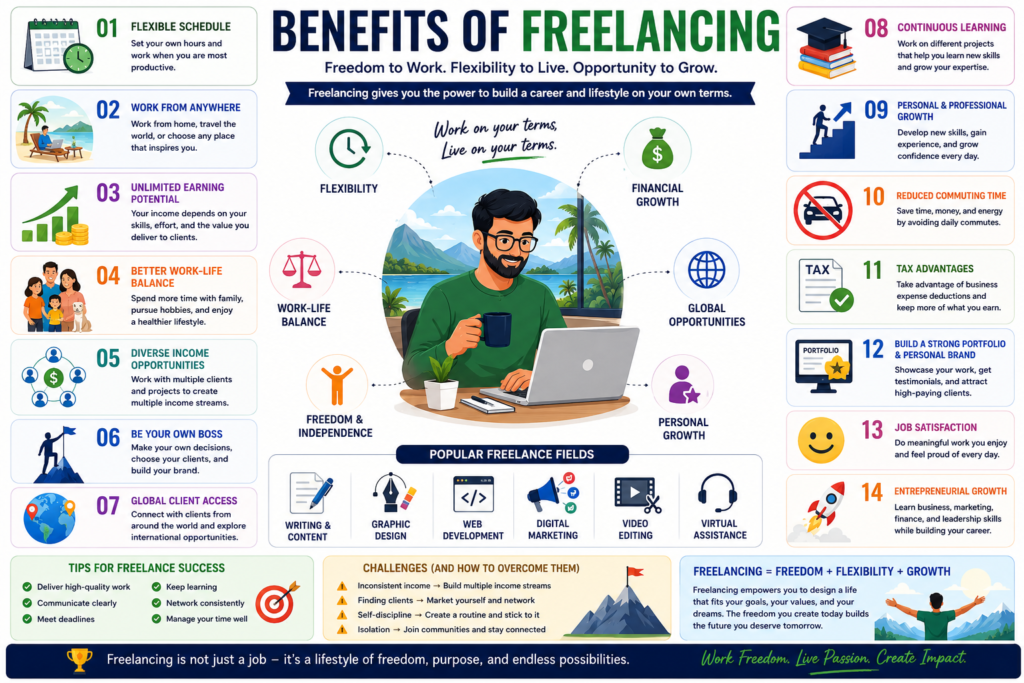
Freelancing has transformed the modern workforce, offering professionals greater flexibility, independence, and control over their careers. Thanks to digital technology and global connectivity, millions of people now earn income as freelancers across industries such as writing, graphic design, web development, marketing, consulting, translation, and virtual assistance.
Unlike traditional employment, freelancing allows individuals to choose their clients, projects, schedules, and work environments. This freedom has made freelancing an increasingly attractive career path for professionals seeking better work-life balance and financial opportunities.
This comprehensive guide explores the key benefits of freelancing and why more people are choosing self-employment as a path toward professional and personal success.
What Is Freelancing?
Freelancing involves providing services to clients on a contract or project basis rather than working as a permanent employee for a single company.
Freelancers may work in fields such as:
- Content writing
- Graphic design
- Web development
- Video editing
- Digital marketing
- Social media management
- Virtual assistance
- Consulting
- Translation services
Many freelancers work remotely and serve clients from around the world.
Why Freelancing Is Growing
Several factors have contributed to the rise of freelancing:
- Remote work technology
- Global online marketplaces
- Flexible work preferences
- Entrepreneurial opportunities
- Digital transformation
- Growing demand for specialized skills
Businesses increasingly hire freelancers to access expertise without long-term employment commitments.
1. Flexible Working Hours
One of the most attractive benefits of freelancing is schedule flexibility.
Freelancers can:
- Set their own hours
- Work when most productive
- Adjust schedules around personal commitments
- Take breaks as needed
This flexibility often leads to greater job satisfaction and reduced stress.
2. Work from Anywhere
Freelancers are not tied to a traditional office environment.
They can work from:
- Home offices
- Coffee shops
- Co-working spaces
- Libraries
- While traveling
This location independence has contributed to the growth of the digital nomad lifestyle.
3. Greater Control Over Projects
Freelancers often choose which projects to accept.
Benefits include:
- Working on preferred industries
- Focusing on personal interests
- Building specialized expertise
- Avoiding undesirable assignments
This level of control is rarely available in traditional employment.
4. Unlimited Earning Potential
Unlike fixed salaries, freelance income is often directly tied to effort, skill, and demand.
Freelancers can increase earnings by:
- Raising rates
- Taking on larger projects
- Expanding services
- Building long-term client relationships
Many successful freelancers earn significantly more than they did in traditional jobs.
5. Better Work-Life Balance
Freelancing allows professionals to design a lifestyle that aligns with their priorities.
Benefits may include:
- More family time
- Reduced commuting
- Greater personal freedom
- Improved mental well-being
A customized schedule can support healthier work-life integration.
6. Diverse Income Opportunities
Freelancers often work with multiple clients simultaneously.
This creates:
- Multiple income streams
- Reduced dependence on one employer
- Greater financial resilience
Diversification can help protect against economic uncertainty.
7. Opportunity to Build a Personal Brand
Freelancers develop professional reputations based on their expertise and results.
A strong personal brand can lead to:
- Higher-paying projects
- Referral opportunities
- Industry recognition
- Long-term career growth
Building a brand becomes an asset that continues generating opportunities.
8. Continuous Skill Development
Freelancers frequently work on varied projects that require learning and adaptation.
Benefits include:
- Expanded expertise
- Industry knowledge
- Technical skill growth
- Problem-solving experience
Continuous learning helps freelancers remain competitive.
9. Freedom to Choose Clients
Freelancers can often decide who they work with.
Advantages include:
- Better professional relationships
- Alignment with personal values
- More enjoyable work experiences
This freedom contributes to higher job satisfaction.
10. Reduced Commuting Time
Remote freelancing eliminates daily commuting for many professionals.
Benefits include:
- Time savings
- Lower transportation costs
- Reduced stress
- Improved productivity
Many freelancers reinvest saved time into personal development or additional projects.
11. Entrepreneurial Growth
Freelancing often serves as a gateway to business ownership.
Freelancers learn:
- Client management
- Marketing
- Sales
- Financial planning
- Business operations
These skills can support future entrepreneurial ventures.
12. Global Client Access
The internet allows freelancers to work with clients worldwide.
Global opportunities include:
- International projects
- Diverse industries
- Higher-paying markets
- Cultural exposure
Access to worldwide clients significantly expands career possibilities.
13. Increased Job Satisfaction
Many freelancers report higher satisfaction due to:
- Autonomy
- Flexibility
- Meaningful work
- Personal achievement
Having control over career decisions often improves overall happiness.
14. Potential Tax Advantages
Depending on local laws and regulations, freelancers may qualify for business-related deductions.
Examples can include:
- Home office expenses
- Professional software
- Business equipment
- Educational courses
Professional tax advice is recommended for individual circumstances.
Challenges of Freelancing
While freelancing offers many advantages, it also presents challenges.
Common challenges include:
- Income fluctuations
- Client acquisition
- Self-discipline requirements
- Administrative responsibilities
- Managing taxes and finances
Understanding these challenges helps freelancers prepare for long-term success.
How to Succeed as a Freelancer
Develop In-Demand Skills
Focus on skills with strong market demand.
Build a Professional Portfolio
Showcase previous work and achievements.
Network Consistently
Relationships often lead to referrals and new opportunities.
Deliver High-Quality Work
Client satisfaction supports repeat business.
Continue Learning
Industry trends and technologies evolve rapidly.
Popular Freelancing Careers
High-demand freelance fields include:
- Content writing
- Copywriting
- Graphic design
- Video editing
- Web development
- Mobile app development
- SEO consulting
- Social media management
- Translation services
- Virtual assistance
These professions offer strong opportunities for remote work and income growth.
Freelancing and Financial Independence
Many people pursue freelancing as part of a broader financial independence strategy.
Benefits include:
- Increased earning potential
- Multiple income streams
- Business ownership opportunities
- Flexible retirement planning
When managed effectively, freelancing can contribute significantly to long-term wealth building.
The Future of Freelancing
Freelancing is expected to continue growing due to:
- Remote work adoption
- Digital transformation
- Global talent marketplaces
- Business demand for specialized expertise
- Flexible workforce models
Professionals who adapt to changing market needs will continue to find abundant opportunities.
Conclusion
Freelancing offers numerous benefits, including flexibility, independence, unlimited earning potential, global opportunities, and improved work-life balance. While it requires discipline, business skills, and proactive client management, freelancing can provide a rewarding and sustainable career path.
Whether you’re looking to supplement your income, escape the traditional office environment, or build your own business, freelancing offers a powerful way to take control of your professional future and create a lifestyle that aligns with your personal goals.