Introduction
In today’s digital world, video content dominates online platforms, social media, marketing campaigns, entertainment, and education. Behind every engaging YouTube video, cinematic commercial, viral social media clip, and professional documentary is a skilled Video Editor who transforms raw footage into compelling visual stories.
Video Editors play a critical role in modern content creation by combining technical expertise, creativity, storytelling, and attention to detail. Their work influences how audiences perceive information, connect with brands, and experience entertainment.
As video continues to become the preferred form of online communication, the demand for professional Video Editors has grown significantly across industries.
This guide explores the role of a Video Editor, essential skills, editing workflows, tools, career opportunities, and future trends shaping the industry.
What Is a Video Editor?
A Video Editor is a creative professional responsible for assembling, modifying, enhancing, and refining video footage to create a polished final product.
Video Editors work with:
- Raw video footage
- Audio recordings
- Visual effects
- Motion graphics
- Music and sound effects
- Animations
- Titles and subtitles
Their goal is to tell a story effectively while maintaining quality, consistency, and audience engagement.
Why Video Editing Matters
Enhances Storytelling
Editing shapes narratives and creates emotional connections with viewers.
Improves Viewer Engagement
Well-edited videos hold attention and increase watch time.
Strengthens Brand Identity
Consistent editing styles help businesses establish recognizable brands.
Increases Content Quality
Professional editing improves visual appeal and production value.
Supports Marketing Goals
Video content drives traffic, conversions, and audience growth.
Responsibilities of a Video Editor
Typical responsibilities include:
- Reviewing raw footage
- Organizing media assets
- Cutting and trimming clips
- Synchronizing audio
- Adding transitions
- Creating visual effects
- Color correction and grading
- Sound editing
- Motion graphics integration
- Exporting final videos
Video Editors often collaborate with:
- Content creators
- Marketing teams
- Producers
- Directors
- Graphic designers
- Animators
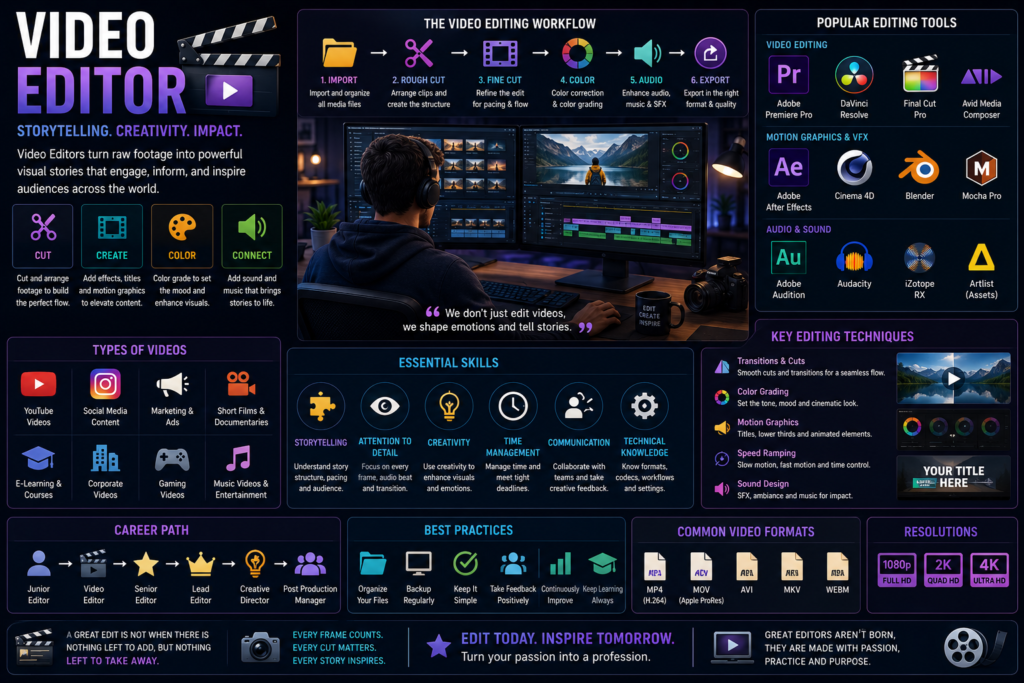
The Video Editing Process
1. Project Planning
Understanding project goals, audience, and creative direction.
2. Media Organization
Sorting and managing:
- Video files
- Audio tracks
- Graphics
- Animations
- Project assets
3. Rough Cut
Creating an initial sequence that establishes the video’s structure.
4. Fine Editing
Refining pacing, timing, transitions, and storytelling.
5. Audio Editing
Improving sound quality through:
- Noise reduction
- Voice enhancement
- Music integration
- Sound effects
6. Color Correction
Adjusting exposure, contrast, and color balance.
7. Color Grading
Applying a creative visual style and mood.
8. Final Export
Rendering the finished video in appropriate formats and resolutions.
Essential Skills for Video Editors
Storytelling
Understanding narrative structure and audience engagement.
Creativity
Developing visually appealing and impactful content.
Attention to Detail
Small edits significantly influence video quality.
Time Management
Meeting deadlines while maintaining quality standards.
Communication
Collaborating effectively with clients and production teams.
Technical Skills
Understanding video formats, codecs, resolutions, and workflows.
Popular Video Editing Software
Adobe Premiere Pro
One of the most widely used professional editing platforms.
Features include:
- Advanced editing tools
- Motion graphics integration
- Audio editing
- Multicam editing
DaVinci Resolve
Known for:
- Professional color grading
- Advanced editing capabilities
- Visual effects
- Audio production
Final Cut Pro
Popular among Apple users for high-performance video editing.
Adobe After Effects
Used for:
- Motion graphics
- Visual effects
- Animations
- Compositing
CapCut
Widely used for short-form social media content.
Filmora
A beginner-friendly video editing solution.
Types of Video Editing
YouTube Video Editing
Optimized for audience retention and engagement.
Social Media Editing
Designed for platforms such as:
- TikTok
- Instagram Reels
- YouTube Shorts
Corporate Video Editing
Creates professional business presentations and marketing materials.
Documentary Editing
Focuses on storytelling and factual presentation.
Film Editing
Involves cinematic storytelling techniques.
Commercial Editing
Designed to support advertising and brand promotion.
Motion Graphics and Visual Effects
Modern video production often includes advanced visual elements.
Examples include:
- Animated text
- Lower thirds
- Logo animations
- Infographics
- Visual effects (VFX)
- Motion tracking
Motion graphics improve professionalism and viewer engagement.
Color Correction vs Color Grading
Color Correction
Ensures accurate and consistent colors.
Color Grading
Creates a unique visual style and atmosphere.
Both processes contribute significantly to video quality.
Audio Editing
High-quality audio is essential for professional video production.
Key tasks include:
- Noise removal
- Audio balancing
- Voice enhancement
- Music synchronization
- Sound effect integration
Poor audio can negatively impact viewer experience regardless of video quality.
Video Formats and Resolutions
Video Editors work with various formats and resolutions.
Common formats include:
- MP4
- MOV
- AVI
- MKV
- WebM
Popular resolutions:
- 1080p Full HD
- 1440p QHD
- 4K Ultra HD
- 8K
Best Practices for Video Editing
Focus on Storytelling
Every edit should support the narrative.
Keep Audiences Engaged
Maintain pacing and eliminate unnecessary content.
Use Transitions Sparingly
Transitions should enhance rather than distract.
Optimize for Platforms
Adapt content for specific audiences and channels.
Maintain Consistent Branding
Use consistent colors, typography, and visual styles.
Organize Projects Properly
Structured workflows improve efficiency and collaboration.
Career Path for Video Editors
Junior Video Editor
Learns editing fundamentals and assists senior editors.
Video Editor
Handles projects independently.
Senior Video Editor
Leads editing projects and mentors team members.
Motion Graphics Designer
Specializes in animation and visual effects.
Post-Production Supervisor
Manages editing teams and workflows.
Creative Director
Oversees visual content strategy and production.
Industries Hiring Video Editors
Marketing and Advertising
Creating promotional and branded content.
Entertainment
Film, television, and streaming productions.
Social Media
Content creation for digital platforms.
Education
Developing online courses and training videos.
Corporate Communications
Internal and external business content.
Gaming
Producing trailers, gameplay content, and esports media.
Future Trends in Video Editing
Artificial Intelligence
AI-assisted editing is automating repetitive tasks.
Short-Form Content Growth
Platforms increasingly prioritize short, engaging videos.
4K and 8K Production
Higher-resolution content continues to expand.
Virtual Production
Advanced technologies blend physical and digital environments.
Interactive Video
Users increasingly engage with personalized video experiences.
Benefits of Becoming a Video Editor
- High creative freedom
- Growing global demand
- Remote work opportunities
- Freelance flexibility
- Diverse career paths
- Continuous learning
- Strong earning potential
Conclusion
Video Editors are essential creators in today’s digital content economy. Through storytelling, technical expertise, and creativity, they transform raw footage into engaging experiences that educate, entertain, and inspire audiences.
As video continues to dominate online communication and marketing, professional editing skills remain highly valuable across industries. Whether working in film, advertising, social media, or corporate production, Video Editors play a crucial role in shaping the visual content that influences modern audiences worldwide.