Introduction
In the digital age, motion graphics have become an essential part of communication, marketing, entertainment, and user engagement. From animated advertisements and social media content to movie titles, product explainers, and television broadcasts, motion graphics help transform static visuals into compelling visual experiences.
Behind these dynamic animations is the Motion Graphics Designer—a creative professional who combines graphic design, animation, storytelling, and technology to create engaging visual content.
As businesses increasingly invest in video marketing, digital experiences, and interactive media, the demand for skilled Motion Graphics Designers continues to grow across industries worldwide.
This guide explores the role, skills, tools, workflows, career opportunities, and future trends that define the exciting field of motion graphics design.
What Is a Motion Graphics Designer?
A Motion Graphics Designer is a creative professional who designs and animates visual elements to communicate ideas, tell stories, and enhance user experiences.
Unlike traditional graphic designers who work with static visuals, Motion Graphics Designers bring designs to life through movement, timing, sound, and animation.
They often create:
- Animated advertisements
- Social media videos
- Explainer videos
- Logo animations
- Broadcast graphics
- Product demonstrations
- UI animations
- Corporate presentations
- Visual effects sequences
Their goal is to make information more engaging, understandable, and memorable.
Why Motion Graphics Matter
Improves Audience Engagement
Animated content captures attention more effectively than static visuals.
Enhances Storytelling
Motion helps communicate ideas and emotions more clearly.
Strengthens Branding
Animated logos and branded visuals improve brand recognition.
Increases Information Retention
Viewers often remember animated content better than text alone.
Supports Marketing Success
Motion graphics improve click-through rates, conversions, and audience engagement.
Key Responsibilities of a Motion Graphics Designer
A Motion Graphics Designer typically handles:
- Concept development
- Storyboarding
- Graphic design
- Animation creation
- Visual effects integration
- Typography animation
- Audio synchronization
- Video editing
- Client presentations
- Final content delivery
They often collaborate with:
- Creative Directors
- Marketing Teams
- Video Editors
- Illustrators
- UI/UX Designers
- Content Creators
- Producers
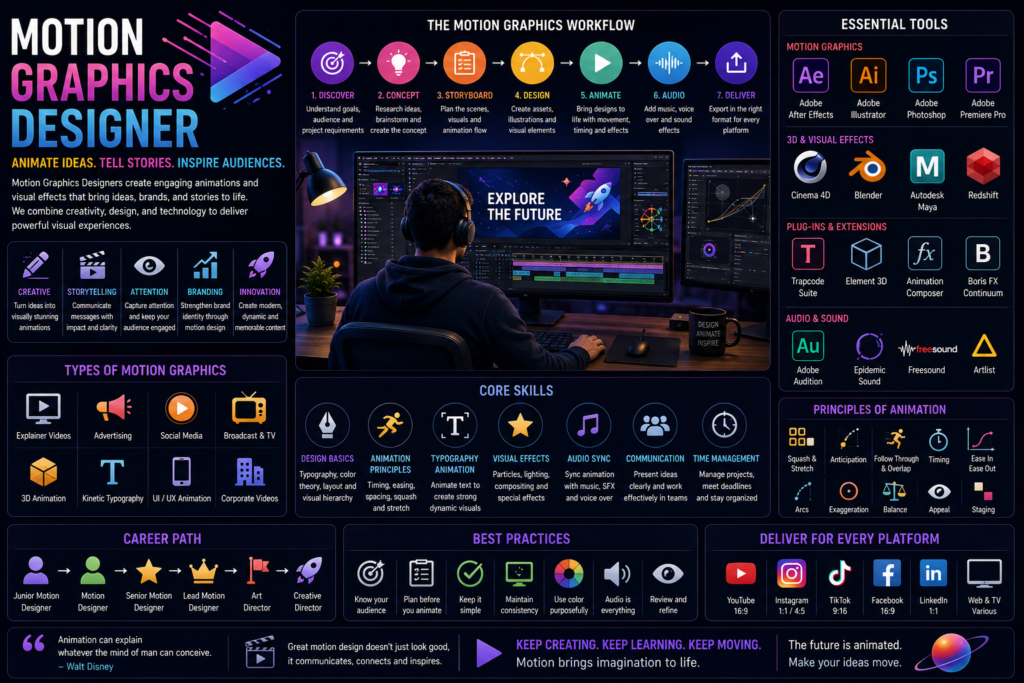
The Motion Graphics Design Process
1. Project Discovery
Understanding client goals, target audiences, and project requirements.
2. Research and Planning
Analyzing competitors, trends, and visual references.
3. Storyboarding
Creating visual plans that outline animation sequences and storytelling flow.
4. Design Creation
Developing illustrations, graphics, icons, typography, and visual assets.
5. Animation
Bringing static designs to life using movement and timing principles.
6. Audio Integration
Synchronizing animations with:
- Voiceovers
- Music
- Sound effects
7. Review and Revisions
Gathering feedback and refining the animation.
8. Final Export
Delivering optimized files for various platforms and formats.
Essential Skills for Motion Graphics Designers
Graphic Design
Strong foundations in:
- Typography
- Layout
- Color theory
- Composition
- Branding
Animation Principles
Understanding:
- Timing
- Spacing
- Easing
- Anticipation
- Follow-through
- Motion dynamics
Storytelling
Creating visual narratives that communicate messages effectively.
Creativity
Developing unique visual concepts and animation styles.
Attention to Detail
Ensuring smooth transitions, consistent branding, and high-quality output.
Communication
Working effectively with clients and creative teams.
Popular Motion Graphics Software
Adobe After Effects
The industry-standard software for motion graphics and animation.
Features include:
- Keyframe animation
- Motion tracking
- Visual effects
- Compositing
Adobe Illustrator
Used for creating vector graphics and design assets.
Adobe Photoshop
Supports image editing and digital artwork creation.
Cinema 4D
Popular for 3D motion graphics and animation.
Blender
A powerful open-source platform for 3D modeling and animation.
DaVinci Resolve
Provides advanced editing, visual effects, and color grading capabilities.
Types of Motion Graphics Projects
Explainer Videos
Simplify complex concepts through engaging animations.
Social Media Content
Create short-form content for platforms such as:
- TikTok
- YouTube
Broadcast Graphics
Used in television and live productions.
Product Demonstrations
Showcase product features through animation.
Corporate Videos
Support internal communications and marketing campaigns.
UI and App Animations
Improve digital experiences through interactive motion design.
2D vs 3D Motion Graphics
2D Motion Graphics
Involve flat illustrations and graphic elements.
Benefits:
- Faster production
- Lower costs
- Broad versatility
3D Motion Graphics
Include depth, lighting, and realistic movement.
Benefits:
- Greater realism
- High visual impact
- Advanced storytelling possibilities
Many Motion Graphics Designers work with both styles.
Motion Graphics and Video Production
Motion graphics often complement video production by adding:
- Animated titles
- Lower thirds
- Infographics
- Transitions
- Visual effects
- Call-to-action animations
Combining live footage with animation creates highly engaging content.
Best Practices for Motion Graphics Design
Keep Designs Simple
Clear visuals communicate messages more effectively.
Focus on Storytelling
Animation should support the overall narrative.
Maintain Consistent Branding
Use consistent colors, typography, and styles.
Optimize for Platforms
Adapt animations for different screen sizes and formats.
Use Motion Purposefully
Every animation should enhance communication.
Prioritize Quality
Smooth animations and polished visuals improve professionalism.
Career Path for Motion Graphics Designers
Junior Motion Graphics Designer
Learns animation tools and assists on projects.
Motion Graphics Designer
Creates animations independently.
Senior Motion Graphics Designer
Leads creative projects and mentors junior designers.
Art Director
Guides visual direction across campaigns.
Creative Director
Oversees creative strategy and production teams.
Animation Director
Manages large-scale animation and motion design projects.
Industries Hiring Motion Graphics Designers
Marketing and Advertising
Creating promotional content and brand campaigns.
Entertainment
Film, television, streaming, and gaming industries.
Technology
Producing product demos and software tutorials.
Education
Developing engaging learning materials.
Corporate Communications
Supporting presentations and internal training.
Media and Broadcasting
Designing visual content for television and digital platforms.
Future Trends in Motion Graphics
Artificial Intelligence
AI tools are streamlining animation workflows and content generation.
3D Motion Design Growth
More brands are adopting immersive 3D visuals.
Interactive Motion Graphics
Users increasingly engage with dynamic and interactive experiences.
Augmented Reality (AR)
Motion graphics are becoming integral to AR experiences.
Virtual Production
Advanced technologies continue blending real and digital environments.
Personalized Video Content
Customized animations are becoming increasingly common.
Benefits of Becoming a Motion Graphics Designer
- High creative freedom
- Growing industry demand
- Remote work opportunities
- Diverse project types
- Competitive salaries
- Freelance flexibility
- Continuous learning and innovation
Conclusion
Motion Graphics Designers play a vital role in modern visual communication. By combining graphic design, animation, storytelling, and technology, they create engaging experiences that inform, entertain, and inspire audiences.
As video content, digital marketing, and interactive media continue to expand, Motion Graphics Design remains one of the most exciting and future-focused creative careers. Professionals who master animation tools, design principles, and visual storytelling will continue to find abundant opportunities in the evolving digital landscape.