Introduction
In today’s fast-paced business environment, executives and business leaders rely heavily on skilled professionals who help manage schedules, coordinate operations, organize communications, and ensure productivity remains high. These professionals are known as Executive Assistants.
An Executive Assistant (EA) serves as a trusted partner to senior leaders, helping them manage daily responsibilities, streamline workflows, and focus on strategic decision-making. Far more than a traditional administrative role, modern Executive Assistants often act as project coordinators, communication managers, business partners, and organizational leaders.
As companies continue to grow and executives face increasing demands on their time, Executive Assistants remain among the most valuable support professionals in the workplace.
What Is an Executive Assistant?
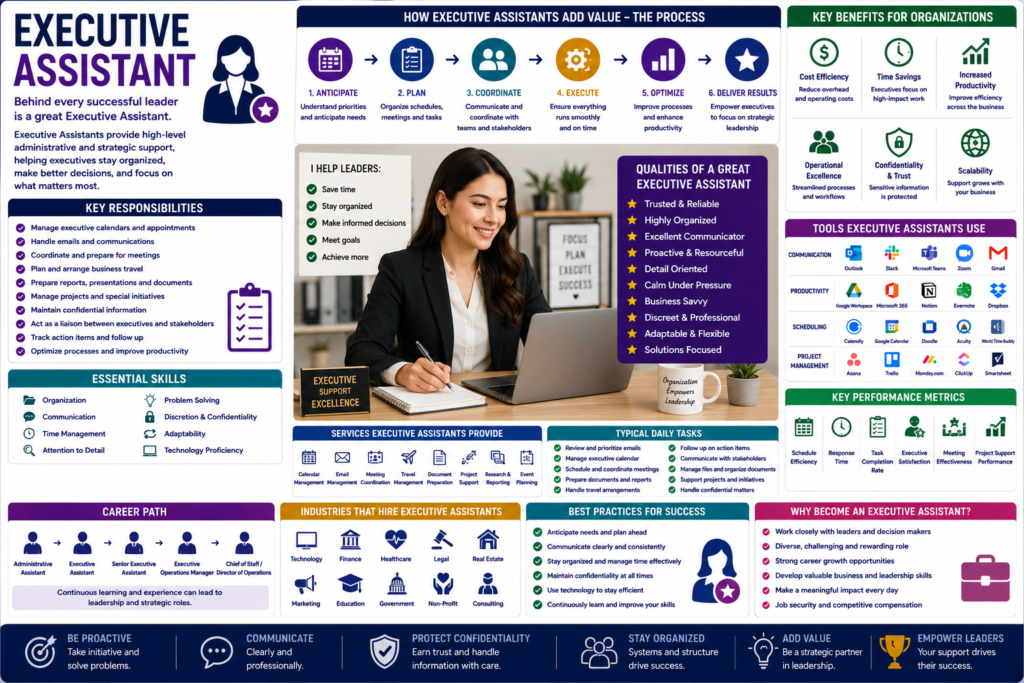
An Executive Assistant is a professional responsible for providing high-level administrative and operational support to executives, directors, business owners, and senior leadership teams.
Their primary objectives include:
- Managing executive schedules
- Coordinating meetings
- Organizing communications
- Handling confidential information
- Supporting strategic initiatives
- Managing travel arrangements
- Assisting with project coordination
- Improving executive productivity
Executive Assistants often become key contributors to organizational efficiency and leadership effectiveness.
Why Executive Assistants Are Important
Maximize Executive Productivity
Executive Assistants handle administrative responsibilities, allowing leaders to focus on strategic priorities.
Improve Organization
Well-managed schedules and workflows help organizations operate efficiently.
Facilitate Communication
Executive Assistants ensure information flows effectively across teams and departments.
Support Business Operations
They often coordinate projects, meetings, and company initiatives.
Enhance Decision-Making
By organizing information and preparing reports, EAs help executives make informed decisions.
Key Responsibilities of an Executive Assistant
Calendar Management
Scheduling appointments, meetings, and events.
Email Management
Organizing communications and prioritizing important messages.
Meeting Coordination
Preparing agendas, arranging logistics, and recording meeting notes.
Travel Planning
Booking flights, hotels, transportation, and itineraries.
Project Support
Assisting with business initiatives and operational projects.
Document Preparation
Creating reports, presentations, spreadsheets, and business documents.
Communication Management
Serving as a liaison between executives and stakeholders.
Confidential Information Handling
Managing sensitive business information professionally and securely.
Daily Tasks of an Executive Assistant
A typical workday may include:
- Reviewing executive schedules
- Responding to emails
- Coordinating meetings
- Preparing reports
- Managing travel arrangements
- Supporting projects
- Handling client communications
- Organizing business documents
- Following up on action items
- Managing executive priorities
Every day presents new challenges and opportunities.
Essential Skills for Executive Assistants
Organization
Managing multiple responsibilities simultaneously.
Communication
Maintaining professional communication with internal and external stakeholders.
Time Management
Prioritizing tasks effectively and meeting deadlines.
Attention to Detail
Ensuring accuracy in scheduling, documentation, and communications.
Problem Solving
Finding solutions independently and proactively.
Discretion
Handling confidential information responsibly.
Adaptability
Supporting changing executive priorities and business needs.
Technology Skills
Using productivity and collaboration tools efficiently.
Executive Assistant vs Administrative Assistant
Administrative Assistant
Provides general office and administrative support.
Executive Assistant
Provides high-level support directly to senior leaders and executives.
Executive Assistants often manage more complex responsibilities and strategic initiatives.
Tools Used by Executive Assistants
Productivity Tools
- Microsoft Office
- Google Workspace
- Notion
- Evernote
Communication Tools
- Microsoft Teams
- Slack
- Zoom
- Google Meet
Scheduling Platforms
- Google Calendar
- Microsoft Outlook
- Calendly
Project Management Tools
- Asana
- Monday.com
- Trello
- ClickUp
Document Management Systems
- SharePoint
- Dropbox
- Google Drive
Executive Calendar Management
One of the most critical responsibilities of an EA is managing executive schedules.
Key activities include:
- Prioritizing appointments
- Preventing scheduling conflicts
- Coordinating across time zones
- Managing executive availability
- Scheduling recurring meetings
- Preparing reminders and briefings
Effective calendar management significantly improves executive productivity.
Meeting Management
Executive Assistants often oversee the entire meeting process.
Responsibilities include:
Before Meetings
- Scheduling attendees
- Preparing agendas
- Organizing materials
During Meetings
- Taking notes
- Tracking action items
After Meetings
- Distributing summaries
- Following up on tasks
- Monitoring progress
Travel and Event Coordination
Executive Assistants frequently manage:
- Flights
- Hotels
- Ground transportation
- Conference registrations
- Business events
- Executive retreats
Careful planning helps avoid disruptions and improves efficiency.
Confidentiality and Professionalism
Executive Assistants regularly work with:
- Financial information
- Business strategies
- Employee records
- Legal documents
- Executive communications
Maintaining confidentiality is essential to success in the role.
Career Path for Executive Assistants
Administrative Assistant
Entry-level office support position.
Executive Assistant
Supports senior leaders and executives.
Senior Executive Assistant
Handles high-level executive support responsibilities.
Executive Operations Manager
Coordinates executive functions and business operations.
Chief of Staff
Acts as a strategic partner to executive leadership.
Operations Director
Oversees organizational operations and performance.
Business Manager
Leads administrative and operational functions.
Industries Hiring Executive Assistants
Technology
Supporting startup founders and executives.
Finance
Assisting financial leaders and executives.
Healthcare
Supporting healthcare administrators and leadership teams.
Legal Services
Managing communications and schedules for legal professionals.
Real Estate
Supporting brokers, investors, and executives.
Nonprofit Organizations
Assisting executive directors and leadership teams.
Government
Supporting public sector executives and administrators.
Key Performance Metrics
Executive Assistants often measure success through:
Schedule Efficiency
Effective management of executive calendars.
Task Completion Rate
Percentage of tasks completed successfully.
Response Time
Speed of communication and follow-up.
Executive Satisfaction
Feedback from supported executives.
Meeting Effectiveness
Successful preparation and coordination.
Project Support Performance
Contribution to organizational initiatives.
Best Practices for Executive Assistants
Stay Organized
Use systems to manage priorities and deadlines.
Be Proactive
Anticipate executive needs before they arise.
Communicate Clearly
Maintain professional and concise communication.
Prioritize Effectively
Focus on high-impact activities first.
Continue Learning
Develop business, leadership, and technology skills.
Maintain Confidentiality
Protect sensitive information at all times.
Future Trends in Executive Assistance
Remote Executive Support
Virtual Executive Assistants continue growing in popularity.
Artificial Intelligence
AI tools assist with scheduling, communication, and task management.
Digital Collaboration
Cloud-based tools improve remote productivity.
Strategic Partnership Roles
Executive Assistants increasingly participate in decision-making processes.
Automation
Routine administrative tasks become more automated.
Business Operations Integration
Executive Assistants take on broader operational responsibilities.
Benefits of Becoming an Executive Assistant
- Strong career stability
- Competitive salaries
- Opportunities to work with leadership teams
- Exposure to business strategy
- Diverse responsibilities
- Professional networking opportunities
- Career advancement potential
Conclusion
Executive Assistants are vital professionals who help leaders operate efficiently, stay organized, and achieve strategic goals. Through exceptional communication, organization, problem-solving, and business support skills, they contribute directly to executive effectiveness and organizational success.
As businesses continue evolving and leadership demands increase, skilled Executive Assistants will remain highly valuable. Professionals who combine administrative expertise, technology skills, discretion, and strategic thinking can build rewarding careers while playing a critical role in organizational growth and success.