Introduction
The digital learning industry has experienced explosive growth over the past decade. Businesses, educators, entrepreneurs, and industry experts are increasingly sharing their knowledge through online courses that reach learners worldwide. At the center of this rapidly expanding industry is the Course Creator.
Course Creators design, develop, publish, and market educational programs that help people learn new skills, gain knowledge, and achieve personal or professional goals. Whether teaching business strategies, programming, marketing, fitness, language learning, or creative skills, Course Creators transform expertise into valuable learning experiences.
As online education continues to grow globally, Course Creators have become key contributors to the future of learning. Their ability to combine education, technology, content creation, and entrepreneurship makes this one of the most exciting career opportunities in the digital economy.
This guide explores the role of a Course Creator, responsibilities, essential skills, tools, course development processes, business opportunities, and future trends shaping the e-learning industry.
What Is a Course Creator?
A Course Creator is a professional who develops educational content and learning experiences designed to teach specific knowledge, skills, or competencies.
Course Creators often combine expertise in:
- Subject matter knowledge
- Instructional design
- Content creation
- Video production
- Digital marketing
- Learning technology
- Student engagement
- Business development
Their primary goal is to create effective educational programs that deliver measurable learning outcomes while providing value to learners.
Why Course Creators Are Important
Expand Access to Education
Online courses allow learners to access knowledge from anywhere.
Share Specialized Expertise
Experts can teach skills beyond traditional educational institutions.
Support Career Development
Courses help professionals gain valuable workplace skills.
Enable Flexible Learning
Students learn at their own pace and schedule.
Create Scalable Education
A single course can educate thousands of learners worldwide.
Key Responsibilities of a Course Creator
Research and Planning
Identifying audience needs and learning objectives.
Curriculum Development
Designing course structures and lesson sequences.
Content Creation
Producing videos, presentations, assignments, and learning materials.
Assessment Design
Creating quizzes, projects, and evaluations.
Platform Management
Publishing and maintaining courses on learning platforms.
Marketing and Promotion
Attracting students and growing course enrollment.
Learner Support
Responding to questions and improving course experiences.
Types of Course Creators
Academic Course Creator
Develops educational programs for schools and universities.
Professional Development Creator
Builds career-focused learning programs.
Corporate Training Creator
Creates employee training materials.
Entrepreneurial Course Creator
Sells independent courses directly to learners.
Technical Course Creator
Teaches technology, coding, and digital skills.
Creative Course Creator
Focuses on design, art, writing, music, and creative disciplines.
Coaching-Based Course Creator
Combines instruction with mentorship and coaching services.
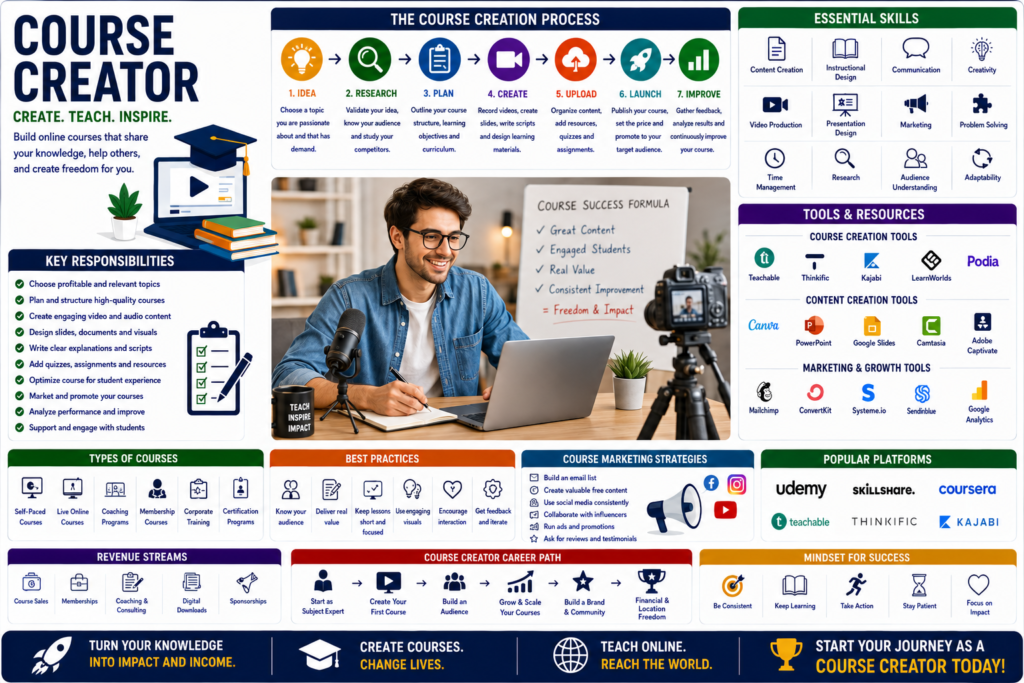
The Course Creation Process
1. Identify the Audience
Understand learner needs, goals, and challenges.
2. Define Learning Outcomes
Establish measurable objectives.
3. Create a Course Outline
Organize modules and lessons logically.
4. Develop Content
Produce videos, presentations, exercises, and resources.
5. Build Assessments
Measure student understanding and progress.
6. Publish the Course
Upload content to learning platforms.
7. Launch and Market
Promote the course to potential students.
8. Improve Continuously
Gather feedback and update content regularly.
Essential Skills for Course Creators
Subject Matter Expertise
Strong knowledge in the chosen topic.
Instructional Design
Understanding how people learn effectively.
Communication Skills
Explaining concepts clearly and engagingly.
Video Production
Creating professional educational videos.
Content Writing
Developing scripts, lesson materials, and resources.
Marketing Knowledge
Promoting courses and attracting students.
Project Management
Managing course development timelines and tasks.
Instructional Design for Course Creation
Successful courses follow instructional design principles.
Clear Learning Objectives
Students should know what they will achieve.
Structured Progression
Lessons should build logically upon one another.
Active Learning
Encourage learner participation and practice.
Assessment Integration
Measure understanding throughout the course.
Real-World Application
Connect lessons to practical outcomes.
Feedback Opportunities
Help learners improve continuously.
Types of Online Courses
Self-Paced Courses
Students learn independently.
Cohort-Based Courses
Groups progress through lessons together.
Live Courses
Delivered through real-time virtual sessions.
Hybrid Courses
Combine self-paced and live instruction.
Certification Programs
Provide credentials upon completion.
Membership Learning Programs
Offer ongoing educational content.
Course Creation Tools
Video Recording Tools
- Camtasia
- OBS Studio
- Loom
- ScreenFlow
Presentation Tools
- PowerPoint
- Google Slides
- Canva
- Keynote
Course Authoring Tools
- Articulate Storyline
- Adobe Captivate
- Rise 360
- iSpring Suite
Design Tools
- Canva
- Adobe Creative Cloud
- Figma
Assessment Tools
- Google Forms
- Typeform
- Quizizz
- Kahoot
Popular Online Course Platforms
Udemy
One of the largest course marketplaces.
Teachable
Popular platform for independent creators.
Thinkific
Course hosting and sales platform.
Kajabi
Comprehensive online business platform.
Skillshare
Subscription-based learning marketplace.
LearnWorlds
Advanced course creation and delivery platform.
Moodle
Open-source learning management system.
Creating Engaging Learning Experiences
Effective Course Creators focus on learner engagement.
Strategies include:
Interactive Activities
Encourage participation and application.
Storytelling
Make lessons memorable and relatable.
Multimedia Learning
Use video, audio, visuals, and text.
Practical Exercises
Provide hands-on learning opportunities.
Community Building
Encourage learner interaction and collaboration.
Gamification
Use rewards, achievements, and challenges.
Course Marketing Strategies
Even great courses require effective promotion.
Content Marketing
Publish blogs, videos, and educational content.
Email Marketing
Build and nurture subscriber lists.
Social Media Marketing
Promote courses across platforms.
Search Engine Optimization (SEO)
Improve online visibility.
Affiliate Programs
Partner with influencers and affiliates.
Paid Advertising
Use targeted advertising campaigns.
Monetization Opportunities
Course Creators can generate revenue through:
Course Sales
Selling individual courses.
Membership Programs
Recurring subscription-based learning.
Coaching Services
Premium educational support.
Corporate Training
Custom business training solutions.
Certifications
Specialized credentialing programs.
Digital Products
Workbooks, templates, and educational resources.
Course Creator vs Instructional Designer
Course Creator
Develops and often markets educational content.
Instructional Designer
Focuses on learning strategy and educational effectiveness.
Many successful Course Creators use instructional design principles.
Industries Hiring Course Creators
Online Education
Digital learning platforms and schools.
Corporate Training
Employee development programs.
Technology
Software education and certification programs.
Healthcare
Professional medical training.
Financial Services
Compliance and skills development training.
Consulting
Educational products and knowledge sharing.
Entrepreneurship
Independent course businesses.
Certifications for Course Creators
Instructional Design Certifications
Develop learning design expertise.
ATD Learning Certifications
Professional training and development credentials.
Adobe Captivate Certification
E-learning development skills.
Articulate Certifications
Course authoring expertise.
Digital Marketing Certifications
Support course promotion and growth.
Career Path for Course Creators
Content Creator
Produces educational materials.
Junior Course Developer
Supports course design projects.
Course Creator
Develops complete learning experiences.
Senior Learning Designer
Leads major educational initiatives.
Learning Experience Designer
Focuses on learner-centered education.
Director of Learning
Oversees educational strategy.
Education Entrepreneur
Builds scalable online education businesses.
Best Practices for Course Creators
Focus on Learner Outcomes
Design with student success in mind.
Keep Content Engaging
Use interactive and multimedia elements.
Simplify Complex Concepts
Make learning accessible and understandable.
Gather Feedback
Continuously improve course quality.
Stay Current
Update content regularly to maintain relevance.
Invest in Professional Production
High-quality content improves learner experience.
Future Trends in Course Creation
Artificial Intelligence
AI assists with content development and personalization.
Microlearning
Short-form educational content continues growing.
Mobile Learning
Learners increasingly access content on mobile devices.
Virtual Reality
Immersive educational experiences expand.
Adaptive Learning
Technology customizes learning paths automatically.
Global E-Learning Growth
Demand for online education continues increasing worldwide.
Benefits of Becoming a Course Creator
- Flexible work opportunities
- Global audience reach
- Scalable income potential
- Creative and educational work
- Entrepreneurial freedom
- Ability to make a meaningful impact
- Continuous professional growth
Conclusion
Course Creators are transforming education by making knowledge accessible, scalable, and engaging for learners worldwide. Through instructional design, content creation, technology integration, and effective marketing, they build educational experiences that help people achieve meaningful personal and professional growth.
As online learning continues expanding across industries and regions, skilled Course Creators will remain highly valuable. Professionals who combine expertise, creativity, educational strategy, and business skills can build successful careers while shaping the future of digital learning.