For decades, property investing came with a steep price tag. You needed tens of thousands of dollars for a down payment, a solid credit score, and the willingness to manage tenants, repairs, and vacancies. That kept a lot of people on the sidelines.
Real estate crowdfunding platforms changed the equation. These online platforms pool money from hundreds or thousands of investors to fund property deals, from apartment complexes and commercial buildings to single-family rental homes. Some let you get started with as little as $10.
If you’ve been curious about putting money into real estate but didn’t think you had enough capital (or appetite for landlord duties), this guide breaks down everything you need to know.
What Are Real Estate Crowdfunding Platforms?
Real estate crowdfunding platforms are online marketplaces that connect property developers and operators with everyday investors. Instead of one person buying an entire building, the cost is split among a large group of people who each contribute a smaller amount.
Think of it like buying a slice of a pizza instead of the whole pie. You get a proportional share of the income (rental payments, interest, or profits from a sale) based on how much you put in.
These platforms handle the heavy lifting: sourcing deals, conducting due diligence, managing the properties, and distributing returns. Your role as an investor is largely passive. You pick a deal, invest your money, and wait for returns to show up in your account.
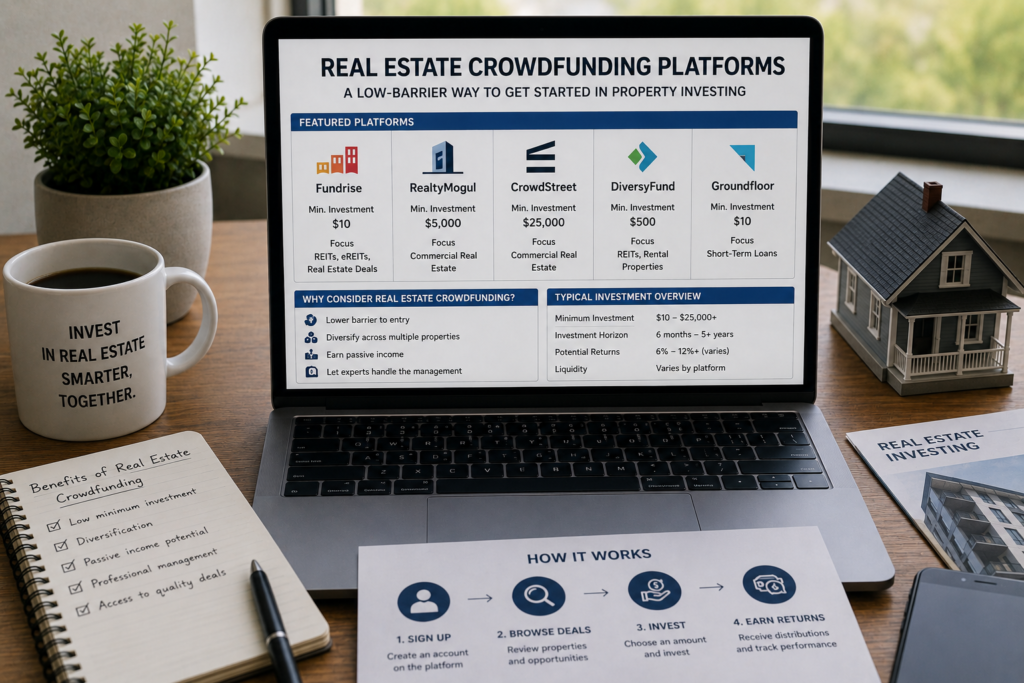
How Real Estate Crowdfunding Works, Step by Step
Here’s what the process looks like from an investor’s perspective:
1. Create an account. Sign up on a crowdfunding platform. Most require basic identity verification and some financial background questions, especially if the platform offers deals limited to accredited investors.
2. Browse available deals. Platforms list current investment opportunities with details like property type, location, projected returns, hold period, and risk level. Some platforms let you filter by strategy (income-focused vs. growth-focused).
3. Review the details. Each listing comes with offering documents, financial projections, market data, and information about the sponsor (the company or individual managing the property). Take time to read these carefully.
4. Invest your money. Once you find a deal you like, commit your capital. This can be as low as $10 on some platforms or $500 to $5,000 on others. The money is typically held in escrow until the funding target is reached.
5. Earn returns. Depending on the deal structure, you’ll receive regular distributions (monthly or quarterly), a lump sum at the end of the investment period, or a combination of both. Returns come from rental income, loan interest, or property appreciation.
6. Exit. Most crowdfunded real estate investments have a set hold period, usually 3 to 7 years. At the end, the property is sold or refinanced, and your principal (plus any remaining profits) is returned.
Types of Real Estate Crowdfunding Investments
Not all crowdfunding deals look the same. Understanding the main types helps you match investments to your financial goals.
Equity Investments
You buy an ownership share in a property. Your returns come from rental income and from any increase in the property’s value when it’s sold. Equity deals tend to offer higher potential returns, but they carry more risk. If the property loses value or rental income drops, your returns shrink too.
Best for: Investors comfortable with longer hold periods who want the potential for larger gains.
Debt Investments
You lend money to a property developer or owner and earn interest on the loan. Debt investments work like bonds. You receive fixed interest payments, and your capital is returned when the loan is repaid. These are generally lower-risk than equity deals because debt holders get paid before equity investors if something goes wrong.
Best for: Investors who prioritize steady, predictable income over high-growth potential.
Preferred Equity
A hybrid that sits between debt and equity. You receive a set return (similar to debt) but with some exposure to the property’s upside potential. In the capital stack, preferred equity gets paid after debt holders but before common equity investors.
Best for: Investors who want a middle ground between stability and growth potential.
REITs (Real Estate Investment Trusts) on Crowdfunding Platforms
Some platforms offer their own non-traded REITs, which are diversified portfolios of properties bundled into a single investment. These give you exposure to multiple properties at once, spreading your risk across different deals and locations.
Best for: Beginners who want instant diversification without picking individual deals.
Why Real Estate Crowdfunding Has Gained Popularity
Several factors have pushed real estate crowdfunding into the mainstream:
Low minimums break down the biggest barrier. Traditional real estate investing requires $20,000 to $100,000 or more upfront. Crowdfunding platforms start at $10 to $500 for many deals. That makes property investing accessible to people who are still building their savings.
You don’t manage anything. No late-night calls about broken pipes. No chasing rent payments. No coordinating contractors. The platform and property sponsors handle day-to-day operations. You’re a passive investor, period.
Diversification becomes realistic. With lower minimums, you can spread $5,000 across 10 different deals instead of locking it all into a single property. Geographic and property-type diversification reduces your overall risk.
Access to commercial-grade deals. Individual investors rarely get the chance to invest in a $50 million apartment complex or a Class A office building. Crowdfunding platforms open those doors.
Transparency is built into the model. Reputable platforms publish detailed financial documents, property reports, and regular performance updates. You can track how your investments are doing through online dashboards.
What to Look for in a Real Estate Crowdfunding Platform
With dozens of platforms on the market, picking the right one matters. Here are the factors worth evaluating:
Minimum Investment Amount
This ranges from $10 (Fundrise, for example) to $25,000 or more on platforms that focus on accredited investors. Match the minimum to what you’re actually comfortable investing.
Accreditation Requirements
Some platforms are open to all investors. Others restrict access to accredited investors (generally, individuals with a net worth over $1 million or annual income above $200,000). If you’re not accredited, narrow your search to platforms that accept non-accredited investors.
Fee Structure
Every platform charges fees, but the structure varies. Common fees include:
- Management fees (typically 0.5% to 2.5% annually)
- Acquisition fees (charged when properties are purchased)
- Disposition fees (charged when properties are sold)
- Performance fees (a percentage of profits above a certain threshold)
Lower fees mean more money stays in your pocket. But don’t choose a platform solely on fees. A slightly more expensive platform with better deal quality and track record can deliver stronger net returns.
Track Record and Transparency
How long has the platform been operating? What are its historical returns? Does it publish audited financials? A platform with a 5+ year track record and transparent reporting gives you more confidence than a newcomer with flashy marketing and no results to back it up.
Liquidity Options
Real estate is inherently illiquid. Most crowdfunding investments lock your money up for years. Some platforms offer secondary markets where you can sell your shares to other investors, but this is never guaranteed. Know the expected hold period before you invest.
Property Types and Strategies
Some platforms specialize in multifamily apartments. Others focus on commercial real estate, single-family rentals, or development projects. Pick a platform that offers the types of deals that align with your risk tolerance and investment thesis.
A Closer Look at Popular Real Estate Crowdfunding Platforms
Here’s a quick comparison of some well-known platforms and what makes each one different:
Fundrise
- Minimum investment: $10
- Open to: All investors (accredited and non-accredited)
- What they offer: eREITs and eFunds that invest in diversified real estate portfolios
- Fee: 0.15% advisory fee + up to 1.85% asset management fee
- Standout feature: Extremely low barrier to entry and automated portfolio management
CrowdStreet
- Minimum investment: $25,000 (individual deals)
- Open to: Accredited investors only
- What they offer: Individual commercial real estate deals and a diversified fund option
- Fee: Varies by deal sponsor
- Standout feature: Access to institutional-quality commercial deals from vetted sponsors
RealtyMogul
- Minimum investment: $5,000 (REITs), higher for individual deals
- Open to: All investors for REITs; accredited investors for private placements
- What they offer: Two non-traded REITs plus individual property investments
- Fee: 1% to 1.25% for REITs
- Standout feature: A blend of REIT-style diversification and deal-by-deal investing
Arrived
- Minimum investment: $100
- Open to: All investors
- What they offer: Shares in individual single-family rental properties and vacation rentals
- Fee: 1% annual asset management fee
- Standout feature: Invest in specific rental homes and earn quarterly dividends
YieldStreet
- Minimum investment: $2,500 (some options lower)
- Open to: Accredited and non-accredited investors (depending on the offering)
- What they offer: Real estate and alternative asset investments
- Fee: Varies by offering (0% to 2.5% management fees)
- Standout feature: Broader alternative investment selection beyond just real estate
Note: Minimums, fees, and availability may change. Always verify current details directly on each platform’s website before investing.
Risks You Should Understand Before Investing
Real estate crowdfunding carries real risks. Knowing them upfront helps you make smarter decisions.
Illiquidity. Your money is typically locked up for 3 to 7 years. If you need cash in a hurry, you may not be able to sell your position, or you might have to sell at a discount.
Platform risk. If the crowdfunding platform itself goes out of business, the process of managing your investments and distributing returns becomes complicated. The underlying real estate may be fine, but administrative disruptions can cause delays or losses.
Market risk. Property values can decline. Occupancy rates can drop. Interest rates can rise, making it harder to refinance or sell at a profit. No real estate investment is immune to market downturns.
Sponsor risk. The company managing the property might make poor decisions, underestimate renovation costs, or mismanage tenants. Even a great property can produce poor returns with bad management.
Lack of control. You have no say in how the property is managed, when it’s sold, or what price it’s sold at. You’re trusting the platform and the sponsor to act in your best interest.
Limited regulatory protections. Unlike publicly traded REITs, many crowdfunded offerings don’t have the same level of SEC oversight. Non-traded offerings can be less transparent and harder to value.
How to Build a Real Estate Crowdfunding Strategy
Jumping in without a plan is a recipe for disappointment. Here’s how to approach it thoughtfully:
Start Small
If this is your first time, invest an amount you’d be comfortable not touching for several years. Many investors begin with $500 to $1,000 just to learn how the process works before committing larger amounts.
Diversify Across Deals
Don’t put all your money into a single property or platform. Spread your investments across different:
- Property types (residential, commercial, industrial)
- Geographic markets (different cities and regions)
- Investment structures (equity and debt)
- Platforms (reduces platform-specific risk)
Match Investments to Your Timeline
If you might need the money in two years, don’t invest in a deal with a five-year hold period. Align your investment horizon with the expected duration of each deal.
Reinvest Your Distributions
Many platforms let you automatically reinvest dividends and distributions. Over time, this compounds your returns and accelerates portfolio growth.
Keep Real Estate as One Piece of Your Portfolio
Financial advisors generally suggest keeping real estate at 10% to 25% of your total investment portfolio. Crowdfunded real estate should fit within that allocation, not replace your stocks, bonds, or emergency savings.
Tax Implications of Real Estate Crowdfunding
Taxes on crowdfunded real estate income can be more complex than standard stock dividends. Here’s a simplified overview:
Rental income distributions are typically taxed as ordinary income at your marginal tax rate.
Capital gains from property sales held longer than one year qualify for long-term capital gains rates, which are lower than ordinary income rates for most people.
Depreciation benefits may pass through to investors in equity deals structured as LLCs or partnerships. This can offset some of your taxable income.
K-1 forms are common. If your investment is structured as a partnership or LLC, you’ll receive a Schedule K-1 instead of a 1099. K-1s can be more complicated to file and sometimes arrive late during tax season.
State taxes may apply if the property is located in a state different from where you live.
Working with a tax professional who understands real estate investments can save you money and headaches during filing season.
Real Estate Crowdfunding vs. Other Real Estate Investment Options
How does crowdfunding stack up against other ways to invest in real estate?
| Factor | Crowdfunding | Publicly Traded REITs | Direct Ownership | Real Estate Syndications |
|---|---|---|---|---|
| Minimum investment | $10 to $25,000 | Price of one share | $20,000+ | $25,000 to $100,000+ |
| Liquidity | Low (multi-year lock-up) | High (sell anytime) | Very low | Low |
| Management required | None | None | High | None |
| Diversification | Moderate to high | High | Low | Low to moderate |
| Potential returns | 6% to 15%+ | 4% to 10% | Varies widely | 8% to 20%+ |
| Accreditation required | Sometimes | No | No | Usually |
Each option serves a different investor profile. Crowdfunding hits a sweet spot for people who want exposure to specific real estate deals without the capital requirements of direct ownership or the full market correlation of public REITs.
Common Mistakes to Avoid
Chasing the highest projected returns. Higher projected returns usually mean higher risk. A deal promising 20%+ annual returns should get extra scrutiny, not blind enthusiasm.
Ignoring the sponsor’s track record. The property is only as good as the team managing it. Research the sponsor’s history, past performance, and reputation before investing.
Skipping the offering documents. Yes, they’re long. Read them anyway. Pay attention to the fee structure, waterfall distribution terms, and risk factors.
Over-concentrating in one deal or platform. Diversification protects you from any single investment going sideways.
Treating it like a savings account. This is a long-term, illiquid investment. Don’t invest money you might need within the next few years.
Forgetting about taxes. The tax treatment of crowdfunded real estate can surprise you at filing time. Budget for the tax impact and keep good records.
Who Is Real Estate Crowdfunding Right For?
Real estate crowdfunding works well for:
- New investors who want to learn about property investing with a small amount of capital
- Busy professionals who want passive income without the responsibilities of direct property ownership
- Portfolio diversifiers looking to add real estate exposure alongside stocks and bonds
- Income-focused investors who want regular distributions from rental properties or debt investments
- Younger investors with long time horizons who can tolerate illiquidity in exchange for potentially higher returns
It may not be the right fit if you need high liquidity, want hands-on control of your investments, or can’t afford to have capital tied up for several years.
The Future of Real Estate Crowdfunding
The industry continues to mature. Regulatory frameworks have expanded since the JOBS Act of 2012 first opened the door for online crowdfunding. Platforms are getting more sophisticated with data analytics, AI-driven deal selection, and improved investor dashboards.
A few trends worth watching:
- Tokenization and blockchain. Some platforms are experimenting with blockchain-based tokens that represent fractional ownership. This could eventually make real estate shares as easy to trade as stocks.
- Lower and lower minimums. The trend toward micro-investing in real estate shows no signs of slowing down. Platforms are competing on accessibility.
- International diversification. A growing number of platforms offer deals in markets outside the U.S., giving investors global real estate exposure.
- Increased regulation and oversight. As the industry grows, expect more regulatory scrutiny, which should improve investor protections over time.
Getting Started Today
If you’ve read this far and you’re ready to take the first step, here’s a practical action plan:
- Set a budget. Decide how much you can invest without impacting your emergency fund or short-term financial goals.
- Research 2 to 3 platforms. Compare minimums, fees, deal types, and investor requirements. Read reviews from actual investors, not just the platform’s own marketing.
- Start with a diversified option. If you’re brand new, a platform REIT or diversified fund is a safer starting point than a single-property deal.
- Make your first investment. Don’t overthink it. Start small, learn the process, and increase your allocation as you gain experience and confidence.
- Track your performance. Monitor your returns, read quarterly updates, and evaluate whether the platform is meeting your expectations before adding more capital.
Real estate crowdfunding won’t make you rich overnight. But it gives ordinary investors a seat at a table that used to be reserved for the wealthy. With a thoughtful approach, reasonable expectations, and proper diversification, it can be a powerful addition to a well-rounded investment portfolio.
Disclaimer: This article is for informational purposes only and does not constitute financial advice. All investments carry risk, including the potential loss of principal. Consult a qualified financial advisor before making investment decisions.