Introduction
Digital marketing has become one of the most powerful tools for businesses seeking to reach customers, build brand awareness, and drive revenue. As consumers spend more time online, organizations of all sizes are investing in digital channels to connect with their target audiences.
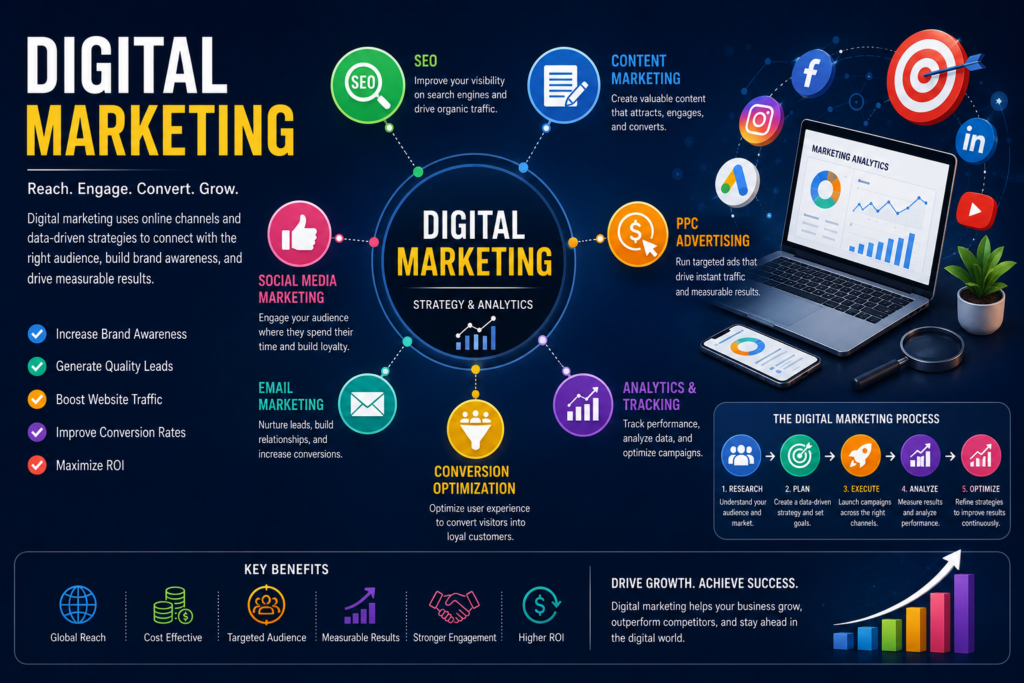
Digital marketing encompasses a wide range of strategies and technologies designed to promote products and services through online platforms. From search engine optimization (SEO) and social media marketing to email campaigns and paid advertising, digital marketing helps businesses engage customers throughout their buying journey.
This guide explores the key components of digital marketing, its benefits, essential strategies, and future trends shaping the industry.
What Is Digital Marketing?
Digital marketing refers to the promotion of products, services, or brands through digital channels such as:
- Search engines
- Websites
- Social media platforms
- Email marketing
- Mobile applications
- Online advertising networks
Unlike traditional marketing, digital marketing allows businesses to measure results in real time and optimize campaigns based on data and customer behavior.
Benefits of Digital Marketing
Global Reach
Businesses can connect with customers worldwide regardless of location.
Cost-Effective Marketing
Digital campaigns often provide better ROI compared to traditional advertising methods.
Measurable Results
Marketers can track impressions, clicks, conversions, and revenue using analytics tools.
Better Targeting
Advanced audience segmentation allows businesses to reach the right customers at the right time.
Increased Engagement
Interactive content, social media, and personalized campaigns help strengthen customer relationships.
Search Engine Optimization (SEO)
SEO is the process of improving website visibility in search engine results.
Key SEO Components
On-Page SEO
- Keyword optimization
- Quality content creation
- Meta titles and descriptions
- Internal linking
- User experience improvements
Off-Page SEO
- Backlink building
- Brand mentions
- Guest posting
- Digital PR
Technical SEO
- Website speed optimization
- Mobile responsiveness
- XML sitemaps
- Structured data
- Secure HTTPS implementation
Effective SEO helps businesses generate organic traffic and long-term growth.
Content Marketing
Content marketing focuses on creating valuable content that attracts and retains customers.
Popular content formats include:
- Blog posts
- Guides and ebooks
- Videos
- Podcasts
- Infographics
- Case studies
- Webinars
High-quality content improves SEO performance, establishes authority, and supports lead generation.
Social Media Marketing
Social media platforms enable brands to engage directly with audiences.
Popular platforms include:
- X (Twitter)
- TikTok
- YouTube
Benefits of social media marketing include:
- Increased brand awareness
- Customer engagement
- Community building
- Lead generation
- Website traffic growth
Pay-Per-Click (PPC) Advertising
PPC advertising allows businesses to display ads and pay only when users click.
Popular PPC platforms include:
Google Ads
Search, display, shopping, and video advertising opportunities.
Meta Ads
Advertising across Facebook and Instagram.
LinkedIn Ads
Ideal for B2B marketing and professional audiences.
YouTube Ads
Video-based campaigns targeting specific demographics and interests.
Email Marketing
Email remains one of the highest-converting digital marketing channels.
Effective email campaigns include:
- Welcome sequences
- Promotional emails
- Newsletters
- Product updates
- Customer retention campaigns
Best practices include personalization, segmentation, and automation.
Conversion Rate Optimization (CRO)
CRO focuses on improving the percentage of website visitors who complete desired actions.
Optimization techniques include:
- A/B testing
- Landing page improvements
- Better call-to-action buttons
- Simplified forms
- Enhanced user experience
Marketing Analytics
Data-driven marketing enables businesses to make informed decisions.
Important metrics include:
- Website traffic
- Bounce rate
- Conversion rate
- Cost per acquisition (CPA)
- Return on investment (ROI)
- Customer lifetime value (CLV)
Popular analytics tools include Google Analytics, Search Console, and marketing automation platforms.
Digital Marketing Trends
The digital marketing landscape continues to evolve rapidly.
Artificial Intelligence
AI-powered tools help with content creation, personalization, automation, and customer service.
Video Marketing
Short-form videos and live streaming continue to dominate user engagement.
Voice Search Optimization
Businesses are adapting content for voice-enabled devices and search queries.
Personalization
Customers increasingly expect tailored experiences based on their interests and behavior.
Influencer Marketing
Brands collaborate with influencers to build trust and reach targeted audiences.
Best Practices for Digital Marketing Success
- Develop a clear marketing strategy
- Understand your target audience
- Create valuable content consistently
- Optimize for search engines
- Leverage multiple marketing channels
- Monitor campaign performance
- Continuously test and improve
- Focus on customer experience
Conclusion
Digital marketing is essential for modern business growth. By combining SEO, content marketing, social media, paid advertising, email marketing, and analytics, organizations can build stronger customer relationships and achieve sustainable success.
As technology continues to evolve, businesses that embrace innovative digital marketing strategies and data-driven decision-making will remain competitive in an increasingly digital world.