Introduction
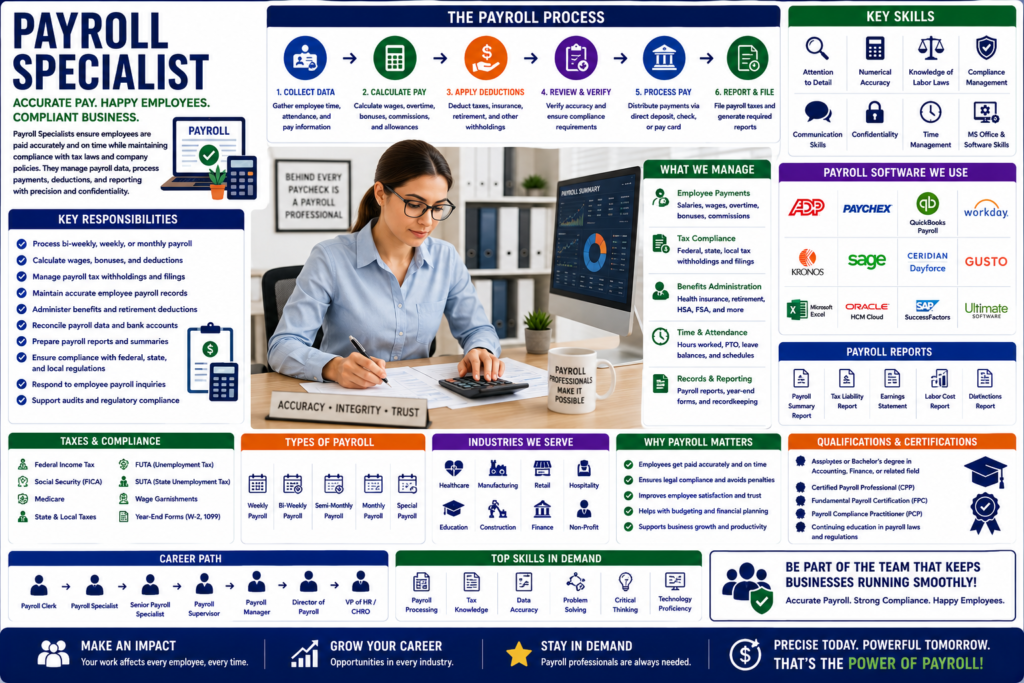
Employees expect to be paid accurately and on time, making payroll one of the most critical functions within any organization. Behind this essential process is the Payroll Specialist, a professional responsible for managing employee compensation, payroll records, tax deductions, benefits administration, and compliance with labor regulations.
Payroll Specialists play a vital role in ensuring businesses maintain accurate payroll operations while meeting legal and financial obligations. Their work directly impacts employee satisfaction, organizational compliance, and financial stability.
As businesses continue expanding globally and payroll regulations become increasingly complex, skilled Payroll Specialists remain highly valuable across industries.
What Is a Payroll Specialist?
A Payroll Specialist is a professional responsible for processing employee wages, maintaining payroll records, calculating deductions, ensuring tax compliance, and administering payroll-related activities.
Their primary responsibilities include:
- Processing payroll
- Calculating employee wages
- Managing tax withholdings
- Maintaining payroll records
- Administering employee benefits
- Ensuring labor law compliance
- Preparing payroll reports
- Managing direct deposits
- Handling payroll inquiries
- Supporting audits
Payroll Specialists help organizations maintain accurate and efficient payroll systems.
Why Payroll Specialists Are Important
Ensure Employees Are Paid Correctly
Accurate payroll processing supports employee trust and satisfaction.
Maintain Compliance
Payroll Specialists help organizations comply with tax and labor laws.
Reduce Financial Risk
Proper payroll management prevents costly penalties and errors.
Support Financial Operations
Payroll data contributes to budgeting and financial planning.
Improve Operational Efficiency
Well-managed payroll systems streamline workforce administration.
Key Responsibilities of a Payroll Specialist
Payroll Processing
Calculating and distributing employee compensation.
Time and Attendance Tracking
Monitoring work hours, overtime, and leave balances.
Tax Administration
Managing payroll tax deductions and filings.
Benefits Management
Processing deductions related to employee benefits.
Record Maintenance
Maintaining accurate payroll and employee records.
Compliance Monitoring
Ensuring payroll activities follow legal requirements.
Reporting
Generating payroll and workforce-related reports.
The Payroll Process
1. Collect Employee Data
Gather time sheets, attendance records, and compensation details.
2. Calculate Earnings
Determine wages, overtime, bonuses, and commissions.
3. Apply Deductions
Process taxes, insurance, retirement contributions, and other deductions.
4. Verify Payroll
Review payroll calculations for accuracy.
5. Process Payments
Distribute employee compensation through direct deposit or other methods.
6. File Payroll Taxes
Submit required tax reports and payments.
7. Maintain Records
Store payroll documentation securely and accurately.
Essential Skills for Payroll Specialists
Attention to Detail
Accuracy is critical in payroll processing.
Numerical Skills
Managing calculations and financial data.
Organization
Handling multiple payroll tasks and deadlines.
Communication
Assisting employees with payroll-related questions.
Problem Solving
Resolving discrepancies and payroll issues.
Confidentiality
Protecting sensitive employee information.
Technology Skills
Using payroll software and reporting tools effectively.
Payroll Compliance and Regulations
Payroll Specialists must understand:
- Labor laws
- Wage regulations
- Overtime requirements
- Tax regulations
- Employee classification rules
- Benefits compliance
- Recordkeeping requirements
Compliance helps organizations avoid legal and financial penalties.
Payroll Taxes
A major responsibility of Payroll Specialists involves managing payroll taxes.
These may include:
Income Tax Withholding
Deducting applicable taxes from employee wages.
Social Insurance Contributions
Managing government-mandated payroll deductions.
Employer Payroll Taxes
Calculating and reporting employer obligations.
Tax Reporting
Preparing payroll tax forms and filings.
Employee Compensation Management
Payroll Specialists handle various forms of compensation:
Regular Wages
Standard employee salaries and hourly pay.
Overtime Pay
Additional compensation for extra work hours.
Bonuses
Performance-based payments.
Commissions
Sales-related compensation.
Incentives
Special compensation programs.
Accurate compensation management is essential for employee satisfaction.
Payroll Software and Tools
Modern Payroll Specialists rely on specialized technology.
ADP
One of the most widely used payroll platforms.
Paychex
Comprehensive payroll and HR solution.
QuickBooks Payroll
Popular among small businesses.
Workday
Enterprise workforce and payroll management platform.
SAP SuccessFactors
Human resources and payroll software.
Oracle HCM
Payroll and workforce management solution.
Microsoft Excel
Frequently used for payroll reporting and analysis.
Payroll Reports
Payroll Specialists regularly prepare reports such as:
Payroll Summary Reports
Overview of employee compensation.
Tax Reports
Payroll tax calculations and filings.
Overtime Reports
Tracking additional work hours.
Benefits Reports
Monitoring employee benefit deductions.
Labor Cost Reports
Analyzing workforce expenses.
Payroll Specialist vs Payroll Administrator
Payroll Specialist
Focuses on payroll processing and compliance.
Payroll Administrator
May oversee broader payroll operations and systems.
Both roles work closely together in many organizations.
Payroll Specialist vs HR Specialist
Payroll Specialist
Focuses on employee compensation and payroll administration.
HR Specialist
Focuses on recruitment, employee relations, and workforce management.
Payroll and HR departments often collaborate closely.
Industries Hiring Payroll Specialists
Corporate Organizations
Managing payroll for employees.
Healthcare
Supporting large healthcare workforces.
Manufacturing
Processing payroll for production employees.
Retail
Managing hourly employee compensation.
Government Agencies
Administering public sector payroll systems.
Financial Services
Supporting payroll compliance and reporting.
Professional Services
Managing payroll operations for clients and employees.
Certifications for Payroll Specialists
Certified Payroll Professional (CPP)
Highly respected payroll certification.
Fundamental Payroll Certification (FPC)
Entry-level payroll credential.
Payroll Compliance Certifications
Focused on regulatory expertise.
Human Resources Certifications
Helpful for professionals working closely with HR teams.
Career Path for Payroll Specialists
Payroll Clerk
Entry-level payroll support position.
Payroll Specialist
Processes payroll and manages compliance activities.
Senior Payroll Specialist
Handles complex payroll operations.
Payroll Supervisor
Leads payroll teams and workflows.
Payroll Manager
Oversees payroll departments and strategies.
Director of Payroll
Leads organization-wide payroll operations.
Chief Human Resources Officer (CHRO)
Executive leadership role overseeing workforce administration.
Best Practices for Payroll Specialists
Verify Data Carefully
Double-check calculations and employee records.
Meet Deadlines
Ensure payroll and tax filings are submitted on time.
Stay Updated
Monitor changes in payroll laws and regulations.
Maintain Confidentiality
Protect employee information and payroll data.
Use Automation Wisely
Leverage payroll software to improve efficiency.
Keep Accurate Records
Maintain organized documentation for compliance purposes.
Future Trends in Payroll Management
Payroll Automation
Technology reduces manual payroll processing.
Artificial Intelligence
AI improves payroll accuracy and compliance monitoring.
Cloud-Based Payroll Systems
Organizations increasingly adopt cloud payroll platforms.
Global Payroll Management
Companies require support for international workforces.
Workforce Analytics
Payroll data supports business intelligence initiatives.
Self-Service Employee Portals
Employees gain greater access to payroll information.
Benefits of Becoming a Payroll Specialist
- Strong job stability
- High demand across industries
- Competitive salaries
- Opportunities for specialization
- Career growth into management
- Valuable financial and HR expertise
- Exposure to business operations
Conclusion
Payroll Specialists play a crucial role in ensuring employees are compensated accurately while maintaining compliance with payroll regulations and tax requirements. Through payroll processing, tax administration, recordkeeping, and reporting, they contribute directly to organizational efficiency and employee satisfaction.
As payroll systems become more sophisticated and compliance requirements continue evolving, skilled Payroll Specialists will remain essential to modern organizations. Professionals who develop expertise in payroll technology, compliance, and workforce administration can build rewarding careers with excellent long-term opportunities.