Introduction
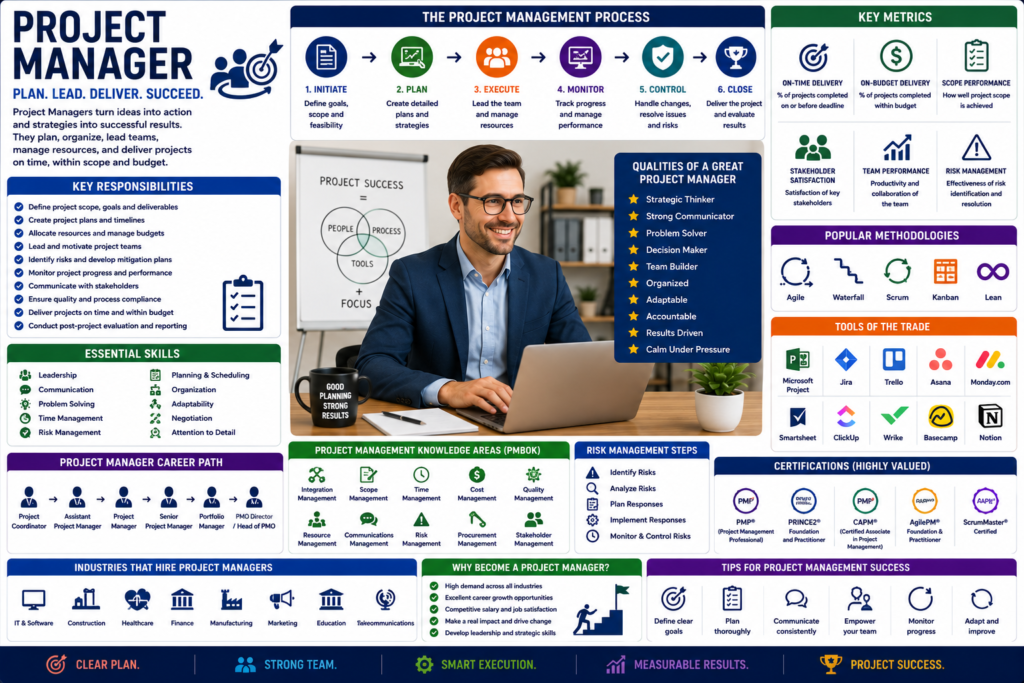
Every successful product launch, software implementation, construction project, marketing campaign, or business transformation initiative requires effective planning, coordination, and leadership. Behind these successful outcomes is a Project Manager.
Project Managers are responsible for ensuring projects are completed on time, within budget, and according to business objectives. They coordinate teams, manage resources, mitigate risks, communicate with stakeholders, and guide projects from initial concept to successful completion.
As organizations become increasingly complex and project-driven, Project Managers have become essential professionals across virtually every industry. Their ability to organize people, processes, and resources directly impacts business performance and long-term success.
This guide explores the role of a Project Manager, essential skills, methodologies, tools, certifications, career opportunities, and future industry trends.
What Is a Project Manager?
A Project Manager (PM) is a professional responsible for planning, executing, monitoring, and closing projects while ensuring organizational goals are achieved.
Project Managers oversee:
- Project planning
- Team coordination
- Budget management
- Risk assessment
- Resource allocation
- Stakeholder communication
- Quality control
- Timeline management
- Performance tracking
- Project delivery
Their primary responsibility is ensuring projects achieve their intended objectives efficiently and effectively.
Why Project Managers Are Important
Improve Project Success Rates
Structured project management increases the likelihood of successful outcomes.
Manage Risks
Project Managers identify and address potential challenges before they become major problems.
Optimize Resources
Teams, budgets, and tools are utilized more effectively.
Enhance Communication
Stakeholders remain informed and aligned throughout the project lifecycle.
Support Business Growth
Successful projects contribute directly to organizational goals and profitability.
Key Responsibilities of a Project Manager
Project Planning
Developing comprehensive project plans and timelines.
Team Leadership
Coordinating team members and maintaining productivity.
Budget Management
Tracking project costs and controlling expenditures.
Risk Management
Identifying and mitigating potential project risks.
Stakeholder Communication
Providing updates and managing expectations.
Quality Assurance
Ensuring deliverables meet requirements and standards.
Performance Monitoring
Tracking progress using key project metrics.
The Project Management Lifecycle
1. Project Initiation
Defining project goals, scope, and stakeholders.
Activities include:
- Business case development
- Feasibility analysis
- Project charter creation
2. Project Planning
Creating detailed execution plans.
Components include:
- Scope definition
- Scheduling
- Budgeting
- Resource planning
- Risk assessments
3. Project Execution
Implementing planned activities and coordinating teams.
4. Monitoring and Controlling
Tracking progress and adjusting plans when necessary.
5. Project Closure
Completing deliverables and documenting lessons learned.
Essential Skills for Project Managers
Leadership
Motivating and guiding teams toward project objectives.
Communication
Managing stakeholder expectations and team collaboration.
Time Management
Ensuring deadlines are met efficiently.
Problem Solving
Addressing challenges and finding practical solutions.
Decision Making
Making informed choices under pressure.
Negotiation
Balancing competing priorities and stakeholder interests.
Organizational Skills
Managing multiple tasks, resources, and deadlines simultaneously.
Project Management Methodologies
Waterfall
A sequential approach where each phase is completed before moving to the next.
Best suited for:
- Construction projects
- Manufacturing
- Highly regulated environments
Agile
An iterative approach focused on flexibility and continuous improvement.
Popular in:
- Software development
- Product management
- Technology projects
Scrum
A framework within Agile that organizes work into short development cycles called sprints.
Kanban
A visual workflow management system focused on continuous delivery.
Hybrid Project Management
Combines elements of traditional and Agile methodologies.
Stakeholder Management
Project Managers regularly interact with:
- Executives
- Clients
- Team members
- Vendors
- Business partners
- Department leaders
Effective stakeholder management involves:
- Clear communication
- Expectation management
- Transparency
- Conflict resolution
Project Planning Components
Successful projects require detailed planning.
Scope Management
Defining project boundaries and deliverables.
Schedule Management
Creating realistic timelines and milestones.
Budget Planning
Estimating costs and allocating financial resources.
Resource Management
Assigning personnel, equipment, and tools.
Risk Planning
Preparing for potential challenges and disruptions.
Risk Management
Risk management is a critical Project Manager responsibility.
Common project risks include:
- Budget overruns
- Scope creep
- Resource shortages
- Delayed deliverables
- Technology failures
- Stakeholder conflicts
Risk mitigation strategies help reduce project uncertainty.
Popular Project Management Tools
Microsoft Project
Comprehensive project scheduling and planning software.
Asana
Task management and team collaboration platform.
Monday.com
Work management and project tracking solution.
Jira
Popular for Agile and software development projects.
Trello
Visual task and workflow management tool.
ClickUp
Project planning and productivity platform.
Notion
Documentation and project organization tool.
Smartsheet
Spreadsheet-based project management platform.
Key Project Management Metrics
Schedule Performance
Measures adherence to project timelines.
Budget Performance
Tracks spending against planned costs.
Resource Utilization
Evaluates efficiency of resource allocation.
Risk Exposure
Assesses project risk levels.
Stakeholder Satisfaction
Measures stakeholder confidence and engagement.
Project Success Rate
Determines whether project goals were achieved.
Project Manager Certifications
Professional certifications enhance credibility and career opportunities.
PMP (Project Management Professional)
One of the most recognized project management certifications worldwide.
CAPM (Certified Associate in Project Management)
Ideal for entry-level project professionals.
PRINCE2
Popular project management framework certification.
Certified ScrumMaster (CSM)
Focuses on Agile and Scrum methodologies.
PMI-ACP
Agile certification offered by PMI.
SAFe Certification
Supports large-scale Agile transformations.
Industries Hiring Project Managers
Information Technology
Managing software development and technology initiatives.
Construction
Coordinating building and infrastructure projects.
Healthcare
Managing healthcare technology and operational projects.
Finance
Leading regulatory, technology, and business transformation initiatives.
Manufacturing
Improving production and operational efficiency.
Marketing
Managing campaigns, product launches, and brand initiatives.
Government
Supporting public-sector projects and programs.
Career Path for Project Managers
Project Coordinator
Supports project planning and administration.
Junior Project Manager
Manages smaller projects and teams.
Project Manager
Leads projects independently.
Senior Project Manager
Oversees complex initiatives and larger budgets.
Program Manager
Coordinates multiple related projects.
Portfolio Manager
Manages strategic collections of projects.
PMO Director
Leads project management offices and governance.
Chief Operations Officer (COO)
Executive leadership focused on organizational performance.
Best Practices for Project Management
Define Clear Objectives
Ensure all stakeholders understand project goals.
Communicate Frequently
Maintain transparency and alignment.
Monitor Risks Continuously
Identify and address issues proactively.
Use Data for Decisions
Leverage project metrics and performance indicators.
Manage Scope Carefully
Prevent uncontrolled project expansion.
Encourage Team Collaboration
Promote engagement and accountability.
Future Trends in Project Management
Artificial Intelligence
AI assists with planning, forecasting, and risk analysis.
Remote Project Management
Distributed teams become increasingly common.
Automation
Administrative tasks become more automated.
Data-Driven Decision Making
Project analytics play a larger role in planning and execution.
Agile Adoption
More industries embrace Agile methodologies.
Digital Transformation Projects
Organizations increasingly invest in technology-driven initiatives.
Benefits of Becoming a Project Manager
- High demand across industries
- Strong earning potential
- Leadership opportunities
- Diverse career paths
- Global career opportunities
- Continuous professional growth
- Direct impact on business success
Conclusion
Project Managers are essential leaders who transform ideas into successful outcomes. Through planning, organization, communication, and leadership, they ensure projects achieve business goals while managing risks, budgets, and stakeholder expectations.
As organizations continue relying on project-based work to drive innovation and growth, skilled Project Managers will remain highly valuable. Professionals who master project methodologies, leadership skills, communication strategies, and modern project management tools can build rewarding and successful careers in virtually any industry.