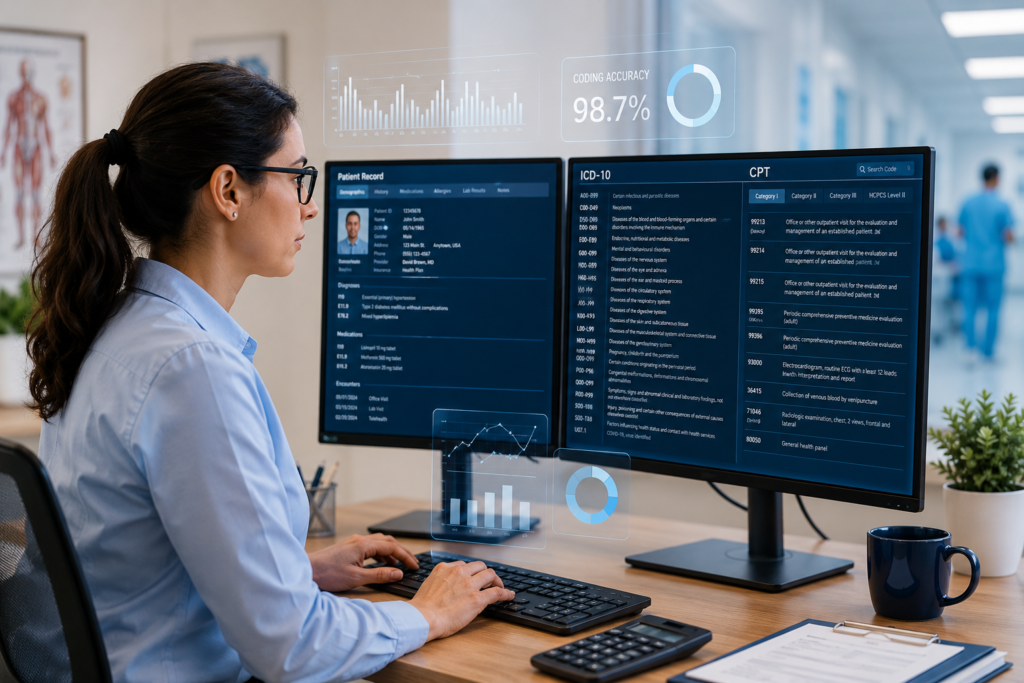
In the rapidly evolving landscape of healthcare, few roles are as critical to the industry’s financial health and operational efficiency as the Medical Coder. As healthcare providers strive to navigate complex insurance regulations and ensure accurate reimbursement, the demand for skilled professionals who can translate medical diagnoses and procedures into universal codes has never been higher.
Whether you are considering a career change, looking to enter the healthcare field without a clinical degree, or seeking to advance your administrative skills, becoming a Medical Coder offers a stable, rewarding, and flexible career path. This guide explores everything you need to know about the profession, from certification requirements to salary expectations and the impact of technology on the field.
What Does a Medical Coder Do?
At its core, medical coding is the process of translating healthcare diagnoses, procedures, medical services, and equipment into universal medical alphanumeric codes. These codes are derived from the patient’s medical record and are used by insurance companies, government agencies, and healthcare providers to process claims and determine reimbursement.
A Medical Coder acts as the bridge between clinical care and the business side of healthcare. Their primary responsibilities include:
- Reviewing Clinical Documentation: Analyzing patient records, physician notes, lab results, and radiology reports to identify all diagnoses and procedures performed.
- Assigning Codes: Applying the correct codes from standardized coding systems, primarily:
- ICD-10-CM: International Classification of Diseases, 10th Revision, Clinical Modification (for diagnoses).
- CPT: Current Procedural Terminology (for medical procedures and services).
- HCPCS Level II: Healthcare Common Procedure Coding System (for supplies, drugs, and services not covered by CPT).
- Ensuring Compliance: Adhering to strict federal and state regulations, such as HIPAA, to protect patient privacy and prevent fraud.
- Querying Providers: Communicating with doctors and nurses to clarify ambiguous documentation to ensure the codes accurately reflect the care provided.
- Auditing and Reporting: Reviewing coded data for accuracy and assisting in the preparation of reports for billing departments.
Without accurate coding, hospitals and clinics risk claim denials, delayed payments, legal penalties, and inaccurate health statistics.
Why Choose a Career in Medical Coding?
The healthcare industry is one of the largest employers in the world, and the administrative sector is growing alongside it. Here are several compelling reasons to pursue a career as a Medical Coder:
1. High Demand and Job Security
The aging population in many countries, combined with an increase in chronic diseases, ensures a steady stream of medical services. Consequently, the need for accurate coding is constant. According to the U.S. Bureau of Labor Statistics, employment for medical records and health information technicians (which includes coders) is projected to grow significantly faster than the average for all occupations.
2. Flexibility and Remote Work Opportunities
One of the most attractive aspects of medical coding is its adaptability to remote work. Because the job is primarily computer-based and relies on digital records, many coders work from home. This flexibility makes it an ideal career for parents, caregivers, or those seeking a better work-life balance.
3. No Need for a Medical Degree
Unlike nurses or doctors, Medical Coders do not need to attend medical school or spend years in clinical training. Most entry-level positions require a post-secondary certificate or an associate degree, which can be completed in one to two years.
4. Competitive Salary
Medical coding offers a competitive salary relative to the education required. While entry-level positions start modestly, experienced coders with specialized certifications can earn six-figure incomes, particularly in specialized fields like oncology or cardiology.
Essential Certifications: The Key to Success
While some employers may hire candidates with just a high school diploma and on-the-job training, obtaining a professional certification is the gold standard in the industry. Certification validates your knowledge, increases your employability, and often leads to higher pay.
The two primary organizations that offer medical coding certifications are the AAPC (American Academy of Professional Coders) and AHIMA (American Health Information Management Association).
Top Certifications to Consider:
1. Certified Professional Coder (CPC) – AAPC
The CPC is the most recognized certification for physicians’ offices and outpatient settings. To earn the CPC credential, candidates must pass a rigorous exam covering anatomy, medical terminology, pathology, and coding guidelines.
- Best for: Those interested in working in private practices, clinics, or outpatient facilities.
- Prerequisites: Passing the exam; apprenticeship status (CPC-A) is removed after gaining two years of experience or submitting letters of recommendation.
2. Certified Coding Specialist (CCS) – AHIMA
The CCS credential is highly regarded for hospital-based coding. It focuses on inpatient coding, which is generally more complex than outpatient coding due to the severity of illnesses and the variety of procedures involved.
- Best for: Those aiming to work in hospitals, large healthcare systems, or inpatient facilities.
- Prerequisites: Requires a strong background in medical terminology, anatomy, and pathophysiology; often preferred for candidates with prior healthcare experience.
3. Certified Outpatient Coding (COC) and Certified Inpatient Coding (CIC)
These are newer, specialized certifications offered by the AAPC that allow coders to demonstrate expertise in specific settings, further distinguishing them in the job market.
How to Become a Medical Coder: Step-by-Step
Breaking into the field requires a structured approach. Here is a roadmap to launching your career:
Step 1: Education and Training
Enroll in a medical coding and billing program. These programs are available at community colleges, vocational schools, and online institutions. Look for programs accredited by organizations like the Commission on Accreditation for Health Informatics and Information Management Education (CAHIIM) or those approved by the AAPC.
- Curriculum Focus: Ensure your training covers medical terminology, anatomy and physiology, pathophysiology, pharmacology, and the three major coding systems (ICD-10, CPT, HCPCS).
Step 2: Gain Practical Experience
Many entry-level jobs require experience, creating a “catch-22” for new graduates. To overcome this:
- Internships: Seek internships during your training.
- Volunteering: Offer to help local clinics with their coding projects.
- Apprenticeship: If you pass your CPC exam but lack experience, you will receive the CPC-A designation. You can remove the “A” by submitting proof of two years of experience or one year of experience plus completing an 80-hour coding practicum.
Step 3: Obtain Certification
Prepare for and pass your chosen certification exam. Study guides, practice exams, and study groups are essential resources. Many training programs include exam vouchers or prep courses.
Step 4: Continue Your Education
Healthcare coding guidelines change annually. To maintain your certification, you must earn Continuing Education Units (CEUs). This ensures you stay updated on the latest ICD-10 updates, CPT changes, and regulatory requirements.
Medical Coder Salary and Job Outlook
Salaries for Medical Coders vary based on location, experience, certification level, and the type of facility.
- Entry-Level: Typically ranges from $40,000 to $50,000 annually.
- Experienced (3-5+ years): Can range from $55,000 to $75,000.
- Specialized/Certified: Senior coders, auditors, or those with multiple certifications (e.g., CPC and CIC) can earn $80,000 to $100,000+.
Geographic location plays a significant role. Coders in major metropolitan areas or regions with a high cost of living generally command higher salaries. Additionally, remote positions may offer competitive pay regardless of location, though some companies adjust salaries based on the employee’s residence.
The job outlook remains robust. As healthcare data becomes increasingly digitized and regulations tighten, the need for precise coding will continue to drive demand.
The Impact of Technology and AI on Medical Coding
A common question among aspiring coders is: “Will Artificial Intelligence replace me?”
While AI and automation are transforming the industry, they are not replacing Medical Coders entirely. Instead, the role is evolving.
- Automation: AI can now scan records and suggest codes, speeding up the process.
- The Human Element: AI lacks the critical thinking skills to interpret complex, ambiguous, or incomplete documentation. Coders are needed to audit AI suggestions, query providers for clarification, and ensure compliance with ever-changing laws.
- Shift in Focus: The future coder will spend less time manually assigning codes and more time acting as a compliance auditor and data analyst, ensuring the integrity of the healthcare revenue cycle.
To stay relevant, modern coders must embrace technology, learn to work with Computer-Assisted Coding (CAC) software, and develop strong analytical skills.
Skills Required for Success
Beyond technical knowledge, successful Medical Coders possess a unique blend of soft and hard skills:
- Attention to Detail: A single digit error can lead to a denied claim or a fraud investigation.
- Analytical Thinking: The ability to read complex medical notes and determine the correct code set.
- Ethical Integrity: Handling sensitive patient data requires strict adherence to privacy laws.
- Communication: Effectively communicating with physicians to clarify documentation.
- Adaptability: Willingness to continuously learn as coding guidelines update every year.
Conclusion
Becoming a Medical Coder is a strategic investment in a stable and dynamic career. With the healthcare industry’s relentless growth and the critical need for accurate data management, skilled coders are indispensable. Whether you choose to work in a bustling hospital, a quiet private practice, or from the comfort of your home, the path to becoming a certified coder offers a clear route to professional fulfillment and financial stability.
By obtaining the right certification, staying committed to continuous learning, and adapting to technological advancements, you can build a thriving career that supports the backbone of modern healthcare.
Frequently Asked Questions (FAQ)
Q: How long does it take to become a Medical Coder? A: Most certificate programs take 9 to 12 months to complete. Associate degrees typically take 2 years. Adding exam preparation and potential apprenticeship time, you can be job-ready in 1 to 2 years.
Q: Is medical coding a good remote job? A: Yes, it is one of the top remote-friendly careers in healthcare. Many hospitals and billing companies hire remote coders, provided they have a secure workspace and high-speed internet.
Q: Do I need a college degree? A: No, a college degree is not strictly required. A post-secondary certificate or diploma from an accredited program is sufficient for most entry-level positions, though an associate degree can be beneficial for career advancement.
Q: What is the difference between a Medical Coder and a Medical Biller? A: A Coder translates medical records into codes. A Biller uses those codes to create claims and submit them to insurance companies. While the roles are distinct, many professionals are trained in both and work as “Billing and Coding Specialists.”
Q: How much does certification cost? A: Exam fees for certifications like the CPC or CCS typically range from $300 to $500. Membership fees for organizations like the AAPC or AHIMA are additional but often provide access to study materials and networking.