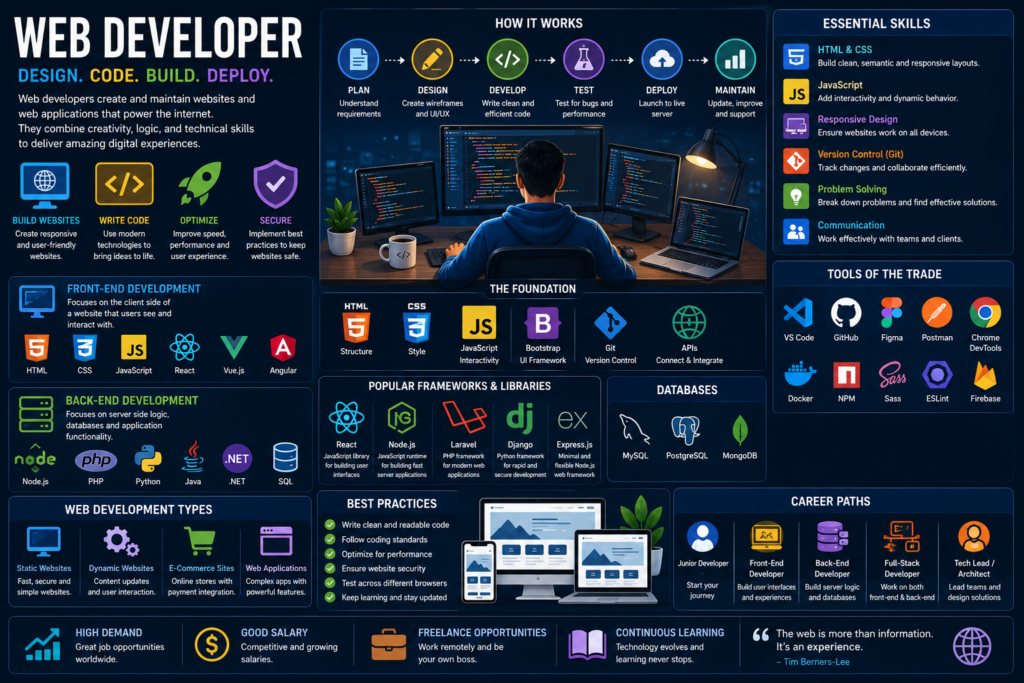
Introduction
Web developers are the professionals responsible for creating and maintaining websites and web applications that power the internet. From simple business websites to complex e-commerce platforms and social media networks, web developers transform ideas into interactive digital experiences.
As businesses continue to expand their online presence, the demand for skilled web developers remains strong. Modern web development combines creativity, problem-solving, and technical expertise to deliver fast, secure, and user-friendly websites.
This guide explores the role of a web developer, essential skills, technologies, career opportunities, and industry best practices.
What Is a Web Developer?
A web developer is a professional who designs, builds, tests, and maintains websites and web applications. Their goal is to create digital experiences that are functional, responsive, secure, and visually appealing.
Typical responsibilities include:
- Writing code
- Building website functionality
- Managing databases
- Optimizing performance
- Testing and debugging
- Ensuring security
- Maintaining web applications
Types of Web Developers
Front-End Developer
Front-end developers focus on the visual aspects of websites that users interact with directly.
Key technologies include:
- HTML
- CSS
- JavaScript
- React
- Vue.js
- Angular
Back-End Developer
Back-end developers build the server-side functionality that powers websites.
Popular technologies include:
- Node.js
- PHP
- Python
- Java
- C#
- SQL Databases
Full-Stack Developer
Full-stack developers work on both front-end and back-end development, making them highly versatile professionals.
Essential Web Development Technologies
HTML
HTML provides the structure and content of web pages.
CSS
CSS controls visual appearance, layouts, colors, and responsive design.
JavaScript
JavaScript adds interactivity and dynamic functionality to websites.
Databases
Common databases include:
- MySQL
- PostgreSQL
- MongoDB
- SQL Server
APIs
APIs allow applications to communicate and exchange data efficiently.
Popular Frameworks and Libraries
React
One of the most widely used JavaScript libraries for building user interfaces.
Angular
A powerful framework for creating large-scale web applications.
Vue.js
A flexible and beginner-friendly front-end framework.
Node.js
Enables JavaScript development on the server side.
Laravel
A popular PHP framework for web application development.
Django
A robust Python framework known for security and scalability.
Responsive Web Design
Modern websites must work across multiple devices including:
- Smartphones
- Tablets
- Laptops
- Desktop computers
Responsive design ensures users enjoy a consistent experience regardless of screen size.
Web Development Lifecycle
Planning
Define project goals, requirements, and target audiences.
Design
Create layouts, wireframes, and user experience flows.
Development
Build front-end and back-end functionality.
Testing
Verify usability, performance, and security.
Deployment
Launch the website to a live environment.
Maintenance
Update content, fix issues, and improve performance.
Essential Skills for Web Developers
Technical Skills
- HTML & CSS
- JavaScript
- Database Management
- APIs
- Version Control (Git)
- Responsive Design
- Web Security
Soft Skills
- Problem Solving
- Communication
- Teamwork
- Time Management
- Adaptability
Web Development Tools
Popular tools include:
- Visual Studio Code
- GitHub
- Git
- Figma
- Postman
- Docker
- Chrome DevTools
These tools help developers build, test, and manage projects more efficiently.
Web Development Best Practices
Write Clean Code
Maintain readable and organized code structures.
Optimize Performance
Improve loading speeds and user experience.
Prioritize Security
Protect websites against vulnerabilities and attacks.
Ensure Accessibility
Design websites usable by all users, including those with disabilities.
Test Across Devices
Verify functionality on multiple browsers and screen sizes.
Career Opportunities
Web development offers many career paths:
- Front-End Developer
- Back-End Developer
- Full-Stack Developer
- Web Application Developer
- E-Commerce Developer
- WordPress Developer
- Technical Lead
- Software Architect
Future Trends in Web Development
Progressive Web Apps (PWAs)
Websites increasingly offer app-like experiences.
Artificial Intelligence Integration
AI-powered features enhance user interactions.
Serverless Architecture
Cloud-based solutions simplify deployment and scaling.
Web3 Technologies
Blockchain and decentralized applications continue to grow.
Enhanced Cybersecurity
Security-first development practices are becoming essential.
Benefits of Becoming a Web Developer
- High global demand
- Remote work opportunities
- Competitive salaries
- Continuous learning
- Career flexibility
- Freelance opportunities
- Creative and technical challenges
Conclusion
Web development is one of the most dynamic and rewarding careers in technology. By mastering modern programming languages, frameworks, tools, and best practices, web developers can create powerful digital experiences that serve millions of users worldwide.
As businesses continue investing in digital transformation, skilled web developers will remain essential for building the next generation of websites, applications, and online services.