Introduction
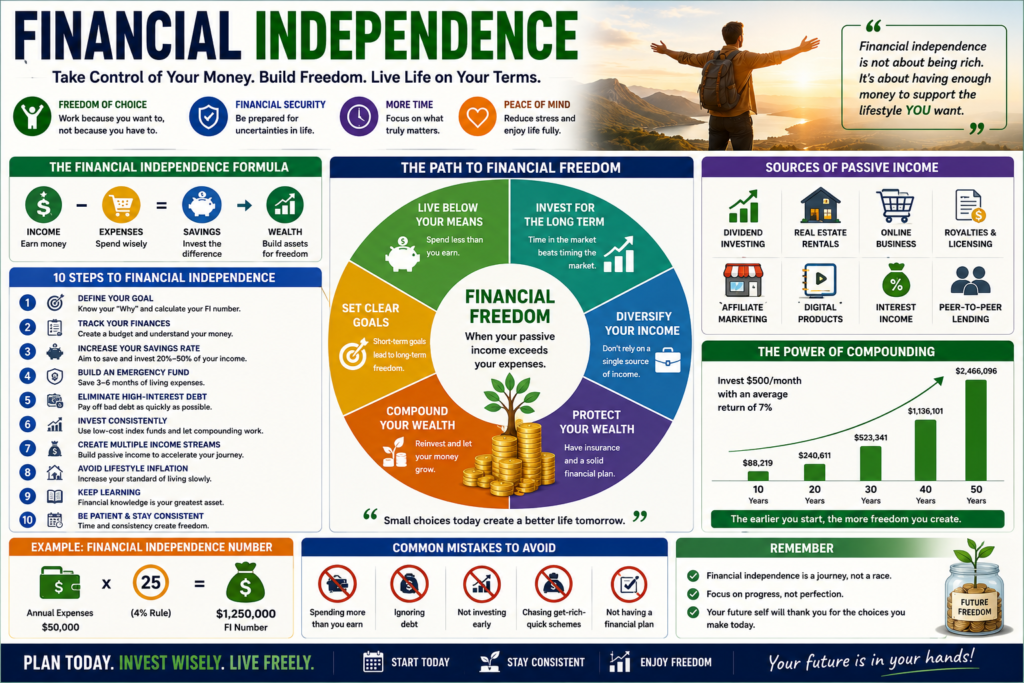
Financial independence is the dream of millions of people worldwide. It means having enough income, savings, and investments to support your lifestyle without relying solely on a traditional paycheck. Achieving financial independence provides freedom, flexibility, and peace of mind, allowing you to make life decisions based on personal goals rather than financial necessity.
While financial independence may seem like a distant goal, it is achievable through disciplined saving, strategic investing, smart money management, and long-term planning. Whether your goal is early retirement, career flexibility, or simply financial security, understanding the principles of financial independence can help you build a brighter future.
This comprehensive guide explores the key concepts, strategies, and habits that can help you achieve financial independence and long-term wealth.
What Is Financial Independence?
Financial independence occurs when your assets and passive income generate enough money to cover your living expenses indefinitely.
This income may come from:
- Investment portfolios
- Dividend stocks
- Rental properties
- Business ownership
- Royalties
- Interest income
- Other passive income streams
When your passive income exceeds your expenses, you achieve financial independence.
Why Financial Independence Matters
Freedom of Choice
You can make career and lifestyle decisions without being constrained by financial obligations.
Reduced Financial Stress
Financial security provides peace of mind during economic uncertainty.
More Time for What Matters
Financial independence allows you to focus on:
- Family
- Travel
- Hobbies
- Personal growth
- Community involvement
Greater Financial Security
A strong financial foundation protects against unexpected life events.
The Financial Independence Formula
The basic concept is simple:
Income – Expenses = Savings
Savings + Investments = Wealth Growth
Wealth Growth + Time = Financial Independence
The larger the gap between income and expenses, the faster wealth can accumulate.
Step 1: Define Your Financial Independence Goal
Begin by determining what financial independence means to you.
Consider:
- Desired lifestyle
- Retirement age
- Annual living expenses
- Travel plans
- Family goals
- Housing preferences
Clear goals provide direction and motivation throughout the journey.
Step 2: Calculate Your Financial Independence Number
Your Financial Independence (FI) Number represents the amount of invested assets required to support your lifestyle.
A common guideline is:
FI Number = Annual Expenses × 25
For example:
- Annual expenses: $40,000
- FI Number: $1,000,000
This guideline is based on the widely discussed 4% withdrawal rule.
Step 3: Increase Your Savings Rate
Your savings rate is one of the most important factors in achieving financial independence.
Ways to Increase Savings
- Create a budget
- Reduce unnecessary expenses
- Avoid lifestyle inflation
- Pay off high-interest debt
- Increase income
Higher savings rates significantly shorten the path to financial independence.
Step 4: Build an Emergency Fund
Before aggressively investing, establish an emergency fund.
Recommended amount:
- Three to six months of living expenses
Benefits include:
- Financial stability
- Reduced reliance on debt
- Protection during emergencies
Step 5: Eliminate High-Interest Debt
Debt reduces your ability to invest and build wealth.
Focus on paying off:
- Credit cards
- Personal loans
- Payday loans
- High-interest consumer debt
Reducing debt improves cash flow and accelerates wealth creation.
Step 6: Invest Consistently
Investing is essential for financial independence.
Popular investment options include:
Index Funds
Benefits:
- Low costs
- Broad diversification
- Strong historical performance
ETFs
Benefits:
- Flexibility
- Diversification
- Ease of investing
Dividend Stocks
Benefits:
- Passive income
- Long-term growth
Real Estate
Benefits:
- Rental income
- Property appreciation
Consistent investing allows compound growth to work over time.
Step 7: Create Multiple Income Streams
Financially independent individuals often have multiple sources of income.
Examples include:
- Employment income
- Dividend income
- Rental income
- Business income
- Freelance work
- Royalties
- Online businesses
Diversified income streams reduce financial risk.
Step 8: Understand the FIRE Movement
FIRE stands for:
Financial Independence, Retire Early
The FIRE movement encourages:
- High savings rates
- Intentional spending
- Aggressive investing
- Long-term wealth building
Common FIRE approaches include:
Lean FIRE
Retiring on a modest budget.
Traditional FIRE
Maintaining a comfortable lifestyle through investments.
Fat FIRE
Retiring with substantial wealth and a higher spending level.
Step 9: Avoid Lifestyle Inflation
Lifestyle inflation occurs when spending increases as income rises.
Examples include:
- Larger homes
- Luxury vehicles
- Expensive vacations
- Premium subscriptions
Instead of increasing spending dramatically, direct raises and bonuses toward investments.
Step 10: Focus on Long-Term Thinking
Financial independence is a marathon, not a sprint.
Successful individuals focus on:
- Consistency
- Patience
- Long-term investing
- Continuous learning
Small actions repeated over many years produce extraordinary results.
Habits of Financially Independent People
Most financially independent individuals:
- Live below their means
- Save consistently
- Invest regularly
- Avoid unnecessary debt
- Track expenses
- Set clear goals
- Continue learning about finance
These habits support sustainable wealth creation.
Common Mistakes That Delay Financial Independence
Overspending
Spending more than you earn limits savings and investing opportunities.
Ignoring Investments
Saving alone rarely generates sufficient long-term wealth.
Lack of Financial Goals
Without clear objectives, progress becomes difficult to measure.
Emotional Investing
Fear and greed often lead to poor investment decisions.
Waiting Too Long to Start
Time is one of the most valuable assets in wealth building.
Timeline to Financial Independence
The timeline varies based on:
- Income
- Expenses
- Savings rate
- Investment returns
- Lifestyle choices
For many people:
- Saving 10% may require several decades.
- Saving 30%–50% can significantly accelerate the process.
- Higher savings rates often lead to earlier financial independence.
Benefits After Achieving Financial Independence
Financial independence can provide:
- Career flexibility
- Optional retirement
- Reduced stress
- Greater life satisfaction
- More time with family
- Increased opportunities for personal growth
The goal is not simply accumulating money but creating freedom and choice.
Conclusion
Financial independence is one of the most rewarding financial goals you can pursue. By increasing your savings rate, reducing debt, investing consistently, creating passive income streams, and maintaining disciplined financial habits, you can build a future where work becomes optional rather than necessary.
The journey requires patience and commitment, but every step you take today moves you closer to financial freedom. Start small, stay consistent, and remember that financial independence is built through thousands of smart financial decisions made over time.