Introduction
Graphic design is one of the most powerful forms of visual communication in the modern world. From company logos and websites to advertisements, social media graphics, and product packaging, graphic design influences how people perceive brands, products, and information.
In today’s digital-first environment, businesses rely heavily on effective design to attract customers, build credibility, and communicate messages clearly. Great graphic design combines creativity, strategy, and technical skills to create visuals that are both attractive and functional.
Whether you’re an aspiring designer, entrepreneur, marketer, or business owner, understanding graphic design fundamentals can help you create stronger visual experiences and more impactful communication.
What Is Graphic Design?
Graphic design is the art and practice of creating visual content to communicate messages effectively.
Graphic designers use elements such as:
- Typography
- Color
- Images
- Layouts
- Illustrations
- Shapes
- Icons
These elements work together to convey information, evoke emotions, and influence audience behavior.
Graphic design is used across numerous industries, including:
- Marketing
- Advertising
- Publishing
- Technology
- E-commerce
- Entertainment
- Education
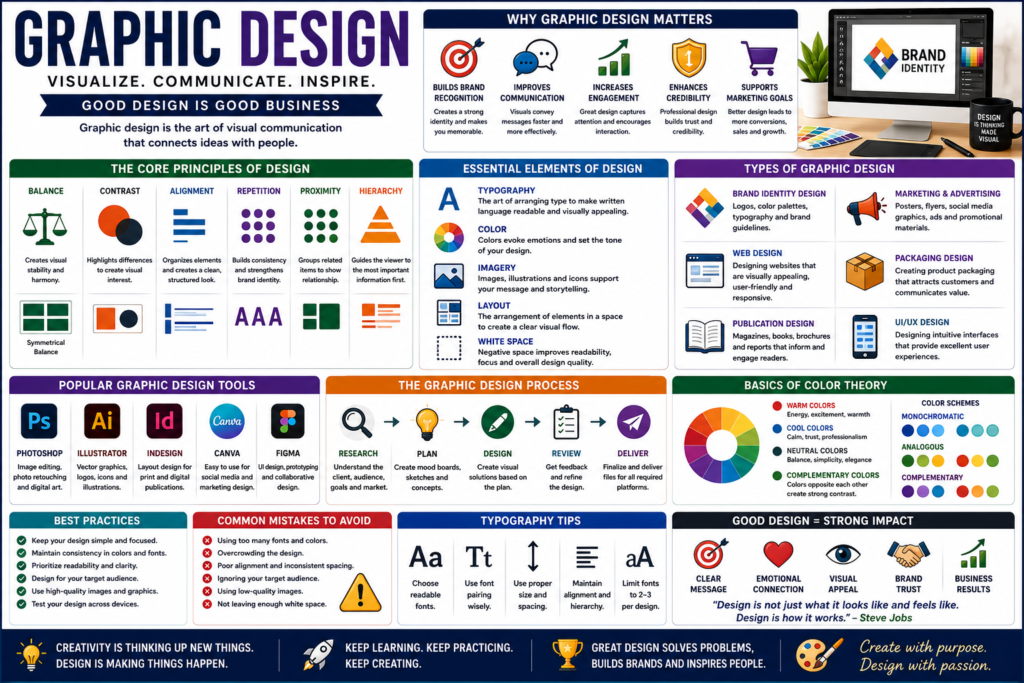
Why Graphic Design Matters
Effective graphic design provides several important benefits.
Builds Brand Recognition
Strong visual identity helps customers recognize and remember a brand.
Improves Communication
Visual elements often communicate information faster than text alone.
Increases Engagement
Professional design attracts attention and encourages interaction.
Enhances Credibility
Well-designed materials create trust and professionalism.
Supports Marketing Goals
Strategic design can increase conversions, sales, and customer engagement.
The Core Principles of Graphic Design
Successful design follows fundamental principles that improve visual effectiveness.
Balance
Balance creates visual stability.
Types include:
- Symmetrical balance
- Asymmetrical balance
- Radial balance
Balanced designs feel organized and professional.
Contrast
Contrast helps important elements stand out.
Examples include:
- Light versus dark
- Large versus small
- Bold versus thin
Contrast improves readability and visual interest.
Alignment
Alignment creates structure and organization.
Proper alignment helps guide viewers through content logically.
Repetition
Repeating design elements creates consistency and strengthens branding.
Examples include:
- Colors
- Fonts
- Shapes
- Visual styles
Proximity
Related elements should be grouped together to improve understanding.
Hierarchy
Visual hierarchy directs attention to the most important information first.
Designers use:
- Size
- Color
- Position
- Typography
to establish hierarchy.
Essential Elements of Graphic Design
Typography
Typography refers to the style and arrangement of text.
Good typography improves:
- Readability
- User experience
- Brand personality
Common font categories include:
- Serif
- Sans-serif
- Script
- Display fonts
Color Theory
Color influences emotions and perceptions.
Examples:
- Blue: Trust and professionalism
- Green: Growth and health
- Red: Energy and urgency
- Yellow: Optimism and creativity
Understanding color psychology helps create more effective designs.
Imagery
Images support storytelling and communication.
Examples include:
- Photography
- Illustrations
- Icons
- Graphics
High-quality visuals improve audience engagement.
Layout
Layout determines how elements are arranged.
A strong layout:
- Improves readability
- Creates visual flow
- Enhances user experience
White Space
White space, or negative space, improves clarity and focus.
Benefits include:
- Reduced clutter
- Better readability
- Improved visual appeal
Types of Graphic Design
Brand Identity Design
Brand identity design includes:
- Logos
- Color palettes
- Typography systems
- Brand guidelines
These elements create a consistent visual identity.
Marketing and Advertising Design
Examples include:
- Posters
- Flyers
- Brochures
- Social media graphics
- Online advertisements
Marketing design helps promote products and services.
Web Design
Web design focuses on creating user-friendly digital experiences.
Key considerations include:
- Navigation
- Responsiveness
- Accessibility
- Visual appeal
Packaging Design
Packaging influences purchasing decisions and brand perception.
Effective packaging combines:
- Functionality
- Branding
- Consumer appeal
Publication Design
Examples include:
- Magazines
- Books
- Reports
- Newspapers
Publication design emphasizes readability and organization.
User Interface (UI) Design
UI design focuses on digital products and applications.
Goals include:
- Ease of use
- Visual consistency
- User satisfaction
Popular Graphic Design Tools
Professional designers often use:
Adobe Photoshop
Ideal for:
- Photo editing
- Digital artwork
- Image manipulation
Adobe Illustrator
Best for:
- Logos
- Vector graphics
- Illustrations
Adobe InDesign
Commonly used for:
- Magazines
- Books
- Layout design
Canva
Popular for:
- Social media graphics
- Marketing materials
- Beginner-friendly design projects
Figma
Widely used for:
- UI design
- Collaboration
- Prototyping
Graphic Design Process
Step 1: Research
Understand:
- Client objectives
- Target audience
- Industry trends
- Competitors
Step 2: Planning
Create:
- Mood boards
- Wireframes
- Design concepts
Step 3: Design Creation
Develop visual solutions based on project goals.
Step 4: Review and Revision
Gather feedback and refine designs.
Step 5: Final Delivery
Prepare files for:
- Digital platforms
- Marketing campaigns
Graphic Design Best Practices
Keep Designs Simple
Simple designs are often more effective and memorable.
Maintain Consistency
Use consistent:
- Colors
- Typography
- Visual styles
Prioritize Readability
Ensure content remains easy to read across devices and formats.
Design for the Audience
Always consider audience preferences and expectations.
Focus on Functionality
A beautiful design should also achieve its communication goals.
Common Graphic Design Mistakes
Avoid these common errors:
Overcrowding
Too many elements create confusion.
Poor Typography Choices
Unreadable fonts reduce effectiveness.
Inconsistent Branding
Inconsistency weakens brand recognition.
Weak Color Selection
Poor color choices can negatively impact user experience.
Ignoring White Space
Crowded layouts reduce visual clarity.
Graphic Design and Business Growth
Graphic design contributes directly to business success by:
- Increasing brand awareness
- Improving customer trust
- Enhancing marketing campaigns
- Supporting sales efforts
- Creating memorable customer experiences
Strong visual branding often differentiates successful companies from competitors.
Future Trends in Graphic Design
Emerging trends include:
- AI-assisted design tools
- Motion graphics
- 3D design
- Minimalist branding
- Interactive experiences
- Personalized visuals
- Augmented reality design
Designers who adapt to evolving technologies remain competitive.
Skills Every Graphic Designer Should Develop
Successful designers often possess:
- Creativity
- Communication skills
- Typography knowledge
- Color theory expertise
- Problem-solving abilities
- Software proficiency
- Marketing awareness
Continuous learning is essential in the rapidly changing design industry.
Conclusion
Graphic design is far more than creating attractive visuals. It is a strategic discipline that combines creativity, communication, and problem-solving to influence how people understand and interact with information.
By mastering design principles, understanding visual communication, developing technical skills, and staying current with industry trends, designers can create impactful work that drives engagement, strengthens brands, and delivers meaningful results.
Whether you’re designing for business, marketing, digital products, or personal projects, graphic design remains one of the most valuable skills in today’s visual world.