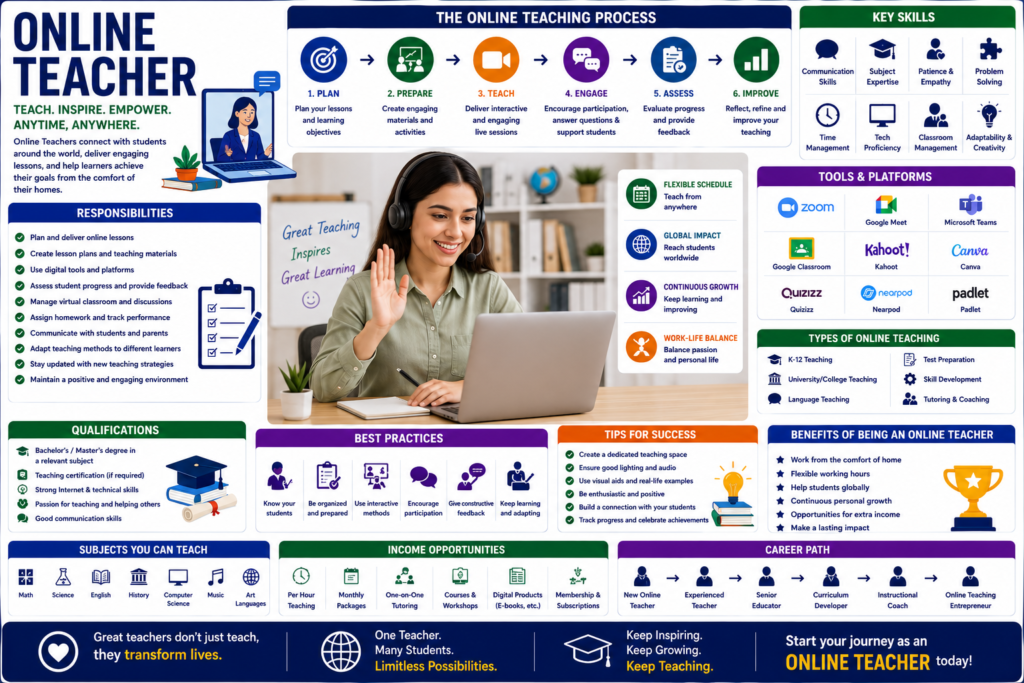
The education industry has undergone a remarkable transformation in recent years. Advances in technology, increased internet accessibility, and the growth of digital learning platforms have created new opportunities for educators worldwide. At the center of this educational revolution is the Online Teacher.
Online Teachers provide instruction through virtual classrooms, video conferencing tools, learning management systems, and digital educational resources. They help students of all ages achieve academic, professional, and personal learning goals without the limitations of traditional classroom settings.
As remote learning continues to expand globally, Online Teachers have become essential contributors to modern education. Their ability to engage students, deliver high-quality instruction, and leverage technology makes them highly valuable in today’s digital learning environment.
This guide explores the role of an Online Teacher, key responsibilities, skills, tools, certifications, career paths, and future trends shaping online education.
What Is an Online Teacher?
An Online Teacher is an educator who delivers instruction, guidance, assessments, and support to students through digital platforms and virtual learning environments.
Unlike traditional classroom teachers, Online Teachers interact with students remotely using internet-based technologies.
Their responsibilities often include:
- Teaching live virtual classes
- Creating digital lesson plans
- Developing educational content
- Assessing student performance
- Providing feedback
- Managing online classrooms
- Supporting student engagement
- Facilitating discussions
- Tracking progress
- Using educational technology tools
Online Teachers can work independently, for schools, universities, tutoring companies, corporate training organizations, or online education platforms.
Why Online Teachers Are Important
Increase Access to Education
Students can learn from anywhere in the world.
Provide Flexible Learning
Online education accommodates diverse schedules and learning preferences.
Support Lifelong Learning
Professionals and adult learners can continue education while working.
Expand Educational Opportunities
Students gain access to specialized instructors and courses.
Enable Global Learning Communities
Online classrooms connect learners across countries and cultures.
Key Responsibilities of an Online Teacher
Lesson Planning
Creating engaging and effective online learning experiences.
Virtual Instruction
Teaching students through video conferencing and digital platforms.
Student Assessment
Evaluating assignments, quizzes, exams, and projects.
Classroom Management
Maintaining productive virtual learning environments.
Student Support
Providing guidance, mentoring, and academic assistance.
Content Development
Creating educational resources, presentations, and activities.
Progress Tracking
Monitoring student performance and participation.
Types of Online Teachers
K-12 Online Teacher
Provides instruction for elementary, middle, and high school students.
University Instructor
Teaches college-level courses remotely.
Online Tutor
Offers personalized academic support.
Language Teacher
Teaches languages through virtual platforms.
Corporate Trainer
Provides professional development and workplace training.
Course Creator
Develops online courses for educational platforms.
Special Education Online Teacher
Supports students with specialized learning needs.
The Online Teaching Process
1. Curriculum Planning
Designing lessons aligned with learning objectives.
2. Content Preparation
Creating presentations, videos, and learning materials.
3. Virtual Instruction
Delivering lessons through online platforms.
4. Student Interaction
Facilitating discussions and answering questions.
5. Assessment
Evaluating student understanding and performance.
6. Feedback
Providing constructive guidance for improvement.
7. Continuous Improvement
Updating teaching methods and content based on results.
Essential Skills for Online Teachers
Communication Skills
Clear and engaging communication is crucial in virtual environments.
Technology Proficiency
Comfort using digital teaching tools and software.
Adaptability
Adjusting lessons and teaching strategies to different learning needs.
Organization
Managing schedules, assignments, and student records effectively.
Creativity
Designing engaging learning experiences.
Patience
Supporting diverse learners with varying abilities and backgrounds.
Time Management
Balancing teaching, grading, and administrative responsibilities.
Educational Technology Tools
Modern Online Teachers use a variety of digital platforms.
Video Conferencing Tools
- Zoom
- Microsoft Teams
- Google Meet
- Webex
Learning Management Systems (LMS)
- Moodle
- Canvas
- Blackboard
- Google Classroom
Content Creation Tools
- Canva
- PowerPoint
- Prezi
- Genially
Assessment Tools
- Kahoot!
- Quizizz
- Google Forms
- Socrative
Collaboration Platforms
- Padlet
- Miro
- Jamboard
- Notion
Creating Effective Online Lessons
Successful Online Teachers focus on:
Clear Learning Objectives
Students should understand expected outcomes.
Interactive Activities
Encourage participation and engagement.
Multimedia Content
Use videos, graphics, and interactive elements.
Student Collaboration
Promote group discussions and teamwork.
Assessment Opportunities
Measure understanding regularly.
Accessibility
Ensure content is accessible to all learners.
Student Engagement Strategies
One of the biggest challenges in online education is maintaining engagement.
Effective methods include:
Live Discussions
Encourage active participation.
Interactive Polls
Gather instant feedback.
Breakout Rooms
Facilitate small-group collaboration.
Gamification
Incorporate points, badges, and rewards.
Multimedia Learning
Use diverse content formats.
Personalized Feedback
Support individual student growth.
Benefits of Online Teaching
Flexible Work Environment
Many Online Teachers work remotely.
Global Opportunities
Teach students from different countries and cultures.
Diverse Career Options
Work in education, training, tutoring, and course development.
Technology Integration
Use innovative educational tools.
Continuous Learning
Stay engaged with evolving teaching methodologies.
Online Teacher vs Traditional Teacher
Online Teacher
Teaches remotely using digital technologies.
Traditional Teacher
Provides instruction in physical classroom settings.
Both roles require educational expertise, but online teaching demands stronger digital communication and technology skills.
Certifications for Online Teachers
Teaching License
Required for many K-12 teaching positions.
TESOL Certification
Popular for teaching English online.
TEFL Certification
Supports international English instruction.
Online Teaching Certifications
Focused on virtual classroom best practices.
Instructional Design Certifications
Useful for course development and e-learning.
Industries Hiring Online Teachers
Online Schools
Virtual K-12 education programs.
Universities
Remote higher education courses.
Tutoring Companies
Academic support services.
Language Learning Platforms
Teaching languages online.
Corporate Training Organizations
Employee education and professional development.
E-Learning Companies
Creating and delivering online courses.
Nonprofit Organizations
Supporting educational outreach initiatives.
Career Path for Online Teachers
Online Tutor
Entry-level online education role.
Online Teacher
Provides virtual instruction independently.
Senior Online Educator
Leads advanced educational programs.
Curriculum Developer
Designs educational content and programs.
Instructional Designer
Creates learning experiences and training materials.
Academic Program Manager
Oversees educational initiatives.
Director of Online Learning
Leads digital education strategies and operations.
Best Practices for Online Teachers
Maintain Student Engagement
Use interactive and collaborative teaching methods.
Leverage Technology Effectively
Choose tools that enhance learning outcomes.
Communicate Clearly
Provide consistent instructions and feedback.
Stay Organized
Manage schedules, assignments, and course materials efficiently.
Encourage Participation
Create inclusive learning environments.
Continue Professional Development
Stay current with educational technologies and teaching strategies.
Future Trends in Online Education
Artificial Intelligence
AI supports personalized learning experiences.
Virtual Reality (VR)
Immersive educational environments continue growing.
Microlearning
Short, focused lessons become increasingly popular.
Mobile Learning
Students increasingly access content through smartphones and tablets.
Personalized Education
Technology enables customized learning pathways.
Global Learning Communities
Cross-border education continues expanding.
Benefits of Becoming an Online Teacher
- Flexible working arrangements
- Global teaching opportunities
- Growing industry demand
- Work-from-home possibilities
- Diverse educational environments
- Continuous learning and development
- Ability to impact students worldwide
Conclusion
Online Teachers are transforming education by making learning more accessible, flexible, and engaging. Through virtual instruction, innovative teaching methods, and educational technology, they help students achieve academic and professional success regardless of location.
As digital learning continues to expand globally, skilled Online Teachers will remain in high demand. Professionals who combine strong teaching abilities, technological expertise, creativity, and student-centered approaches can build rewarding careers while shaping the future of education.